 Vietnamnet.vn

 Podcast



A few months ago, shortly after Decree 46 on food safety took effect on January 26, three containers of walnuts imported from the US, worth VND12.6 billion (US$520,000), belonging to a Ho Chi Minh City-based enterprise, were stranded at Cat Lai Port.
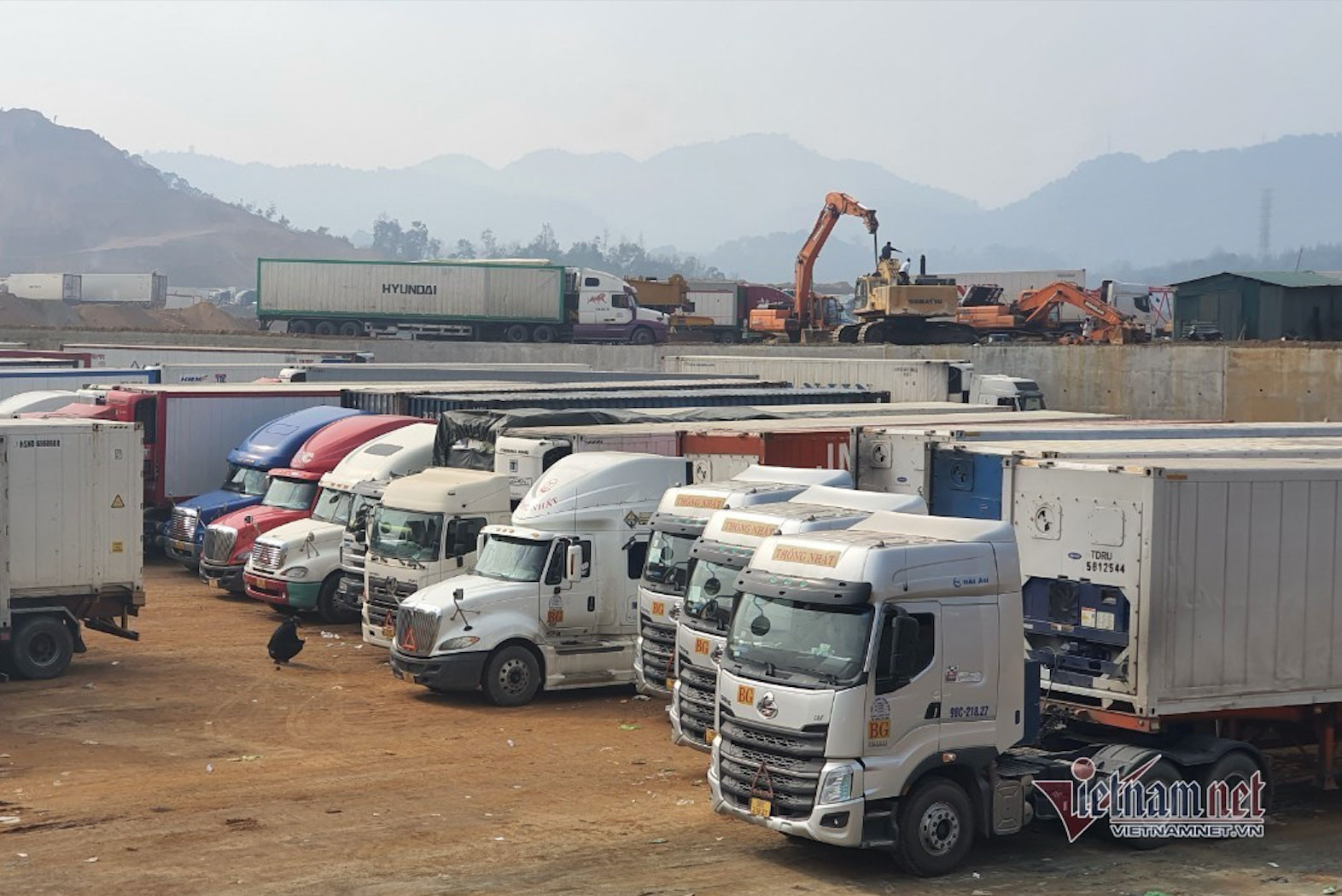
The shipment had arrived on the morning of January 27, 2026, and was expected to clear customs within two days, in time to be transported to Hanoi for processing and packaging as Tet gifts. Instead, everything came to a halt. Procedures related to imported food were suspended, pending detailed guidance on how to implement Decree 46.
There was nowhere to submit documents, no authority to issue certificates. The company could only watch as its goods sat behind port fences, while bank interest, storage fees and delivery pressure mounted day by day.
According to data from the Customs Department on January 30, around 300 trucks carrying agricultural products were stuck at Kim Thanh border gate, 251 trucks at Hoa Lu, along with hundreds more vehicles and boats at Lao Bao, Tinh Bien, Dong Thap and An Giang. All were delayed due to pending food safety inspection results.
This was the outcome of how Decree 46 was designed - a pre-check mechanism, aiming to control risks from the outset. The scope of specialized inspections was expanded, covering not only food but also packaging, materials in direct contact with food, and storage containers.
As a result, goods were held up at ports, contracts fell behind schedule, cash flows were disrupted, while bank interest continued to accrue.
When pre-check requirements are broadly applied to packaging, containers and common materials, a critical question arises: does the social cost outweigh the regulatory benefits?
Waste, in this context, is not limited to delayed public investment projects or abandoned infrastructure. It is found in containers left idle at ports, missed contracts, and businesses reluctant to expand due to procedural uncertainty.
Eventually, the Government had to suspend Decree 46 and revert to Decree 15. A newly issued regulation requiring immediate adjustment to align with reality - this alone speaks volumes about whether the policy truly represented reform.
It is here that the value of Decree 15, introduced in 2018, becomes evident. Decree 15 shifted most products to a self-declaration mechanism, placing responsibility on businesses. Companies could bring goods to market first and assume accountability for product quality, while the State moved to post-check supervision.
This marked a fundamental shift in governance thinking - from pre-check to post-check. The results were clear: more than 90 percent of administrative procedures were eliminated, saving an estimated 10 million working days and approximately VND3.7 trillion (US$150 million) annually for businesses and the economy, according to the Central Institute for Economic Management.
If Decree 15 sought to return resources to businesses through a more open regulatory framework, Decree 46 reflected a return to pre-check thinking.
The difference lies not merely in legal documents, but in two entirely distinct perspectives on businesses and economic growth.
Against this backdrop, Prime Minister Le Minh Hung’s directive requiring ministries to propose plans to cut administrative procedures and business conditions represents a significant effort to reinforce the post-check approach.
Reducing 30 percent of conditional business sectors, eliminating all unnecessary business conditions, cutting at least 50 percent of processing time and compliance costs - these are substantial institutional reforms.
As Vietnam targets GDP growth of 10 percent or more for the 2026-2030 period, the economy cannot continue to operate under thousands of “permits” or so-called sub-licenses.
Cutting business conditions is a clear supply-side solution. It is not about injecting more money into the economy, but about removing barriers that discourage businesses from operating.
For the enterprise with three containers stuck at the port, what it needed was not an interest rate support package, but timely customs clearance.
Notably, the Prime Minister has not only called for reducing business conditions but has also tasked the Ministry of Justice and the Government Office with acting as gatekeepers for administrative procedures.
Laws may open doors, but decrees, circulars and guiding documents often erect new barriers, slowing reform at the implementation stage.
Thus, the story of Decree 46 is not just about procedural bottlenecks. It is a clear lesson in governance thinking during a new phase of development.
That lesson further highlights the value of Decree 15: a decisive shift from pre-check to post-check, granting autonomy to businesses while holding them accountable for their products.
An economy aiming for high growth must unlock resources within society, based on the principle that people and businesses are free to operate in areas not prohibited by law.
The State should stand behind - supervising, strictly penalizing violations, and protecting those who comply. This is the spirit of a facilitating government, and the most direct path to reducing waste, unlocking resources, and building market confidence.
The Prime Minister’s determination to cut business conditions is therefore not merely an administrative reform effort, but a development choice: choosing post-check over pre-check, transparency over permission-seeking, decentralization over centralization.
Ultimately, the layers of sub-licenses are what continue to waste opportunities, money and effort.
Lan Anh
.svg)
