 Vietnamnet.vn

 Podcast



This marks an important legislative milestone, reflecting strong consensus in unlocking resources, improving institutions and creating conditions for culture to become a driving force for national development in a new era.
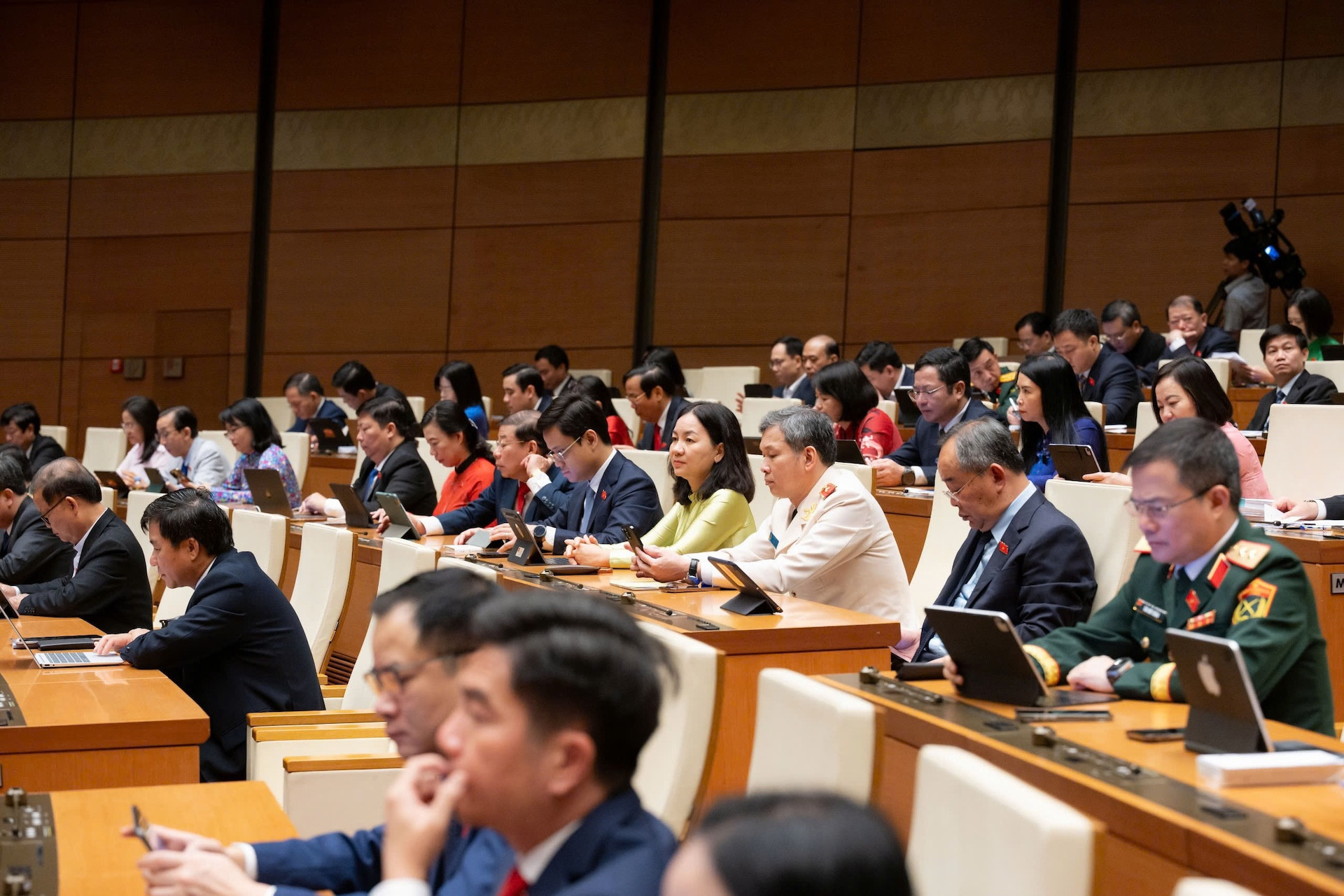
The passage of the Resolution with such a high approval rate is significant not only for the cultural sector but also for the country’s broader development trajectory. After years of affirming culture as the spiritual foundation of society, as both a goal and a driving force, and as an internal resource for growth, the Resolution translates these perspectives into more actionable mechanisms and policies.
Its greatest value lies in moving culture from awareness to institutionalization, from orientation to policy, and from expectation to implementation. Cultural development cannot rely solely on the dedication of artists, artisans, cultural workers or creative communities; it requires resources, mechanisms, infrastructure, human capital, markets and an enabling legal environment.
One notable provision is the designation of November 24 each year as Vietnam Culture Day, with workers entitled to a paid day off. This should not be seen merely as an additional holiday but as an opportunity to create a genuine cultural celebration across society. If well organized, it could encourage people to visit museums, libraries, theaters, heritage sites and creative spaces; allow schools to promote heritage education; enable local communities to showcase their identity; and give children and young people more engaging access to culture.
A breakthrough element of the Resolution is the requirement that the State allocate at least 2% of the total annual budget expenditure to culture, with gradual increases in line with development needs. This represents a crucial commitment of resources. For a long time, many cultural sectors have faced difficulties due to limited funding: grassroots cultural institutions have operated ineffectively; heritage preservation has been constrained; traditional arts have struggled to attract audiences; cultural workers have not received adequate remuneration; and cultural industries, despite their potential, have lacked the conditions to grow.
However, the issue is not only about increasing spending but ensuring its effectiveness. The 2% allocation should be targeted and focused on long-term priorities such as heritage preservation, development of grassroots cultural infrastructure, support for traditional arts, digitization of cultural data, human resource training, commissioning high-quality works and expanding access to culture for children, workers, remote areas, border regions, islands and ethnic minority communities. Transparent allocation with clear evaluation criteria will be essential to create real change.
The Resolution also opens new space for cultural industries. The development of cultural creative clusters, creative hubs and supportive policies on taxation, land access, production facilities, digital infrastructure and advanced technologies are critical mechanisms. Vietnam holds significant potential in heritage, history, arts, cuisine, tourism, design, film, music, gaming and digital content. Yet potential only becomes value when organized within a creative ecosystem.
If implemented effectively, creative clusters and hubs can connect artists, businesses, investors, technology, universities and the public. They can serve as spaces where cultural ideas are tested, produced, distributed and commercialized. At the same time, it is important to avoid labeling purely commercial projects as “creative.” Genuine creative spaces must generate cultural value and contribute meaningfully to cultural life.
Another key component is digital transformation and the development of digital cultural infrastructure. The Resolution calls for building a national cultural database, shared digital platforms, and the digitization of nationally recognized and specially recognized heritage. It also emphasizes supporting enterprises in applying advanced technologies to digital content production, while protecting copyright, cultural security and digital sovereignty. This approach reflects the reality that digital space has become a new cultural environment where values are created and disseminated, but also vulnerable to distortion or uncontrolled commercialization.
Digital transformation in culture is not merely about digitizing artifacts or building databases. More importantly, it is about giving heritage, arts, folk knowledge and collective memory new life in education, tourism, media and creative industries. When done well, cultural data can become a valuable resource for film, games, applied arts, design, digital museums, libraries and contemporary cultural products.
The Resolution also places significant emphasis on human resources in culture, arts and sports. Policies on special recruitment of talent, professional allowances, training and retraining, and the development of high-quality human resources for cultural industries, digital transformation and cultural expertise are essential. Ultimately, culture begins with people. Without artisans, artists, creators, researchers, managers, technologists and practicing communities, cultural policy lacks its core actors.
The introduction of commissioning mechanisms and output-based funding for cultural activities using the state budget is another notable step forward. Creative work in literature and the arts has its own characteristics and cannot be fully governed by rigid administrative frameworks. Output-based funding, assessed by independent professional councils, if implemented transparently, can allow the State to commission high-value works while respecting artistic autonomy.
The Resolution also outlines policies for promoting and developing markets for Vietnam’s cultural industries. Support for Vietnam Culture Weeks abroad, artistic exchanges, Vietnamese language teaching, and the expansion of Vietnamese cultural spaces overseas, along with incentives for exporting cultural products and showcasing heritage in reputable international museums, reflects a new approach to national soft power.
In today’s world, a nation’s image is shaped not only by diplomacy or economic indicators but also by films, music, cuisine, fashion, tourism, museums, festivals, games and books. Vietnam has many compelling stories to tell. The challenge lies in telling them with quality, using the language of the times, technology, intellectual property and professional organization.
Yet, the adoption of the Resolution is only the beginning. Bridging the gap between policy and everyday life requires sustained effort. Clear guidelines, effective coordination mechanisms, transparent resource allocation, accountability at local levels and consistent oversight from legislative bodies, mass organizations, media and the public will be crucial.
There must be caution against formalism: Vietnam Culture Day should not become just a day off; the 2% budget allocation should not remain a symbolic figure; creative hubs should not turn into disguised real estate projects; digitization should not be fragmented; and cultural funds should not become bureaucratic mechanisms. The spirit of the Resolution calls for equally innovative implementation - more transparent, more flexible and more outcome-oriented.
Looking back at 9:28 a.m. on April 24, 2026, what stands out is not only the 95.40% approval rate, but the policy signal sent to society: culture has been placed in a more central position in the national development agenda. From now on, discussing culture means not only preservation and festivals, but also resources, human capital, creative industries, digital transformation, copyright, markets, soft power and quality of life.
A resolution cannot transform everything overnight, but it can open a path. This Resolution on cultural development does exactly that. It reminds us that national development is not only about economic growth, infrastructure or technology, but also about building people, preserving memory, nurturing identity, fostering creativity and ensuring that every citizen lives in a healthy, rich and humane cultural environment.
In a new era of development, Vietnamese culture must move forward with a renewed mindset: preserving while innovating, safeguarding while developing, honoring the past while creating new values for the future. The responsibility after the vote is to ensure that the Resolution moves from parliament into daily life, becoming an internal strength of the Vietnamese people and a sustainable driver of national growth.
Dr. Bui Hoai Son
.svg)
