 Vietnamnet.vn

 Podcast



At its core, every public policy must answer a simple question: after each unit of public spending, how much has people’s capacity to develop improved.
For ethnic policy, this question must be asked even more rigorously. It is not merely about supporting disadvantaged regions, but about ensuring equitable development, strengthening national unity and building a stable foundation for the country’s long-term future.
Following Phase I (2021-2025) of the National Target Program for socio-economic development in ethnic minority and mountainous areas, Vietnam is entering a new institutional turning point: integrating three national target programs for the 2026-2035 period. This is a major policy direction, offering opportunities to reduce overlap, enhance coherence and better concentrate resources. Yet it also presents a critical test - without a shift in approach, integration may remain formal rather than substantive.
As the integration phase begins, the foremost requirement is to ensure that ethnic policy is not diluted within a broader framework.
Infrastructure has improved, but is not the core answer
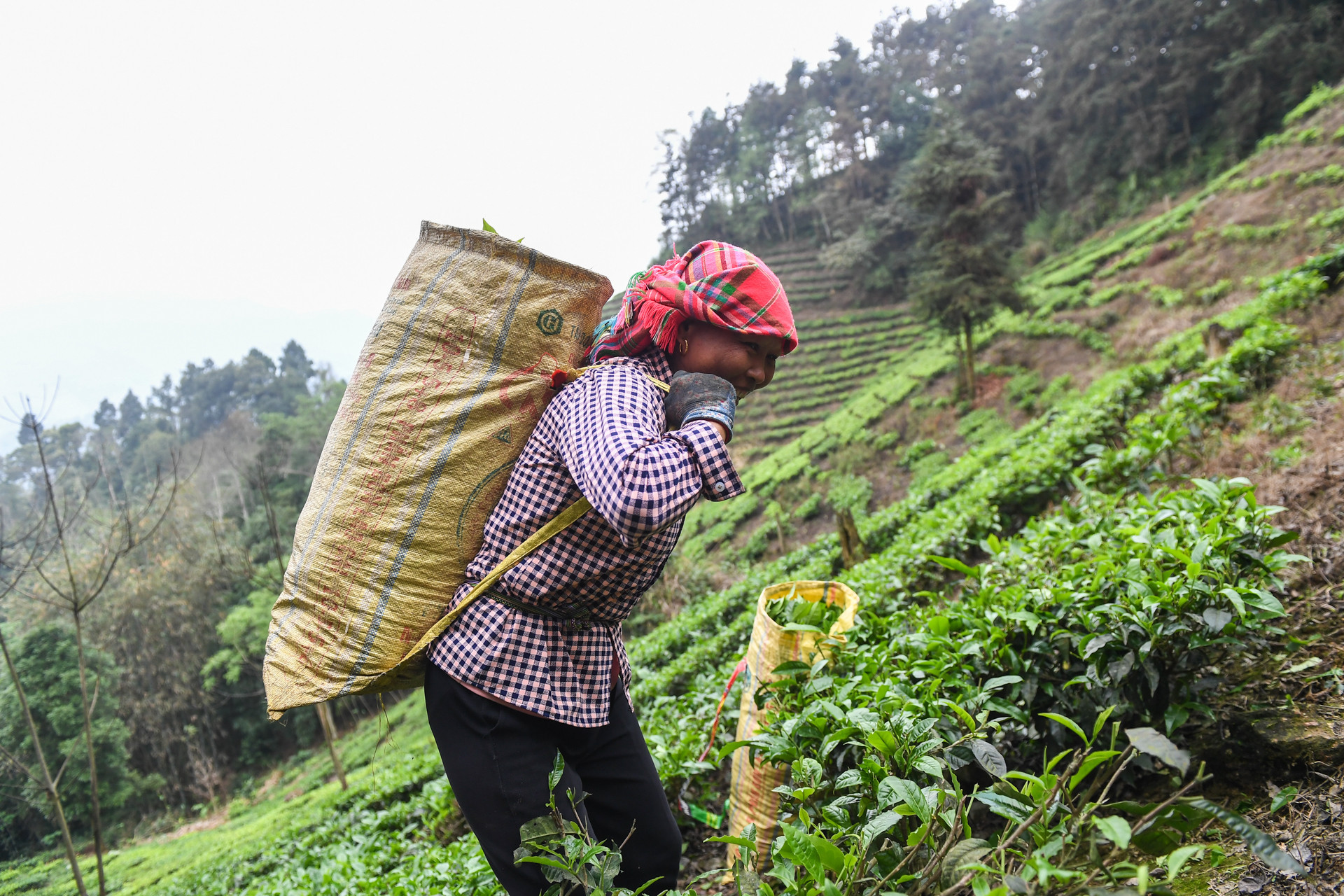
Initial results from the 2021-2025 period show substantial investment: 6,018 rural transport projects completed, 8,673 kilometers of roads upgraded, 442 electricity projects built, 1,787 community houses constructed, 183 commune health stations renovated, equipment provided to 118 health stations, and 629 school facilities developed.
These figures reflect significant efforts to narrow gaps in infrastructure and access to basic services between ethnic minority, mountainous regions and more developed areas.
However, improved infrastructure does not automatically translate into development breakthroughs. Persistent challenges remain - unmet targets, prolonged hardship in certain areas, and unresolved issues related to land for housing and production, livelihoods and human resource quality. Infrastructure is necessary, but it is not sufficient.
The core bottleneck lies in the policy approach, which still leans heavily toward compensating immediate shortages. While input support is necessary, if it continues as the dominant logic, it can lead to three consequences: fragmented resources, an implementation focus on procedures rather than outcomes, and beneficiaries positioned as passive recipients rather than active agents of development.
In such cases, policies may ease short-term difficulties but fail to build the capacity needed for long-term progress.
Why the shift toward capacity building is essential
The answer lies in the evolving development demands of ethnic minority and mountainous regions. Today’s development gap is no longer defined simply by the absence of roads, electricity or schools. It increasingly depends on human capital quality, market participation, digital capability, production organization, access to credit, quality of healthcare and education, and resilience to climate and disaster risks.
In other words, if policy remains focused on input provision, disadvantaged regions may continue receiving support but remain trapped in a cycle of lagging behind. Conversely, policies that invest in people and strengthen internal capacity can deliver more sustainable outcomes.
A student progressing to higher education, a worker trained for market-relevant skills, a household supported with integrated access to credit, technology and markets, or a community capable of organizing cooperatives, engaging in e-commerce or developing community-based tourism - these are the true foundations of long-term development.
The shift from support to capacity building is therefore not merely a technical adjustment. It represents a transformation in development thinking: from addressing immediate shortages to enabling long-term advancement; from viewing people as beneficiaries to recognizing them as central actors; and from focusing on inputs to measuring real-life outcomes.
Integration: opportunity and challenge
The integration of three national target programs into a unified framework for 2026-2035 is organizationally sound. A well-designed integrated program can reduce resource fragmentation, minimize institutional overlap and enable more coordinated local implementation across infrastructure development, poverty reduction and rural transformation.
However, integration also carries a clear risk: the distinctiveness of ethnic policy may be diluted. Ethnic minority and mountainous areas are not simply low-income regions - they represent unique development spaces shaped by specific demographic, geographic, cultural and service-access conditions. Without clearly defined components, tailored criteria and targeted resource allocation, ethnic policy risks being absorbed into general priorities.
Institutional complexity further adds to the challenge. The three existing programs operate under different frameworks - new rural development relies on standardized criteria, sustainable poverty reduction is based on multidimensional poverty benchmarks, while ethnic policy is tied to specific classifications of regions, communities and deprivation levels. Merging these into a unified system is far from straightforward. If rushed, it could increase administrative burden without improving real-world outcomes.
What must be preserved in integration
First, a clearly defined component for ethnic minority and mountainous areas must be maintained. Integration should enhance coherence, not erase specificity. Core areas of poverty, border regions, particularly disadvantaged communes and vulnerable ethnic groups must remain priority targets for resource allocation.
Second, governance must shift decisively toward results-based management. Policy effectiveness cannot be measured solely by budget disbursement or the number of completed projects. It must be assessed through tangible changes - rising household incomes, improved employment stability, higher education attainment, better access to clean water, healthcare and digital services, and increased public satisfaction.
Third, a robust, integrated data system is essential. Fragmented data on poverty, ethnicity, land access, education, healthcare, water, credit and employment makes it difficult to target policies accurately or evaluate impact effectively. Modern governance requires data-driven decision-making, not reliance on administrative reports alone.
Measuring policy through real change in people’s lives
Ultimately, reforming ethnic policy means redefining how success is measured. Success is not the volume of investment, the number of documents issued or meetings held. It must be reflected in real improvements in people’s lives - greater opportunities for education, employment, production, market access and overall quality of life.
A modern ethnic policy must aim to “build capacity”. This may take the form of policy credit paired with financial guidance, vocational training aligned with market demand, production support integrated with technology transfer and market access, digital capacity building to ensure inclusion in the new economy, and strengthening local administrative capacity for effective implementation.
When people gain the capacity to develop independently, policy generates not only socio-economic benefits but also deeper political value - reducing dependency, enhancing initiative, strengthening trust in public policy and reinforcing national unity in a new phase of development.
The 2026-2030 period, therefore, should not be seen merely as the next stage of public investment in disadvantaged areas. It must be a phase of redefining how the State accompanies ethnic minority and mountainous regions - moving beyond short-term support to enabling sustainable, long-term growth.
Only then can ethnic policy truly become a driver of development, rather than simply a mechanism of assistance.
Dr. Ha Viet Quan
.svg)
