 Vietnamnet.vn

 Podcast



A series of new policies on taxation, banking, and financial services are drawing attention this week, including updated tax rules, stricter controls on high-value transfers, potential travel restrictions for tax debts, and limits on credit service disruptions.
New tax and e-invoice regulations
The Government has issued Decree 141/2026 amending tax policies, raising the tax exemption threshold for business households to VND1 billion (US$40,000) and introducing corporate income tax exemptions for small enterprises.
Alongside this easing, the decree also tightens management for larger entities. Business households and individuals with annual revenues exceeding VND1 billion (US$40,000) are now required to use e-invoices authenticated by tax authorities, including those generated from cash registers connected directly to the tax system.
Following the issuance of Decree 141/2026, the General Department of Taxation issued Official Dispatch No. 11, calling for the immediate implementation of tax exemptions for eligible businesses and households.
Transfers above VND500 million no longer processed instantly
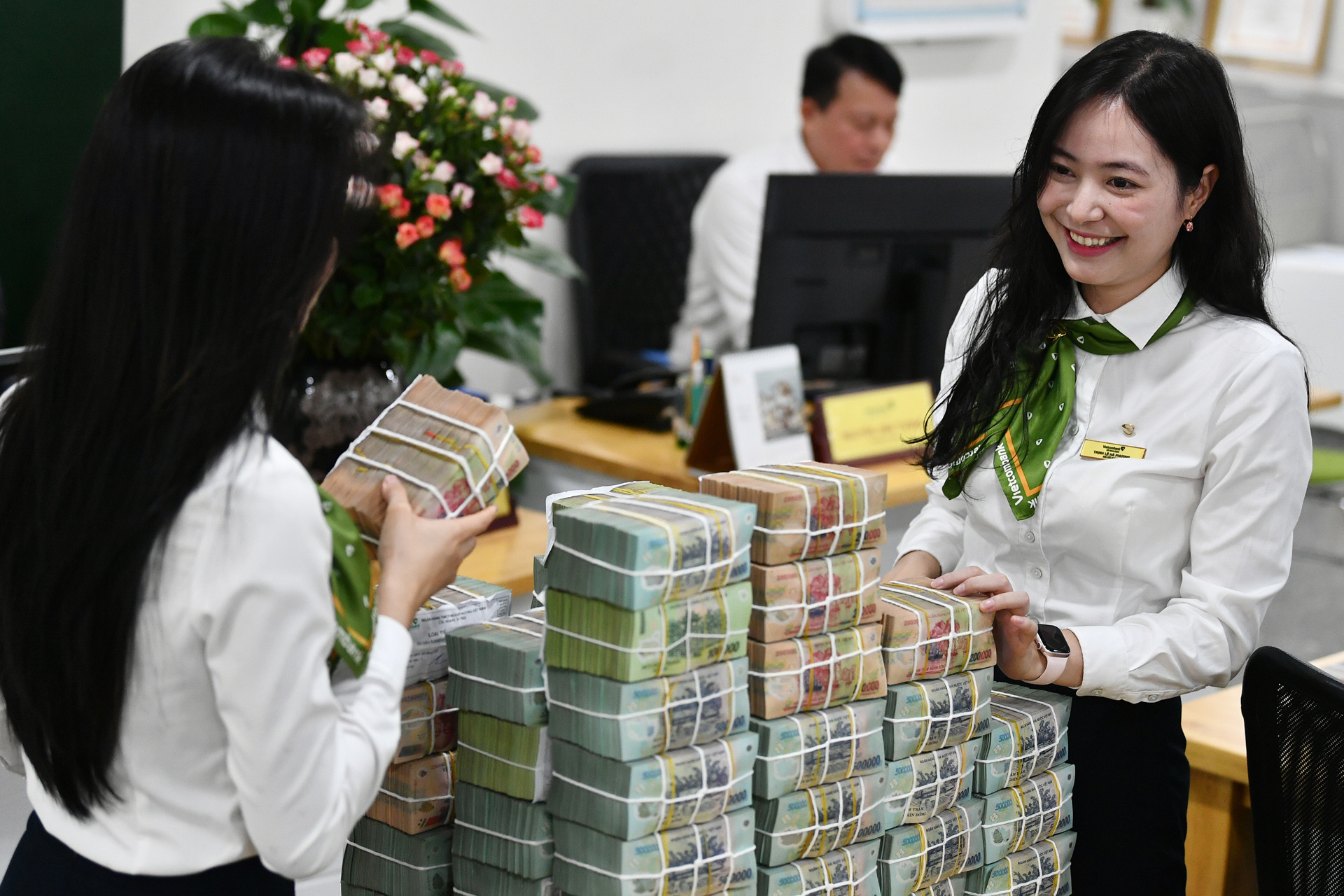
Under Circular 40/2024/TT-NHNN issued by the State Bank of Vietnam on payment services, banks have begun adjusting transfer features.
From May 1, transactions exceeding VND500 million (US$20,000) are no longer automatically split by the system for instant 24/7 processing. Instead, they must go through standard processing channels.
Customers may still choose to divide transactions into smaller amounts below VND500 million (US$20,000) to retain access to instant transfer services.
Tax debts and “ghost addresses” may lead to travel bans
The Ministry of Finance has submitted a draft decree to the Ministry of Justice detailing the implementation of the Law on Tax Administration.
The proposal suggests applying exit bans to individuals with tax debts starting from VND1 million (approximately US$40) if they are no longer operating at their registered addresses. Existing cases subject to travel restrictions would remain unchanged. The regulation could affect hundreds of thousands of taxpayers.
Falling interest rates, banks offer cars and iPhones to attract deposits
Savings interest rates declined across most commercial banks in April. The race to raise deposit rates has largely ended, and bonus interest programs are gradually disappearing.
Instead, banks are launching promotional campaigns offering gifts ranging from everyday items to chances to win cars or domestic and international travel packages.
Rooftop solar gains traction as electricity prices rise
Amid concerns over soaring electricity bills during the hot summer months, with residential electricity prices reaching up to VND3,460 per kWh (US$0.14), thousands of households are installing rooftop solar systems to secure their own power supply.
The Ministry of Industry and Trade recently cited conclusions by Prime Minister Le Minh Hung, calling for accelerated development of self-consumption rooftop solar. The goal is for 10 percent of public offices and households to adopt solar systems annually, combined with battery energy storage systems (BESS), to reduce peak load pressure and enhance on-site energy autonomy.
Gold businesses propose borrowing gold from the public
The Vietnam Gold Business Association has proposed allowing jewelry manufacturers and traders to borrow gold from the public at mutually agreed interest rates in line with civil law, to support production.
Experts note that while such borrowing is not prohibited, the risks involved make both lenders and borrowers cautious.
Credit information services must not be interrupted for more than four hours
The State Bank of Vietnam is seeking feedback on a draft amendment to Decree 58/2021 on credit information services.
Under the proposal, credit information companies must ensure data security, maintain disaster recovery plans, and avoid service interruptions exceeding four working hours.
LPBank’s 30 percent cash dividend raises concerns
At its 2026 annual general meeting, Loc Phat Vietnam Joint Stock Commercial Bank (LPBank) approved a plan to pay a 30 percent cash dividend for 2025, the highest payout ratio in the market.
However, the move has raised concerns among shareholders about potential pressure on the bank’s capital, possibly affecting its competitiveness in the race to increase charter capital.
Hanh Nguyen
.svg)
