 Vietnamnet.vn

 Podcast



With nearly 20 years of work in the automotive media and events field, Pham Thanh Le (admin of the Otofun forum) believes that to remove difficulties for pickup trucks, amending standards and ministerial circulars as well as adjusting local decisions is necessary, with priority given to immediate solutions.
Recently, many people have petitioned the Vietnam Register and the Ministry of Construction to amend Circular 53 regarding vehicle classification, with the aim of removing pickup trucks from the category of trucks subjected to strict movement management.
But to fix this issue, one must start from the root, which means amending the National Technical Regulation on Road Signs and Signals QCVN 41: 2024.
QCVN 41:2024 is the foundation from which the Ministry of Transport (now the Ministry of Construction) issued Circular 53/2024 to classify road traffic vehicles.
The Traffic Police Department will rely on Circular 53 to conduct penalties on vehicles circulating against regulations. The level of administrative fines will be based on Decree 168/2024. At present, traffic police forces still don’t punish pickup truck drivers for traveling in lanes reserved for passenger cars or entering inner Hanoi during the day, but this does not mean that such “relaxation” will be forever.
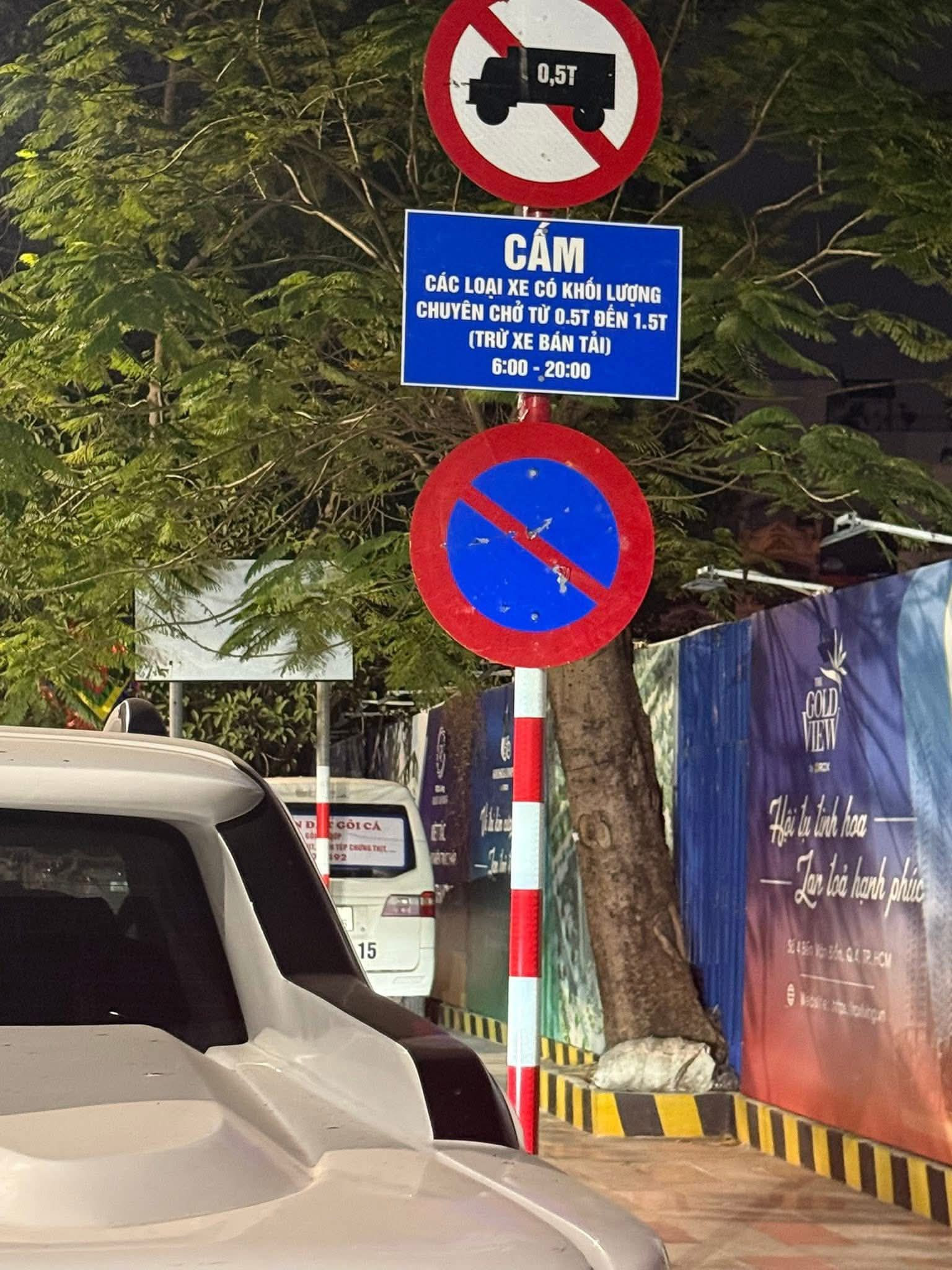
Currently, pickup truck users in Hanoi have two concerns. First, they are banned from the inner city from 6am to 9pm the next day (and this may soon apply in other localities); Second, they are banned from roads and lanes in general that apply to heavy-duty trucks (a common obstacle for pickup drivers nationwide, except for a very small number classified as passenger cars).
However, amending Regulation 41/2024 is a complicated and time-consuming process involving many management levels and is difficult to implement in the short term.
The priority right now is to adjust at the local level, specifically by directly adjusting Decision 01/2026 of the Hanoi People's Committee regarding the operation of road traffic vehicles in the area. This is a more flexible approach that can be deployed quickly and bring immediate efficiency to both the government and the people.
In fact, some localities have already applied this method. HCMC currently does not ban pickup trucks from the inner city, but leaders of the Department of Construction recently noted that drivers of "pickup trucks" must still comply with lane allocation regulations for trucks and are not allowed to circulate when encountering truck-prohibition signs.
In Hai Phong, when placing truck-prohibition signs on certain routes, functional agencies attach auxiliary signs clearly stating that the ban does not apply to pickup trucks. Previously, the Traffic Police Department also proposed banning trucks from the left lane on some highways while still excluding single-cabin and double-cabin pickup trucks and vans.
These methods show that even with new regulations, there is still room for flexible adjustment to suit reality.
However, if focusing only on pickup trucks, another group of vehicles that is equally or even more affected might be overlooked: cargo vans.
It is estimated that the market currently has about 300,000 pickup trucks, while there are about 200,000 cargo vans. This is a fleet of vehicles directly serving urban goods transport activities.
According to Hanoi's Decision 01/2026, a portion of cargo vans is restricted during peak hours, and a large portion, especially those over two tons, is only allowed to operate from after 9pm until before 6am, similar to heavy trucks. This could cause significant disruptions to urban logistics, increasing transport costs and ultimately the cost of goods.
Therefore, if "loosening" restrictions only for pickup trucks without simultaneously considering cargo vans, the policy will lack fairness and could create greater consequences for people's livelihoods.
The current problem does not simply lie with a specific type of vehicle, but in the approach to vehicle management. Regulations have changed to become stricter, but the reality of use is much more diverse and flexible.
In the short term, adjusting at the local level is a feasible solution to reduce policy conflicts and protect the interests of the people. In the long term, consideration could be given to amending regulation QCVN 41:2024 to more fully reflect the reality of vehicle usage.
Vu Diep
.svg)
