 Vietnamnet.vn

 Podcast



A journey of learning English from scratch
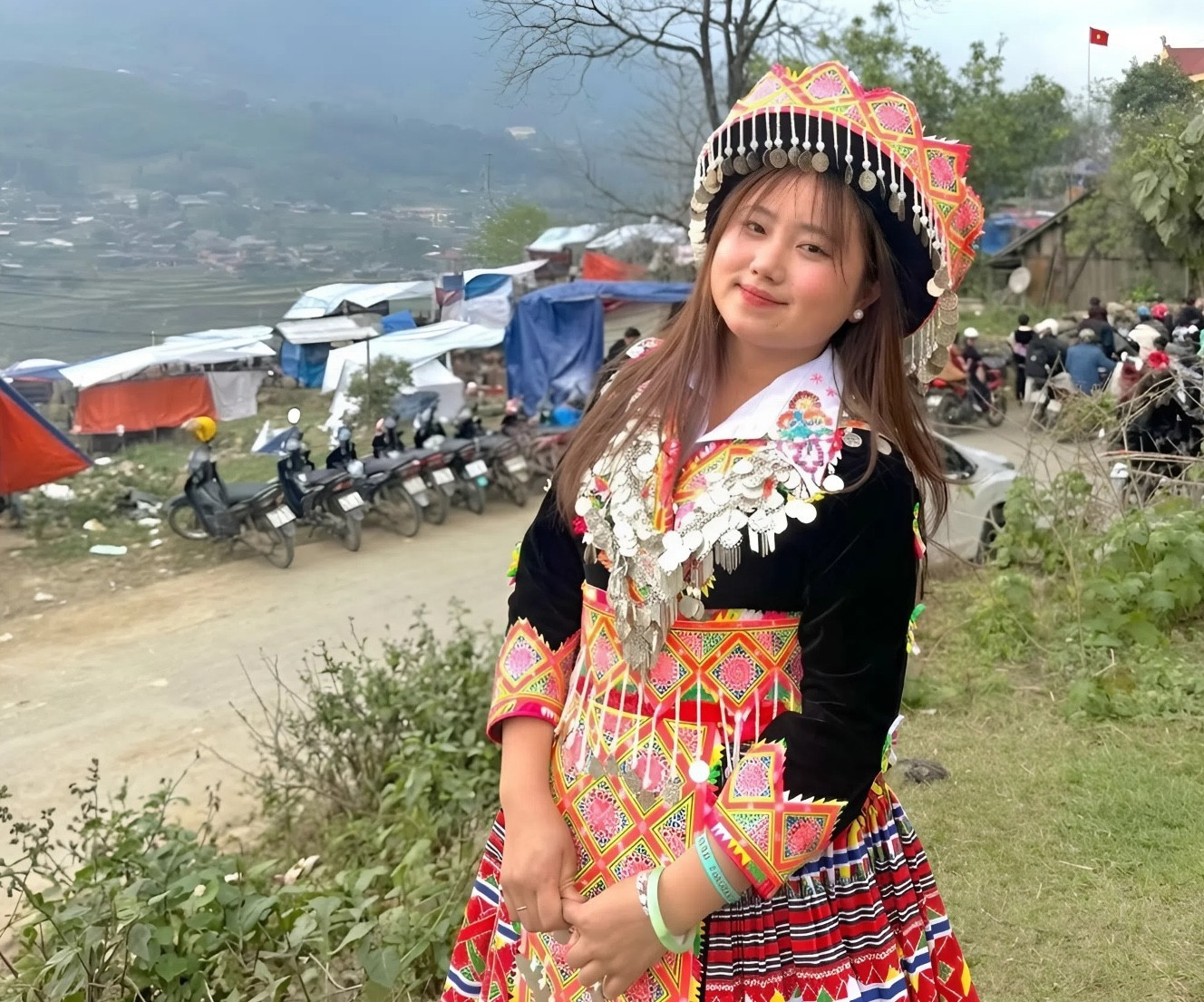
Sung Thi Dinh (born 2002) is a daughter in a Mong family with 4 siblings living in Ta Van Mong village, Ta Van commune, Lao Cai province. After finishing the first semester of grade 12, due to family difficulties, Dinh had to drop out of school and get married early. Nevertheless, Dinh still loved learning.
In 2019, accidentally learning about a 3-month English class taught by foreign volunteers for local people, Dinh decided to participate.
Initially, Dinh went to class simply because she liked it. At that time, she was a total beginner and thought she might not be able to master the language.
“The first time I encountered English, I didn't understand and couldn't communicate. I was also shy about my pronunciation for fear of feeling embarrassed if I didn't speak correctly,” Dinh recalled.
With enthusiastic support from the volunteers, Dinh began using simple learning methods, such as memorizing ten new words each day and practicing pronunciation by repeating words many times.
After each lesson, she tried to use the new vocabulary in daily life. As she understood how the words were used in real situations, she gradually became more confident speaking.
“When I was younger, I always dreamed of sharing my ethnic culture with others. At that time, I wanted to become a tour guide,” she said.
She also realized that Sa Pa had great potential for sustainable cultural tourism. That idea motivated her to keep learning English.
After some time, Dinh started working as a tour guide to earn extra income while improving her limited English skills.
The job opened a real communication environment for her. Every day she met foreign tourists, listened to them speak and tried to respond. She often observed how they moved their mouths to imitate their pronunciation. Many tourists patiently corrected her when she mispronounced words. Gradually, she became able to communicate fluently with international visitors.
“English really changed my life”
Dinh worked as a tour guide for about three to four months before the COVID-19 pandemic disrupted tourism in Sa Pa. With travel nearly frozen, she had to take on various jobs to earn a living.
Two years later, when tourism recovered, she applied for a job as a receptionist and manager at a homestay. For her, the position was not only a job but also another opportunity to interact with foreign travelers and continue practicing English.
During that time, she learned how to welcome guests, manage bookings and handle issues that arise in operating a homestay.
After a year of gaining experience, Dinh left the job to start her own tourism business. With about VND100 million in savings, she built a small stilt house to launch her own homestay.
In the beginning, she had to learn how to use a computer, sell tours online and improve her English writing through self-study on the internet. Every day she spent about 30 minutes to an hour learning new vocabulary, gradually improving her language skills.
“This was also the time when I learned the most. I never imagined that learning English could change my life until today, when I’ve achieved things I once never dreamed of,” she said.
Besides introducing the landscapes of Sa Pa, Dinh always tries to share stories about the cultures of ethnic groups such as the Hmong, Dao and Giay with visitors on every tour.
Currently, Dinh’s business goes smoothly with a stable volume of guests, with rooms often fully booked. She has also bought her own car and created jobs for about 10 people. Most of those working with Dinh are women.
“Previously, in my place, people often said girls couldn't do anything and would just get married after school. I want to show everyone that girls can also master their finances and be free to do what they like,” Dinh said.
Not only operating tours and creating jobs for villagers, Dinh also opens a small English class in the summer to support high-altitude students. Those working with her are also taught English by Dinh to communicate with tourists.
“I hope everyone understands the importance of English and its role in supporting work and life,” Dinh shared.
Ha Nguyen
.svg)
