 Vietnamnet.vn

 Podcast



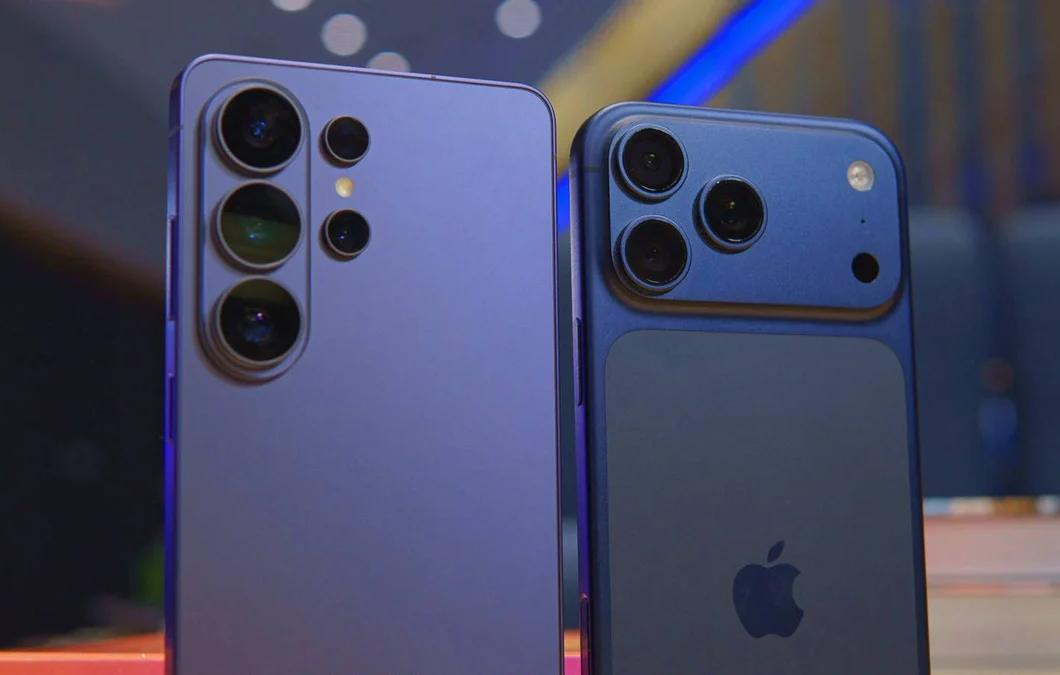
Galaxy S26: A safe upgrade, not a revolution
Samsung has officially unveiled the Galaxy S26 lineup. As expected, this is a relatively modest upgrade over its predecessor. The overall design remains largely unchanged, the hardware philosophy is steady rather than radical, and One UI continues to follow its familiar visual direction.
There is no shocking leap forward, no “revolutionary” redesign. But that does not make the Galaxy S26 any less compelling.
For long-time Android users, it remains one of the most premium choices available, especially as One UI is still considered a polished gem within the Android world, praised for its refinement and rich feature set.
The real question becomes more interesting in a different context: what if you are currently using an iPhone?
If you are using the iPhone 15 series
Launched in 2023, the iPhone 15 marked a major turning point for Apple. It was the first generation to adopt USB-C after more than a decade of Lightning. The Dynamic Island replaced the traditional notch, and the 48MP camera on the Pro models became a new standard.
If you are using an iPhone 15 Pro Max, is the Galaxy S26 Ultra compelling enough to tempt you?
On display quality, the S26 Ultra features a larger, brighter panel with improved anti-reflective properties. Gorilla Glass Armor 2 enhances scratch and drop resistance. Sharpness is also slightly higher than on the iPhone.
In terms of performance, the S26 Ultra runs on the Snapdragon 8 Elite Gen 5 globally, while the iPhone 15 Pro Max is powered by the A17 Pro. Both are built on a 3nm process, but Qualcomm’s latest chip is widely regarded as exceptionally powerful and energy-efficient. In AI workloads and multitasking, the Galaxy feels particularly impressive.
One major difference is the integrated S Pen - something Apple has never offered on the iPhone. For users who enjoy note-taking, sketching or precise photo editing, this is a genuine advantage.
As for cameras, the S26 Ultra continues Samsung’s tradition of versatility. With dual telephoto lenses, more flexible zoom and a 200MP main sensor, it surpasses the iPhone 15 Pro Max in adaptability and detail, even though Apple’s device was outstanding at launch.
On AI, Samsung is currently moving faster than Apple. Galaxy AI is widely available globally, integrating Gemini features such as an intelligent assistant and Circle to Search. Meanwhile, several of Apple’s AI features remain region-locked.
If you are not deeply attached to iOS, switching to the Galaxy S26 Ultra could be a worthwhile new experience.
If you are using the iPhone 16 Pro or 16 Pro Max
With the iPhone 16 Pro or 16 Pro Max, the situation becomes more nuanced.
These devices remain extremely powerful. Their 6.9-inch OLED displays are comparable in size to that of the Galaxy S26 Ultra. Performance is on par in most real-world tasks.
Galaxy’s advantages still lie in globally accessible AI features and the S Pen. If you need a more flexible productivity tool, Galaxy has the edge. However, in terms of pure performance and premium feel, the iPhone 16 Pro Max is far from outdated.
If you are simply tired of iOS and want to move to a high-end Android phone, your choice likely narrows to the Galaxy S26 Ultra or the Pixel 10 Pro XL. In that scenario, Galaxy offers a more comprehensive package: powerful hardware, versatile cameras and a broad ecosystem.
But this is not a “must-upgrade” move. It is fundamentally an operating system shift.
If you are using the standard iPhone 16
The more interesting case is the standard iPhone 16. It is the last iPhone without a 120Hz ProMotion display, yet it remained a strong value proposition in late 2024.
The standard Galaxy S26 is its direct rival in the Android world. However, the S26 largely repeats the formula of previous compact Galaxy models. You will not gain a dramatic breakthrough by switching.
In reality, if you are already using an iPhone 16, upgrading to the iPhone 17 may make more sense. It is currently one of the most well-rounded iPhones overall.
Switching to the Galaxy S26 in this case does not deliver benefits significant enough to justify leaving Apple’s ecosystem.
The ecosystem is the deciding factor
Moving from iPhone to Samsung - or vice versa - has never been purely about hardware. It is about ecosystem.
If you use a MacBook, iPad and AirPods, switching to Galaxy will disrupt that seamless integration. AirDrop, iCloud, Continuity - all those conveniences will no longer work as effortlessly.
Conversely, if you are deeply invested in Android, Galaxy Buds and Samsung tablets, returning to iPhone would create similar friction.
Technically, cross-platform solutions exist. But the experience will not be as fluid and intuitive as staying within a single ecosystem.
If you are using an iPhone 15 Pro Max or older and want more powerful AI, more versatile cameras and the S Pen experience, the Galaxy S26 Ultra is worth considering.
If you are using the iPhone 16 Pro or 16 Pro Max, switching to Galaxy only makes sense if you truly want to leave iOS - not because you need a hardware upgrade.
And if you are using the standard iPhone 16, the practical gains from moving to the Galaxy S26 are fairly limited.
In the end, upgrading between two major ecosystems has never been a decision based solely on specifications. It depends on how you work, communicate and connect with your digital world every day. In many cases, staying within your current ecosystem remains the most rational choice.
Hai Phong
.svg)
