 Vietnamnet.vn

 Podcast



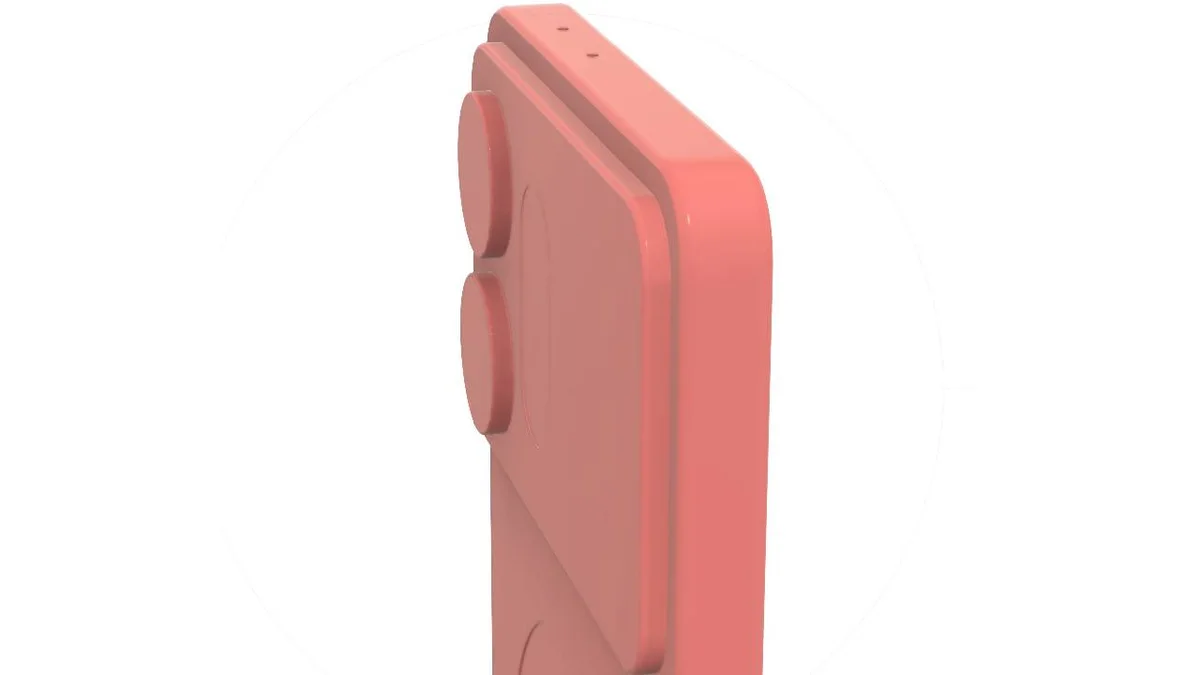
Anyone hoping recent Galaxy S27 Ultra leaks had exaggerated the size of its camera bump may be disappointed. The latest CAD renders from well-known leaker Steve H. McFly, better known as @OnLeaks, add weight to reports that Samsung is planning a major redesign of the camera system on its next-generation flagship.
According to the new renders, the Galaxy S27 Ultra is likely to feature a large raised camera “plate,” with a design noticeably reminiscent of the iPhone 17 Pro. That would make the rear camera assembly considerably more prominent, while some of the rumored hardware changes are already proving controversial.
Most notably, the dedicated 3x telephoto camera could be removed. Meanwhile, the 5x telephoto camera may use a sensor even smaller than the 1/2.52-inch sensor found on the current generation.
That would mark a significant change for the Galaxy Ultra line, which Samsung has long positioned among the market’s most versatile smartphones for shooting across multiple focal lengths.
Body barely changes, but the camera bump gets much thicker
According to dimensions derived from the CAD renders, the Galaxy S27 Ultra measures approximately 163.76 x 78.25 x 7.97mm. Compared with the Galaxy S26 Ultra at 163.6 x 78.1 x 7.9mm, the new model would be only marginally larger.
The picture changes considerably once the camera assembly is included.
Total thickness around the camera area could reach 12.53mm, with the camera protrusion reportedly increasing from around 4.43mm to 4.56mm.
A fraction of a millimeter may not sound significant, but the Galaxy S26 Ultra already has a substantially thicker camera bump than the Galaxy S25 Ultra, whose cameras protrude by only around 2.4mm. Any further increase could therefore make the new phone noticeably more awkward when placed flat on a table or used without a case.
There is at least some reassuring news for S Pen fans. According to @OnLeaks, Samsung is expected to retain the stylus on the Galaxy S27 Ultra for at least one more generation.
What could a larger camera island actually deliver?
Despite the negative reaction to the rumored design, a larger camera assembly is not necessarily without purpose.
In theory, the additional space could allow Samsung to accommodate better camera hardware. Rearranging components around the back of the device could also free up internal space, potentially creating room for a larger battery.
For now, however, those benefits remain theoretical. Some leaks suggest Samsung may actually shrink the 5x telephoto module rather than upgrade it.
More significantly, eliminating the 3x telephoto camera would make the Galaxy S27 Ultra’s camera system less flexible. Its 200MP main camera could use sensor cropping to cover the missing focal range, but such an approach would struggle to match the image quality of a dedicated 3x optical telephoto camera.
Still, losing the 3x camera may not matter equally to every user. Some observers argue that the relatively small sensor used for this camera offers limited benefits and can sometimes produce color noise and other unwanted image artifacts under certain shooting conditions.
What makes the rumored change more contentious is the reason behind it. Samsung is reportedly considering removing the 3x telephoto camera not simply to streamline the design or improve the overall camera system, but as part of an effort to reduce manufacturing costs.
If accurate, that could prove a controversial decision, particularly as the Galaxy S27 Ultra is expected to remain among Samsung’s most expensive and premium smartphones.
The Galaxy S27 Ultra is also reportedly unlikely to feature Samsung’s latest ISOCELL HPC sensor. A variable-aperture system mentioned in earlier rumors may likewise be absent from the final device.
In other words, despite the much larger physical footprint of its camera assembly, users may not necessarily receive camera hardware to match its imposing appearance.
For now, the leaked Galaxy S27 Ultra design is likely to divide opinion, particularly among users who dislike increasingly large camera islands. Smartphone history, however, suggests that a controversial design does not necessarily translate into poor sales.
If Samsung ultimately adopts the new design, users may simply grow accustomed to it over time. Even choices initially regarded as unusually bold - such as the Cosmic Orange finish on the iPhone 17 Pro - can generate publicity and help draw attention to a new product.
The Galaxy S27 Ultra’s enormous camera bump may therefore look jarring in leaked renders, but it remains too early to know whether the design will ultimately hurt - or perhaps even help - the phone’s commercial appeal.
Hai Phong
.svg)
