 Vietnamnet.vn

 Podcast



Samsung has officially unveiled the Galaxy Z Fold 8 Ultra, its most premium foldable smartphone and a strategic product designed to compete directly with the foldable-screen iPhone that Apple is reportedly set to launch this fall.
Adding the Ultra suffix is more than a naming change. It signals Samsung's ambition to take the Fold lineup to an entirely new level, well beyond the already successful Galaxy Z Fold 7.
The launch is considered one of Samsung's most important in years. With Apple preparing to enter the foldable phone market, every upgrade to the Galaxy Z Fold 8 Ultra carries strategic significance as Samsung seeks to maintain its pioneering position.
So how does the Galaxy Z Fold 8 Ultra differ from the Galaxy Z Fold 7? And are the changes significant enough to justify an upgrade?
Familiar design, refined with a new-generation hinge
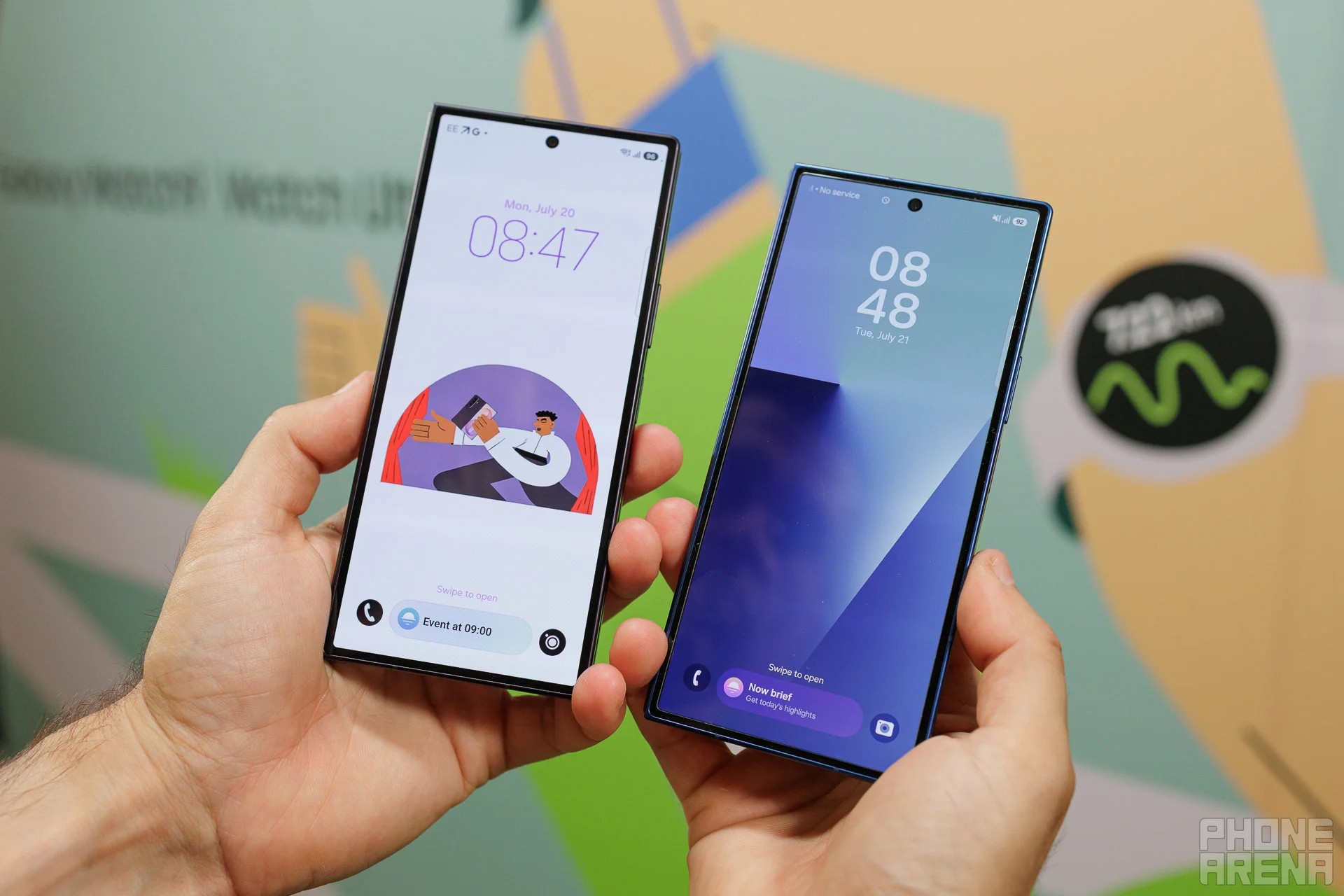
The Galaxy Z Fold 7 was regarded as a major step forward, as Samsung finally delivered a modern ultra-thin design with a display crease that had almost disappeared.
That helped Samsung significantly narrow the gap with Chinese rivals such as the Oppo Find N5, Honor Magic V5 and Huawei Mate X6.
The Galaxy Z Fold 8 Ultra retains that design language but refines several important details.
The most notable change is an entirely new hinge inspired by the TriFold line. Samsung has integrated a magnetic system to make opening and closing smoother while improving stability during use.
Inside the display, the company has also added an ultra-thin titanium alloy layer about 30% thinner than a human hair.
Combined with a titanium plate beneath the display, the new structure further reduces the depth of the crease, leaving the screen almost completely flat when unfolded.
Like the Galaxy Z Fold 7, the Ultra model continues to use an Armor Aluminum frame combined with Gorilla Glass Victus 2, retaining its squared-off design and extremely thin frame for a premium feel.
The Galaxy Z Fold 8 Ultra will be available in Violet Shadow, Cream, Graphite and Violet Green, with the latter sold exclusively online.
The Galaxy Z Fold 7, meanwhile, launched in Jetblack, Silver Shadow, Blue Shadow and Mint.
Brighter display, with the crease almost gone
Display sizes are virtually unchanged between the two generations. Both the Galaxy Z Fold 8 Ultra and Galaxy Z Fold 7 feature an 8-inch OLED main display and a 6.5-inch cover screen with an adaptive refresh rate of up to 120Hz.
The difference lies in display quality.
Peak brightness on the Galaxy Z Fold 8 Ultra's inner display has been increased to 3,000 nits, significantly higher than the Galaxy Z Fold 7's 2,600 nits. This improves outdoor visibility, particularly under strong sunlight.
Samsung has also introduced an entirely new technology called Flex Titanium. It combines an ultra-thin titanium film with a titanium plate beneath the display to reduce pressure around the hinge area, making the crease almost invisible.
The device also receives a new anti-reflective coating combined with Vision Booster technology to improve visibility under a range of lighting conditions.
For biometric security, Samsung retains the side-mounted fingerprint sensor. While it remains fast and reliable, this is one area where rivals such as Vivo and Oppo have moved ahead by integrating under-display fingerprint sensors.
More performance and smarter AI features
The Galaxy Z Fold 8 Ultra is powered by the Snapdragon 8 Elite Gen 5 for Galaxy, Qualcomm's most powerful chip developed specifically for Samsung at present.
The Galaxy Z Fold 7, by comparison, uses the previous-generation Snapdragon 8 Elite for Galaxy. While still extremely powerful, the newer version promises superior CPU and GPU performance as well as greater AI processing capabilities.
Samsung continues to offer 256GB, 512GB and 1TB storage options. The two standard versions retain 12GB of RAM, while the 1TB variant receives 16GB of RAM to better handle demanding AI workloads and heavy multitasking.
On the software side, the Galaxy Z Fold 8 Ultra ships with One UI 9 based on Android 17, with Samsung continuing to promise seven years of updates.
The device also introduces several new Galaxy AI features. Now Nudge has been upgraded to take a more proactive role in suggesting maps, appointments and reminders, or automatically splitting the screen when it detects that users need to run multiple apps simultaneously.
Android 17 also introduces App Bubbles, allowing any app to run in a floating window and making multitasking on the large display considerably more flexible.
Major camera upgrade, particularly for the ultra-wide lens
One of the most significant changes is the camera system. Samsung has upgraded the Galaxy Z Fold 8 Ultra's ultra-wide camera from 12MP to 50MP.
The other two sensors remain unchanged from the Galaxy Z Fold 7, comprising a 200MP main camera and a 10MP telephoto camera.
Alongside the hardware improvements, Samsung is placing a strong emphasis on software enhancements.
The new ProVisual Engine image processor significantly improves low-light video recording, reducing noise and increasing detail.
The device also offers greater flexibility for recording and editing 8K video, adds the storage-efficient APV codec, and integrates four new cinematic LUTs. This allows users to color-grade Log video directly on the phone without professional software.
Silicon-carbon battery and faster charging deliver a major leap
If there is one upgrade that stands out most clearly, it is the battery. The Galaxy Z Fold 8 Ultra features a 5,000 mAh silicon-carbon battery, marking the first time Samsung has widely adopted the new battery technology in its premium Fold lineup.
The Galaxy Z Fold 7, by comparison, uses a 4,400 mAh lithium-ion battery.
The larger capacity, combined with a more power-efficient processor, promises significantly longer battery life, particularly for users who frequently multitask on the large display.
Charging has also received a major upgrade. Samsung has increased wired charging from 25W to 45W and wireless charging from 15W to 20W. It is an improvement Galaxy Fold users have been waiting years for and should significantly reduce charging times.
The Galaxy Z Fold 8 Ultra is positioned as the biggest rival to the foldable-screen iPhone expected to enter the market. Rather than completely overhaul the successful formula of the Galaxy Z Fold 7, Samsung has focused its upgrades on the areas that matter most: design, display, performance, cameras and battery.
With its new-generation hinge, an almost invisible crease, brighter display, upgraded 50MP ultra-wide camera, more powerful Snapdragon processor, 5,000 mAh silicon-carbon battery and 45W fast charging, the Galaxy Z Fold 8 Ultra has the credentials to become the best foldable phone Samsung has ever made.
Hai Phong
.svg)
