 Vietnamnet.vn

 Podcast



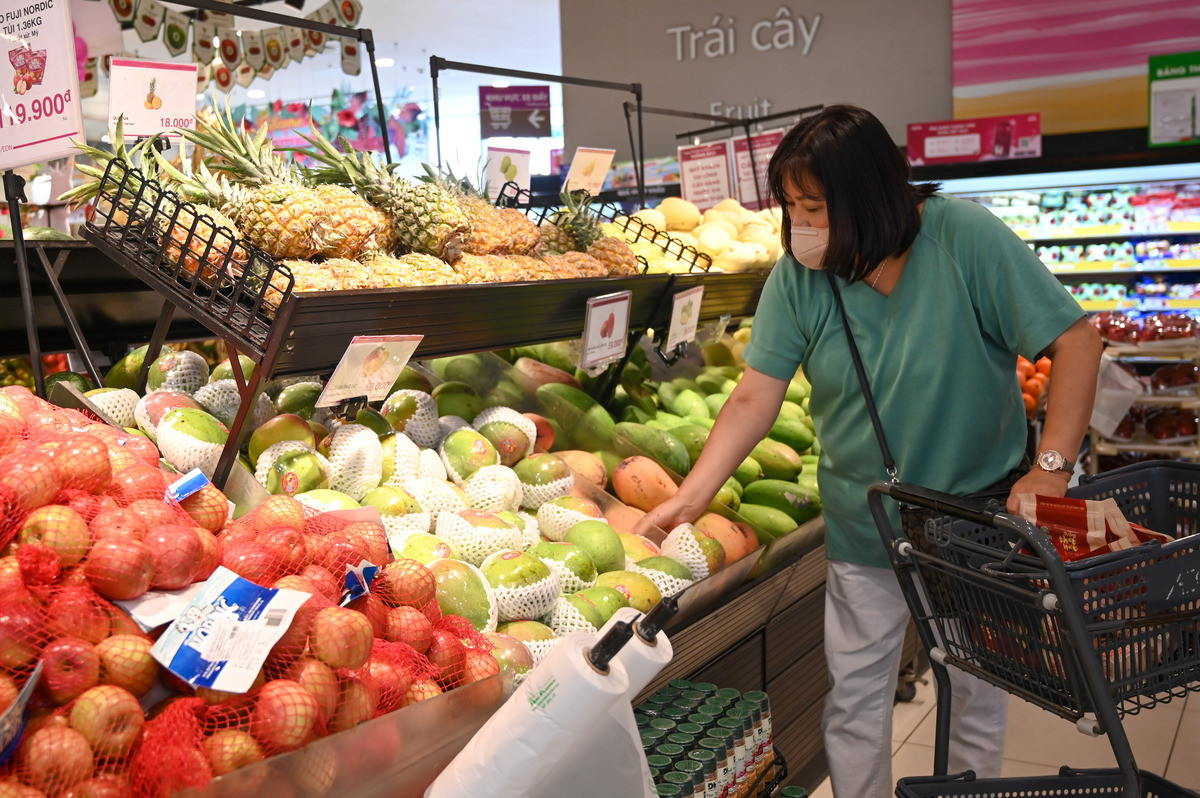
On the afternoon of March 8, after farmers announced new transport charges from Son La and Dien Bien to Hanoi, Vu Huyen, an online agricultural product seller in Tu Liem Ward (Hanoi), began calculating price increases for several products starting the next day.
Transport companies sharply increased freight fees because fuel prices surged. A 30kg package sent from suburban Hanoi to her home now costs VND300,000, up VND100,000 compared with before March 5, when fuel prices began rising sharply.
On the same day, a bundle of pear blossom branches (around 20 small bunches) shipped from Son La and Dien Bien cost VND400,000 in freight, about VND100,000 higher than before. This does not include the additional cost of transporting the goods from the bus station to her house.
“Transport alone already costs nearly VND30,000 per bunch,” she said. That is why she had to adjust prices of many products. Agricultural products have increased by VND5,000–VND7,000 per kg, while flowers have risen by VND15,000 per bunch.
Vu Huyen said that a few days earlier she had increased delivery fees in inner Hanoi from VND15,000 per order to VND20,000 per order due to the fuel price surge.
“Every day my online store has about 150–200 orders to deliver,” she said. Previously, she sold agricultural products in 3kg sets. Customers buying one set paid VND15,000 for delivery, while those ordering two sets received free shipping. Now, because fuel prices are so high, she no longer dares to offer free shipping. All orders now require customers to “add VND5,000.”
“Even with delivery fees raised to VND20,000 per order, I still have to subsidize the shipment. A delivery within the city usually costs VND40,000–VND60,000 depending on the area and product,” she explained. However, fuel prices continue to surge, so within the next one or two days Huyen may raise inner-city delivery fees to VND25,000 per order.
Within about 10 days from February 26 to March 7, the price of E5 RON92 gasoline increased by VND5,703 per liter (29.2 percent) to VND25,226 per liter, while RON95-III rose by VND6,896 per liter (34.2 percent) to VND27,047 per liter. The increase in oil products was even stronger: diesel rose by VND10,960 per liter (56.8 percent) to VND30,239 per liter, while kerosene jumped by VND15,622 per liter (80.2 percent) to VND35,091 per liter.
Feeling the impact of surging fuel prices, many stores announced an additional VND5,000 per order in delivery fees. Freight charges and product prices also increased.
“Fuel prices keep rising, and transport fees have jumped sharply as well,” Do Thi Thu Ha, an online fruit seller in Dinh Cong, told VietNamNet.
Ha said that today she ordered seven boxes of mandarins from a farm in Bac Ninh. The transport fee for each 30kg box was VND150,000, up VND50,000 in just two days. Moving the goods from the bus station to her shop costs another VND100,000 per box.
In total, the transport cost for the seven boxes of mandarins was VND1.75 million. She had to increase the price of mandarins by VND5,000 per kg, from VND30,000 per kg to VND35,000 per kg.
“When goods become expensive, consumers tighten their spending. Then products become harder to sell. But if sellers don’t raise prices, they suffer heavy losses,” Ha said.
A director of a retail business admitted that product prices are usually set according to contracts signed with manufacturers. However, when fuel prices rise by 29–80 percent in a short time, prices of goods will inevitably increase as well. The exact level still needs careful calculation to balance benefits among businesses and avoid a price shock for consumers.
Earlier, after the fuel price increase on March 5, Nguyen Tien Thoa, chair of the Vietnam Valuation Association and former head of the Price Management Department under the Ministry of Finance, told VietNamNet that the increase was very sharp.
The rise in fuel prices can push the overall consumer price index (CPI) up by about 0.63 percent. For industries that rely heavily on fuel, the impact is even greater: transport service prices could rise by 6.3 percent, offshore fishing by 10.5 percent, and coal mining by nearly 10 percent.
“This is a very large increase, putting upward pressure on market prices, pushing CPI higher and creating challenges for macroeconomic management,” Thoa said.
Tam An
.svg)
