 Vietnamnet.vn

 Podcast



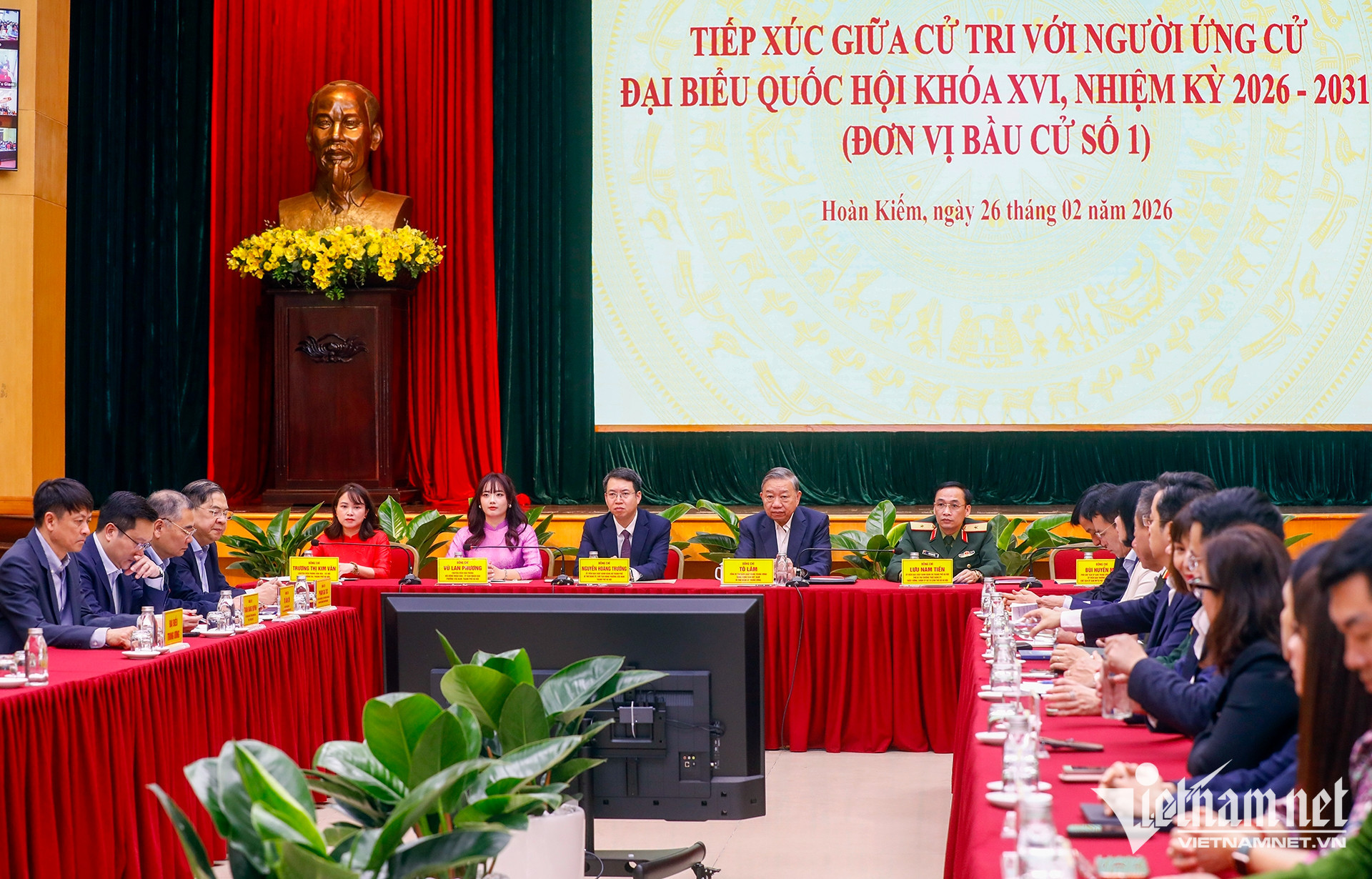
On Thursday morning, General Secretary To Lam met with voters in Constituency No. 1 of Hanoi’s National Assembly delegation, alongside fellow candidates for the 16th National Assembly, at a voter engagement conference.
The conference was held online from Hoan Kiem ward and connected to Ba Dinh, Ngoc Ha, Giang Vo, Cua Nam, Dong Da, Kim Lien, Van Mieu - Quoc Tu Giam, Lang, and O Cho Dua wards.
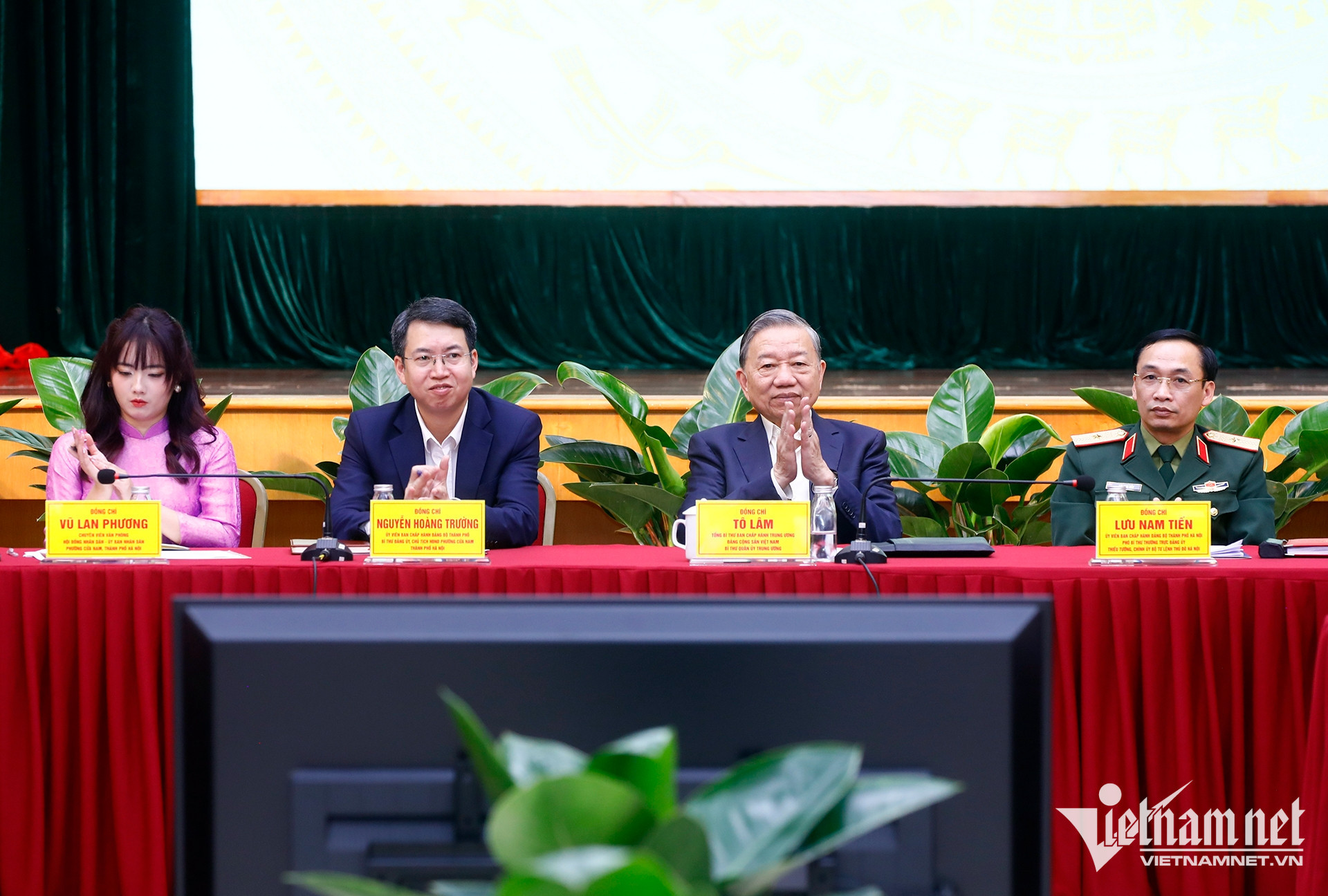
Constituency No. 1 of Hanoi comprises five candidates: General Secretary To Lam, Secretary of the Central Military Commission; Vu Lan Phuong, an officer at the People’s Council and People’s Committee Office of Cua Nam ward; Major General Luu Nam Tien, Political Commissar of the Hanoi Capital Command; Nguyen Hoang Truong, Secretary of the Party Committee and Chairman of the People’s Council of Cua Nam ward; and Truong Thi Kim Van, an officer of the Culture and Social Affairs Division of Dong Da ward.
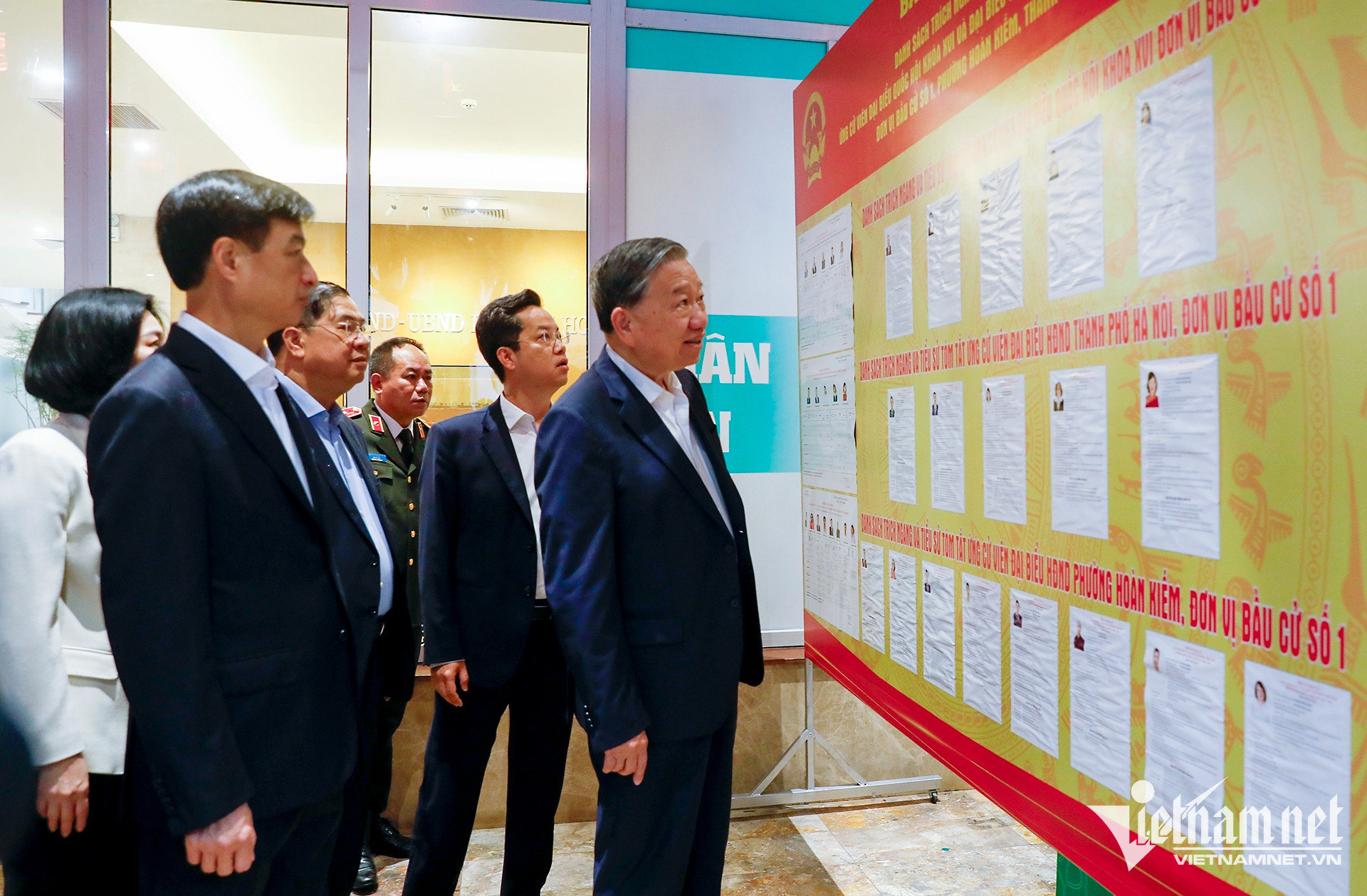
Before the conference, General Secretary To Lam inspected preparations for the election at the headquarters of the People’s Committee of Hoan Kiem ward.
Voters listened to the candidates’ biographies and action programs and exchanged views with them.
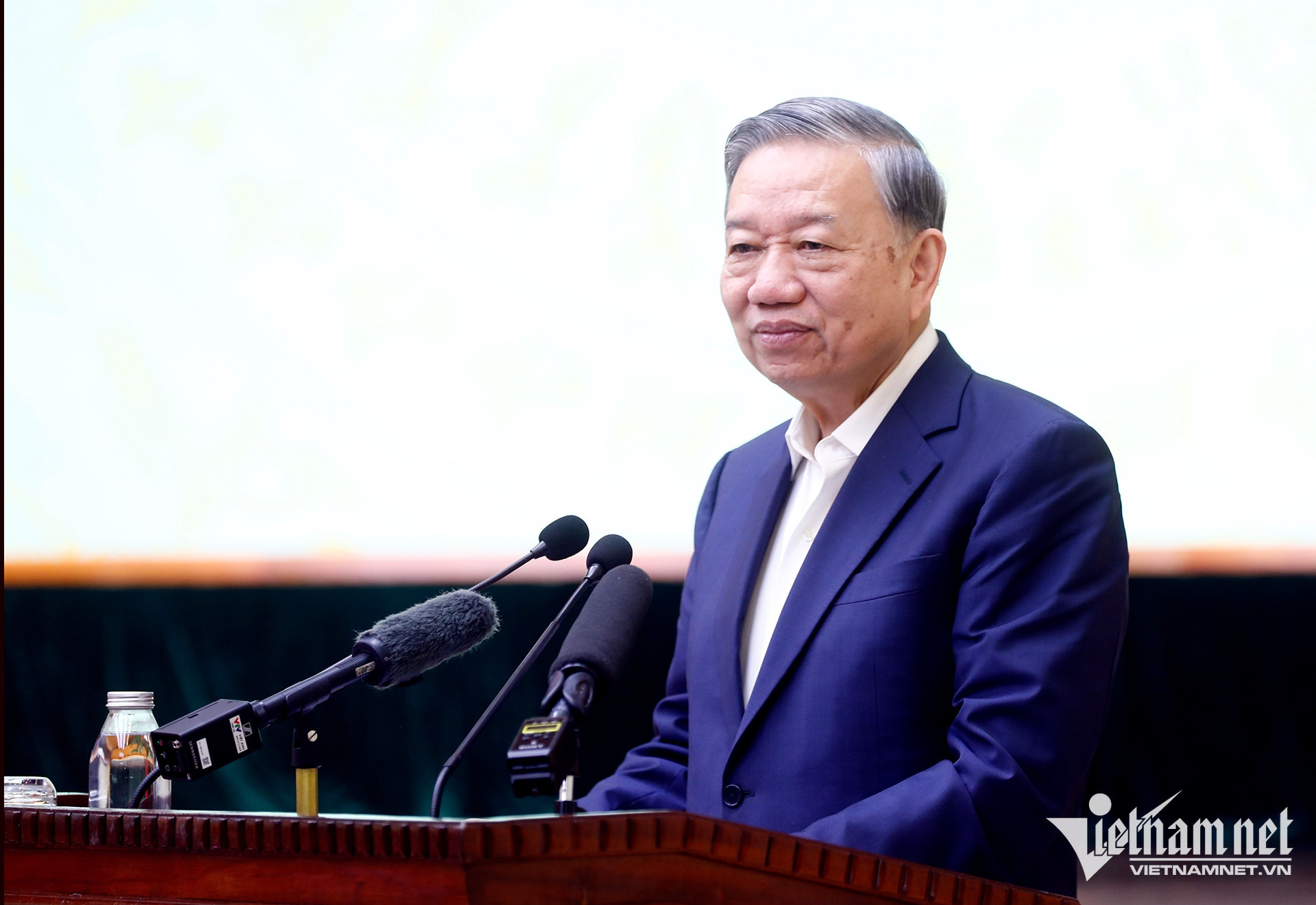
Responding to a voter’s question on the implementation of foreign policy, the General Secretary stressed that comprehensive diplomacy is the shared cause of the entire Party and people. It requires promoting the roles of all three pillars of diplomacy - Party diplomacy, State diplomacy, and people-to-people diplomacy - while mobilizing the participation of the National Assembly’s external relations, ministries, agencies, localities, and citizens.
Vietnam’s external affairs must be conducted in the spirit of multilateralization and diversification of relations, being a friend, a reliable partner, and a responsible member of the international community.
Vietnamese diplomacy continues to evolve, absorbing the quintessence, knowledge, and methods of modern diplomacy while remaining imbued with President Ho Chi Minh’s principle of “unchanging in objectives, flexible in strategies.”
The Resolution of the 14th National Party Congress identifies foreign affairs and international integration as “vital and regular” tasks. This marks an important development in strategic thinking. Accordingly, diplomacy and integration are among the foremost priorities and must be carried out consistently, proactively, sensitively, promptly, and effectively.
The General Secretary described Vietnam’s participation, as a founding member, in the recent Gaza Peace Conference held in Washington D.C. on February 19 as clear evidence of the country’s strategic proactiveness in foreign policy. Both domestic and international opinion have spoken highly of Vietnam’s role at the event, reflecting the growing stature and maturity of the Party’s external relations.
Vietnam supports concrete solutions aimed at ending the conflict, restoring peace and security, rebuilding, and ensuring the livelihoods of people in the Gaza Strip.
He shared that when the US raised the proposal of participating in the Gaza Peace Council, Vietnam was among the first Asian countries to join.
Regarding his meeting with US President Donald Trump, the General Secretary said the exchange provided an opportunity to advance Vietnam - US relations, with a focus on addressing reciprocal tariff issues. During the working visit, he and leaders of ministries and localities held more than 30 meetings and engagements.
Looking ahead, he noted that Vietnam will host the APEC Leaders’ Week in 2027, underscoring the country’s continued commitment to international integration.
Addressing voters’ concerns about fundamental and comprehensive education reform, the General Secretary reaffirmed that education and training are defined as a top national policy and a strategic breakthrough in human development, directly shaping the quality of the workforce and the nation’s future. It is a task of the entire political system and society.
Throughout the revolutionary journey, Vietnam’s education sector has achieved significant accomplishments, contributing to raising public knowledge and training human resources for national construction and defense.
However, he candidly acknowledged that education and training still face limitations and shortcomings and have yet to become a powerful driving force for rapid and sustainable development.
The Politburo, the Government, and relevant agencies have actively implemented a series of new policies, including building boarding primary and lower secondary schools in land border communes; providing lunch support for primary pupils; and developing STEM classrooms so that learning goes hand in hand with practice. These efforts have initially created positive changes in education and training.
Hanoi’s education sector, he said, must ensure that every student has access to school. The ultimate goal is genuine quality - teachers teaching with peace of mind, students learning better, families worrying less - thereby preparing a generation with the competence, ethics, and resilience to build Hanoi and the nation in a new era.
He welcomed Hanoi’s pioneering move to waive tuition fees and provide lunch support for students.
Schools, he emphasized, are not merely places to acquire knowledge but to learn how to become a person. Students should study music, fine arts, and sports, and must complete grade 12 so that when they step into life, they possess sufficient knowledge to pursue vocational training or higher education.
Looking toward 2045, when Vietnam aims to become a developed, high-income country, the generation born this year will be its future masters. Therefore, from now on, the country must invest in their nutrition, intellect, physical well-being, and civic values.
On building and refining environmental protection policies and laws, the General Secretary noted that the 14th Congress documents clearly define environmental protection as a central task, on par with economic development and social welfare.
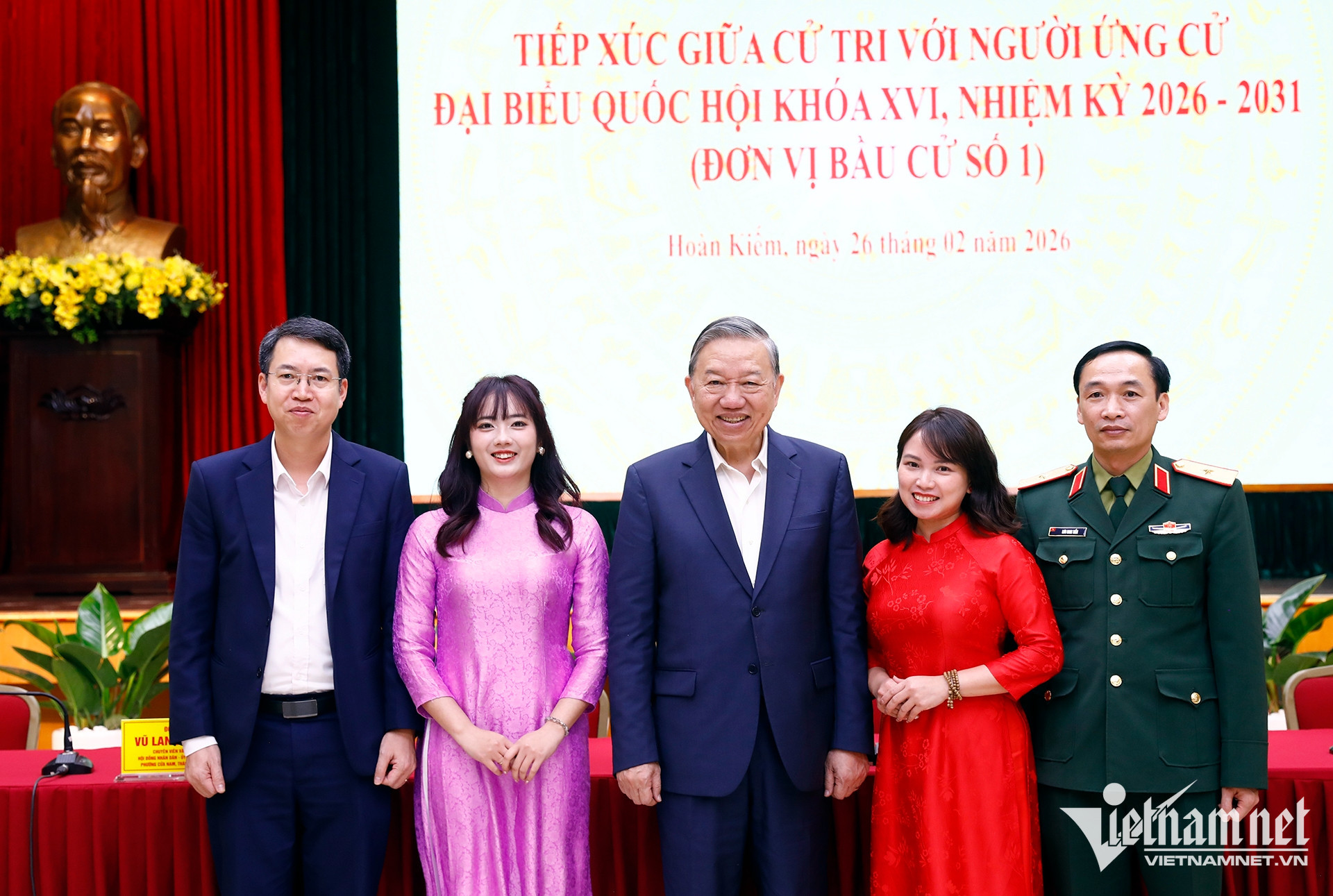
General Secretary To Lam and four other candidates for the 16th National Assembly in Constituency No. 1 of Hanoi.
Photos: Pham Hai
The current approach, he said, is to shift decisively from reactive thinking to a proactive, preventive mindset from early and afar. He outlined three key priorities: continuing to improve environmental policies and laws in a direction that promotes green transition and circular economy while ensuring transparency so that people can supervise; and strengthening discipline and enforcement.
Where serious and prolonged pollution occurs, the responsibility of the head must be clarified and strictly handled, with no exceptions. People must be placed at the center of environmental policy, as protecting the environment is, first and foremost, about protecting public health and livelihoods, especially those of vulnerable groups.
Environmental protection, he stressed, is not solely the responsibility of the State but of every enterprise and citizen. When the environment is safeguarded and quality of life improves, that becomes the foundation for development.
Protecting the environment today is protecting the future of our children. It is not only a policy commitment but a political commitment before the people and voters nationwide.
Tran Thuong
.svg)
