 Vietnamnet.vn

 Podcast



Curious about the traditional holiday
Before meeting Thai Thao, born in 1996 in Da Nang and now his wife, Heiko, born in 1991 in Munich, Germany, had visited Vietnam several times as a tourist, including trips that coincided with Lunar New Year.
Back then, he was neither particularly curious nor enthusiastic about Tet. As a traveler, he often found it inconvenient when many shops were closed.
The couple held their wedding in 2023.
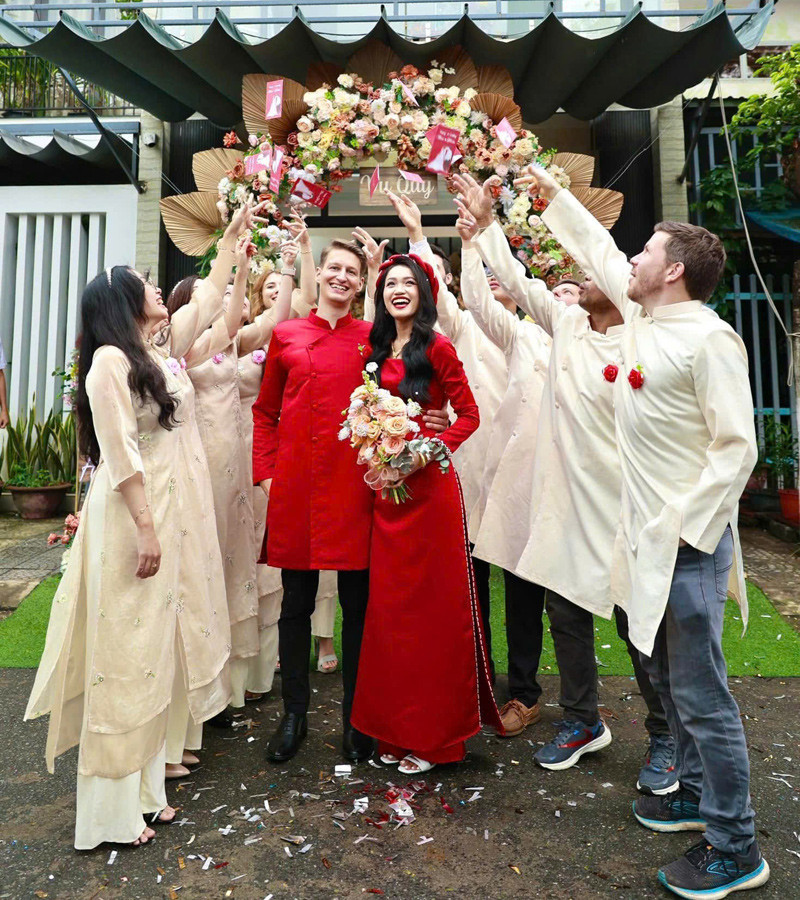
However, once he began dating Thao and celebrated Tet with her family, his perspective changed completely. Listening to her explain customs such as visiting ancestral graves, wrapping banh tet, pickling scallion bulbs, cleaning the house, polishing the ancestral altar, preparing the year-end offering tray and welcoming the New Year at midnight, Heiko grew curious about every ritual.
Lunar New Year 2024 marked his first time experiencing a full traditional Tet as a family member. Previously, he had attended death anniversary ceremonies with his wife’s relatives, so he somewhat understood the cooking and gathering aspects. Yet Tet’s formal rituals still fascinated him.
“Heiko helped my family prepare the year-end offering meal, carried dishes to arrange neatly on the altar and burned votive paper. Whatever he did, he always asked me, ‘Why do we do this?’ or ‘What does this mean?’ I would explain everything carefully,” Thao shared.
Though everything was new, Heiko performed tasks surprisingly skillfully. Perhaps his habit of close observation and genuine enthusiasm helped him adapt quickly.
A German son-in-law fluent in Tet traditions
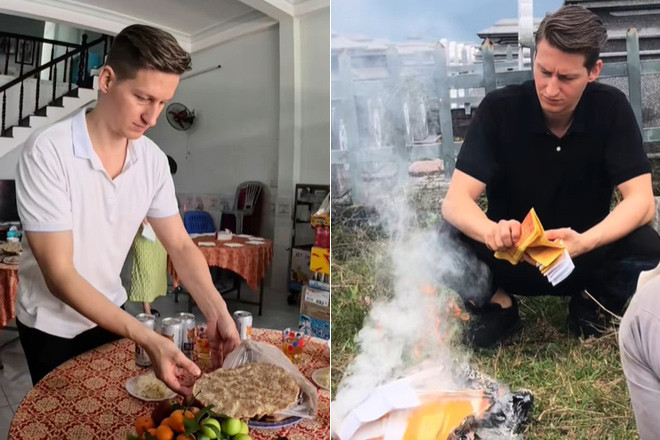
Heiko prepares the year-end offering tray and joins his wife’s family in visiting ancestral graves.
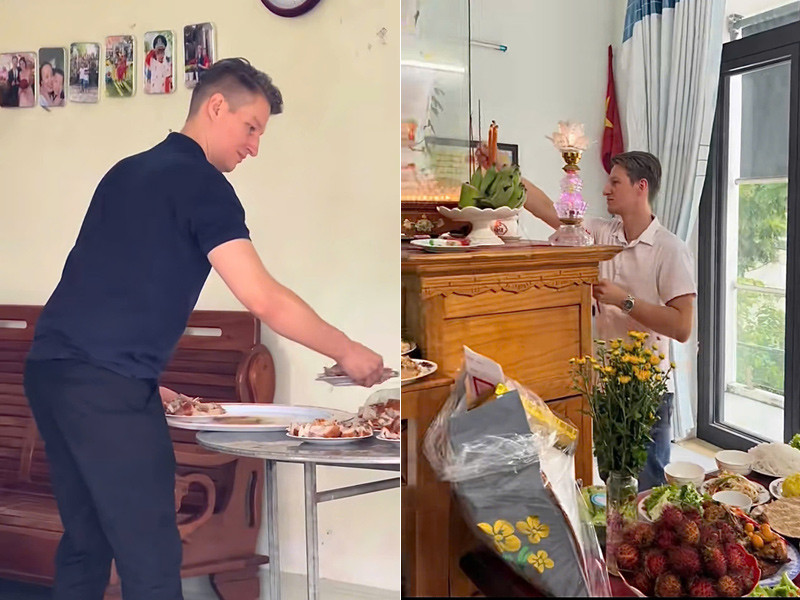
By Lunar New Year 2025, Heiko once again celebrated Tet in Vietnam. This time, he was more familiar with the customs and more confident in the preparations.
On the last day of the lunar year, he and his wife went to the morning market to buy flowers and fruit for the ancestral altar. He then helped his parents-in-law prepare the year-end and New Year’s Eve offerings.
At the stroke of midnight, Heiko stood respectfully beside his father-in-law as incense was lit for the ancestors. Afterwards, he assisted in burning votive paper and joined the family in watching fireworks.
“It seemed he truly felt the sacredness of that moment, when Vietnamese people officially bid farewell to the old year and welcome the new one.
He was also touched by the warmth of reunion and the strong family bonds in Vietnam,” Thao said.
On the first day of Tet, Heiko accompanied his wife’s family to visit relatives and extend New Year greetings. Remembering the phrases Thao had taught him, he confidently wished elders “van su nhu y,” “tien vo nhu nuoc” and “nam moi manh khoe.” His heartfelt greetings, delivered in a charming foreign accent, delighted everyone.
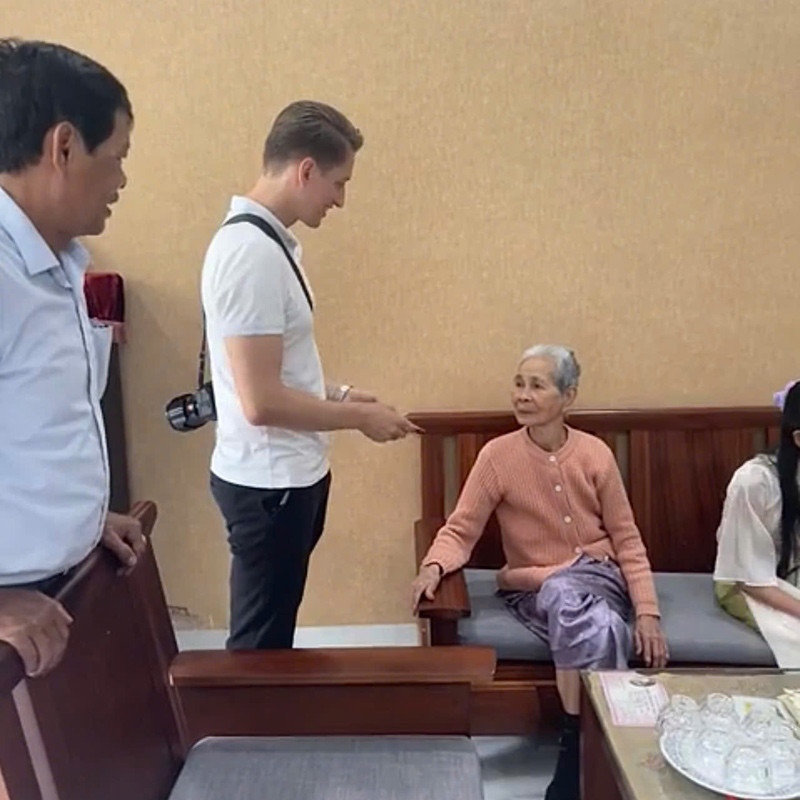
Photos: Provided by the family
Heiko was particularly enthusiastic about giving lucky money. He prepared red envelopes and personally presented them to his grandparents-in-law and parents-in-law. When visiting relatives, he generously gave lucky money to children, understanding that it is a way Vietnamese people share blessings for the year ahead.
“The custom that surprised him most was the year-end offering and cooking banh tet. He couldn’t understand at first why such a lavish meal had to be prepared before Tet. But once I explained that it was a way to bid farewell to the old year with respect, he found it meaningful.
The same with wrapping banh tet. After learning about the origins of banh chung and banh tet, he became very excited. He carefully wiped each banana leaf and learned how to wrap the cakes neatly. He especially loved the moment when the whole family gathered around the wood stove, watching the pot of banh tet simmer overnight,” Thao recalled.
Videos capturing the German son-in-law celebrating Tet with his wife’s family were shared on TikTok and drew millions of views. Images of Heiko carrying offering trays, giving lucky money and burning votive paper with ease charmed many viewers. Thao herself was surprised by how widely those tender moments resonated.
In 2025, Thao moved to Germany to settle with her husband. The Vietnamese-German couple therefore missed Lunar New Year 2026 in Vietnam.
Where Thao now lives, there are not many Vietnamese people, so there are few traditional Tet activities. Making and cooking banh tet in Germany is also difficult due to limited access to ingredients. Not only Thao but Heiko as well felt a sense of regret at missing Tet in Vietnam.
“To make up for it, my parents will send some traditional dishes so we can feel a little bit of Tet.
This year, Heiko plans to take me to a larger city where there may be Tet events for Vietnamese people, or to a Vietnamese restaurant for a festive meal. In previous years, he celebrated the New Year in Vietnam with me. This year, it’s my turn to celebrate the New Year in his homeland,” Thao shared.
Thanh Minh
.svg)
