 Vietnamnet.vn

 Podcast



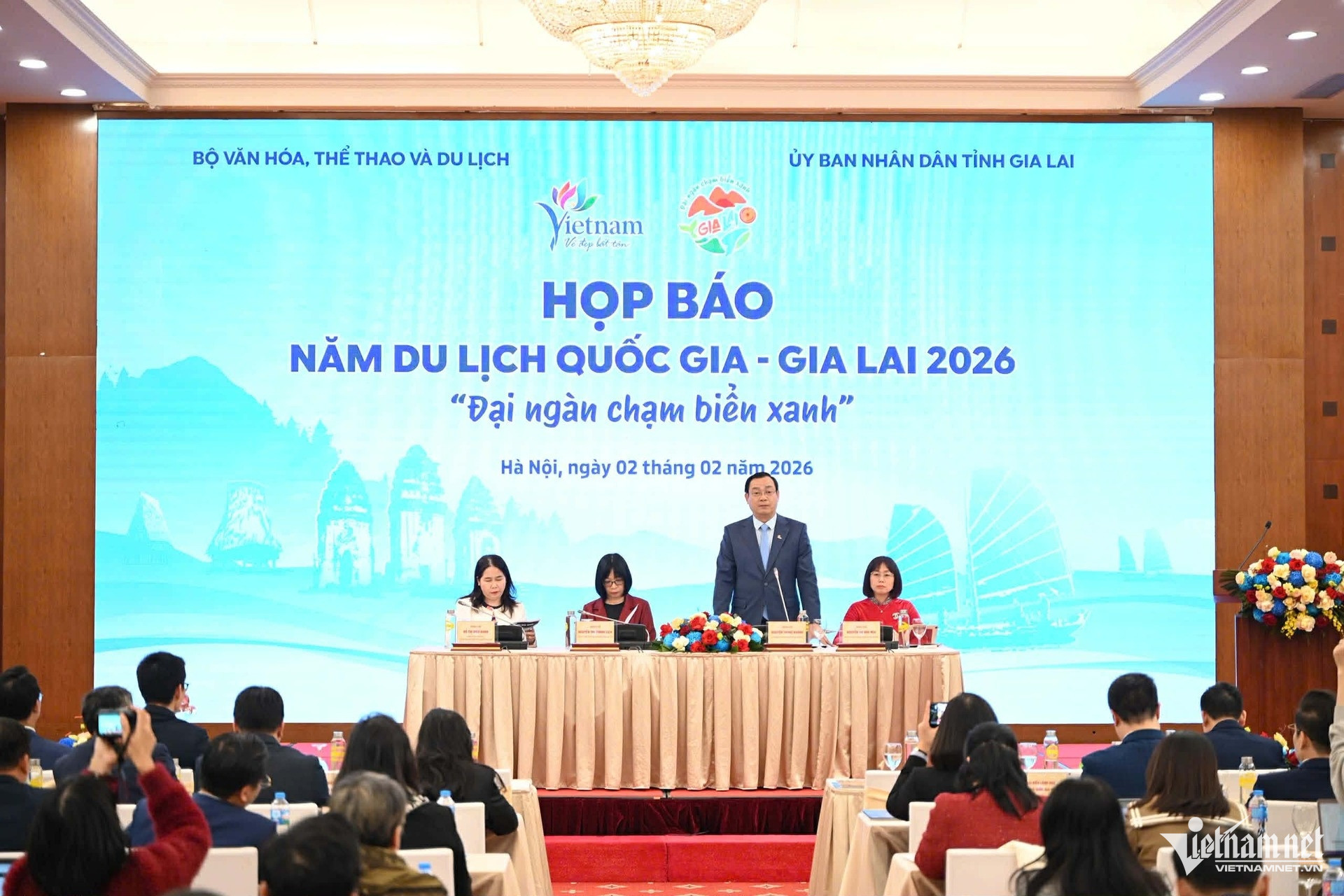
On February 2 in Hanoi, the Ministry of Culture, Sports and Tourism and the People’s Committee of Gia Lai Province held a press conference to introduce the event’s key activities and objectives.
Nguyen Trung Khanh, Director General of the Vietnam National Authority of Tourism, emphasized the significance of the National Tourism Year as a premier national event. It serves as a cultural and tourism highlight, promoting unique destinations and tourism products, honoring Vietnam’s tangible and intangible cultural heritage, and encouraging inter-regional cooperation for tourism development. The event also plays a crucial role in boosting the economy and enhancing Vietnam’s global image.
For 2026, the Ministry selected Gia Lai as host for its strategic geography, cultural depth, abundant natural resources, and strong political will. Gia Lai is the second-largest province in Vietnam by area, home to around 3.5 million people, and acts as a gateway between the Central Highlands and South-Central Coast.
The province enjoys favorable conditions for regional and international connectivity, with a multi-modal transportation network including road, air, sea routes, and international border gates. Gia Lai boasts a diverse tourism profile - from untouched forests, volcanoes, and lakes to coastal access and indigenous cultures.
The region is also home to nationally and globally recognized cultural treasures such as:
Bai Choi singing of Central Vietnam – a UNESCO Intangible Cultural Heritage of Humanity
The gong culture space of the Central Highlands – a UNESCO-recognized cultural heritage
Traditional martial arts of Binh Dinh and Hat Boi opera – designated national intangible heritage
The Roc Tung – Go Da archaeological site – a national special relic
Recently, Quy Nhon city - closely linked to Gia Lai - was named among the Top 25 global destinations for 2026 by Lonely Planet and awarded the ASEAN Clean Tourist City 2026 title.
The theme “Gia Lai – Great forests meet blue seas” reflects not only the province’s expanded geographical identity after regional integration but also a strategic vision of harmony between highland and maritime cultures. It symbolizes the balance between preservation and progress, between the mighty wilderness and vibrant cultural legacies - especially those of gong traditions and epic storytelling.
The National Tourism Year 2026 will include key events such as:
Gia Lai New Year Festival – Spring of the Year of the Horse
Summer Tourism Festival – Enchanting Destination
Gong Echoes, Highland Spirit
Wild Sunflower and Chu Dang Ya Volcano Week
Beyond the sheer number of events, the year’s program will reinforce Gia Lai’s tourism brand by emphasizing depth, authenticity, sustainability, and seamless regional connectivity rooted in cultural and emotional experiences.
Gia Lai has set ambitious goals for the year: attracting approximately 15 million visitors and generating around USD 1.4 billion in tourism revenue.
The opening ceremony, themed “Great forests meet blue seas,” is expected to take place in Quy Nhon ward, Gia Lai Province, in March 2026.
Linh Trang
.svg)
