 Vietnamnet.vn

 Podcast



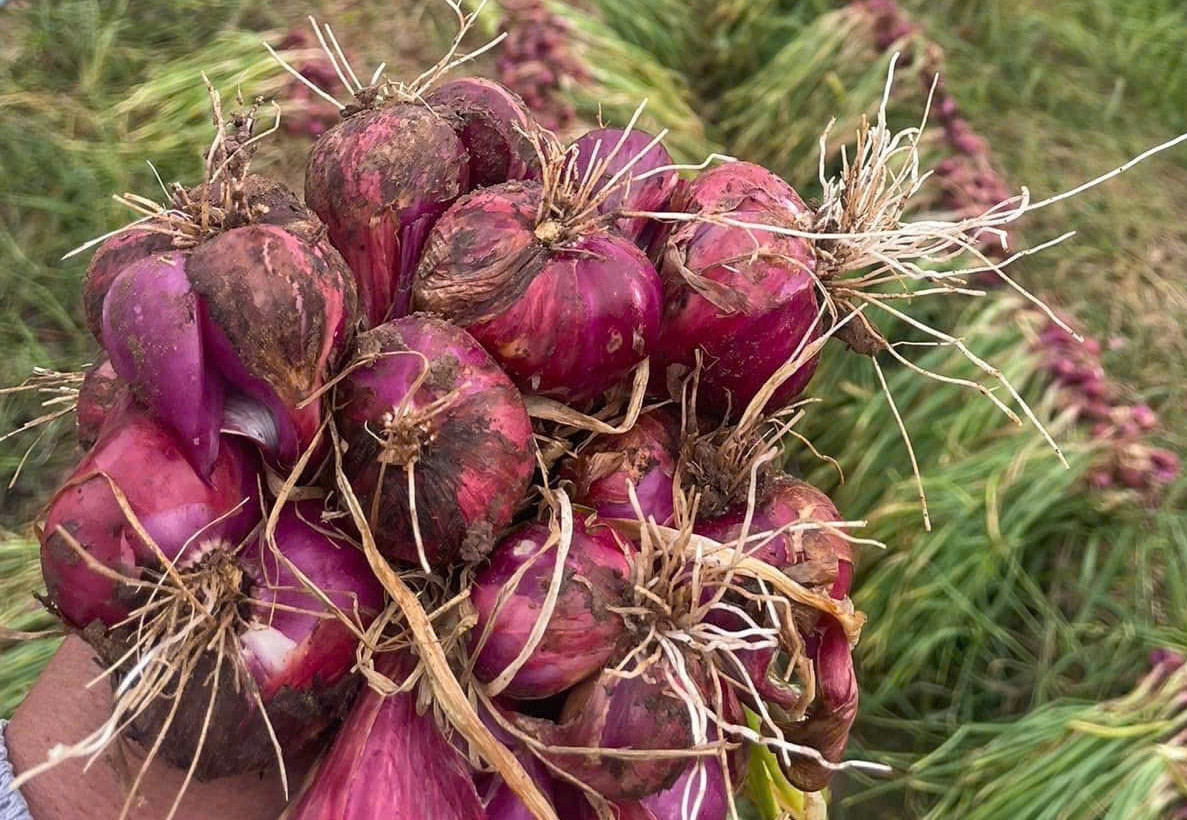
Born and raised in Vinh Chau - an area closely associated with purple onions and white radishes - An left home to pursue a degree in finance and business. He eventually became the CEO of a foreign company specializing in handicrafts in Ho Chi Minh City, a position he held for nearly two decades.
His job was stable, with a monthly income of $1,500. Yet each time he visited home, he saw local farmers toiling under the sun, only to fall into the familiar cycle of “bumper harvest, plummeting prices.” The struggle of “selling their faces to the earth and backs to the sky” weighed heavily on his heart.

“Farmers work hard to grow onions and radishes, but when it’s harvest time, prices drop so low they can’t make a profit. I once saw piles of white radish left rotting in the fields. I kept asking myself: Why can’t we do something to increase the value of our local produce?” he recalled.
That question became a turning point.
He made the bold decision to leave his comfortable urban life behind and return to his hometown to start over - hoping not only to preserve a family tradition but also to create a new path for local agriculture.
An admits the decision wasn’t easy. The difference between city and rural life was stark, from daily routines and income to the psychological shift required.
“I was used to life in the city. Moving back was a shock - financial pressure, lifestyle changes, and even opposition from my own family made me second-guess myself,” he shared.
At first, his family was against the idea, fearing an uncertain future. But An’s passion for local produce and his desire to uplift his community gave him the resolve to press on.
“I saw how much people were struggling, and I believed there were opportunities for our produce. I told myself, if I don’t do it now, when will I ever do it?”
Convincing his wife to leave the city was another challenge. A native of Ho Chi Minh City, she was used to urban comforts and had little interest in rural life. An had to plead with her, explaining every detail of his vision and plans. Over time, seeing his commitment and the early results, she agreed to support him - and eventually became his partner in developing their agricultural brand.
Initially, An continued working with his family’s roasted duck business, expanding it with creative dishes like crispy-skinned duck, yin-yang duck, and “midnight duck.”
But his true passion was creating a sustainable market for purple onions and white radishes.
“Fresh produce prices fluctuate wildly. Only by processing them can we truly increase their value,” he said.
With that in mind, he built a small processing facility, starting with pickled radish (xa bau) and dried purple onions, then gradually added other products.
An admits he began with almost no experience in agriculture. Everything he learned came from passion, trial, and error.
In 2022, he founded an agricultural company and invested over 1 billion VND (around $41,200) in a drying system capable of processing one ton of produce per day. This transformed raw ingredients into branded, value-added goods.
The result: a range of products including salty, sweet, and sweet-sour pickled radish, as well as dried purple onions. Many of these have earned OCOP 3-star and 4-star certifications.
“OCOP is more than just a certificate. It’s a seal of trust that tells consumers Vinh Chau’s produce can compete in bigger markets,” An said.

To scale up, he focused on ingredients, production processes, and packaging. His sweet pickled radish is salted, dried, and coated in syrup using a low-heat drying method that preserves its natural crispness and gentle sweetness. Thanks to this, the company now sells tons of products each month, with shelves in major supermarket chains.
Selling in supermarkets, however, proved to be a major leap from traditional markets. It meant lower profit margins, higher certification costs, and strict quality standards. But An accepted the trade-off.
“It’s fine to earn less if it gets our products into supermarkets. That’s when the brand truly gains value,” he said, adding that he wasn’t chasing quick profits.
His larger vision is to create a model that local residents can replicate - eventually forming a specialized farming area. “We can’t just wait for big companies to invest in rural areas. Only local people with real passion can make this happen,” he reflected.
Beyond production, An has also helped farmers form the Phong Phu Clean Agricultural Cooperative, which now includes 13 full members and 25 affiliates. Together, they cultivate purple onions, chili, and white radishes in concentrated farming zones, providing a standardized supply for processing.
At the same time, An is building an experiential farm where visitors can learn about planting and processing, while also exploring the local culture of Vinh Chau.
His ultimate goal is to export. His company is now working on meeting standards for North America, the Middle East, and China, while also exploring e-commerce channels such as Alibaba and Amazon.
From a young man who once left home to find opportunity, An has now returned to lead a quiet revolution in local agriculture. His work not only secures livelihoods for fellow villagers but also helps establish Vinh Chau’s signature produce as part of the national OCOP brand.
Hoai Thanh
.svg)
