 Vietnamnet.vn

 Podcast



The year 2025 marked a pivotal moment in the global economy: while inflation eased in some regions, the divergence in monetary policies deepened, and prices of precious metals - including gold and silver - soared to historic highs in response to a cascade of unprecedented risks.
Key highlights from the global economy in 2025
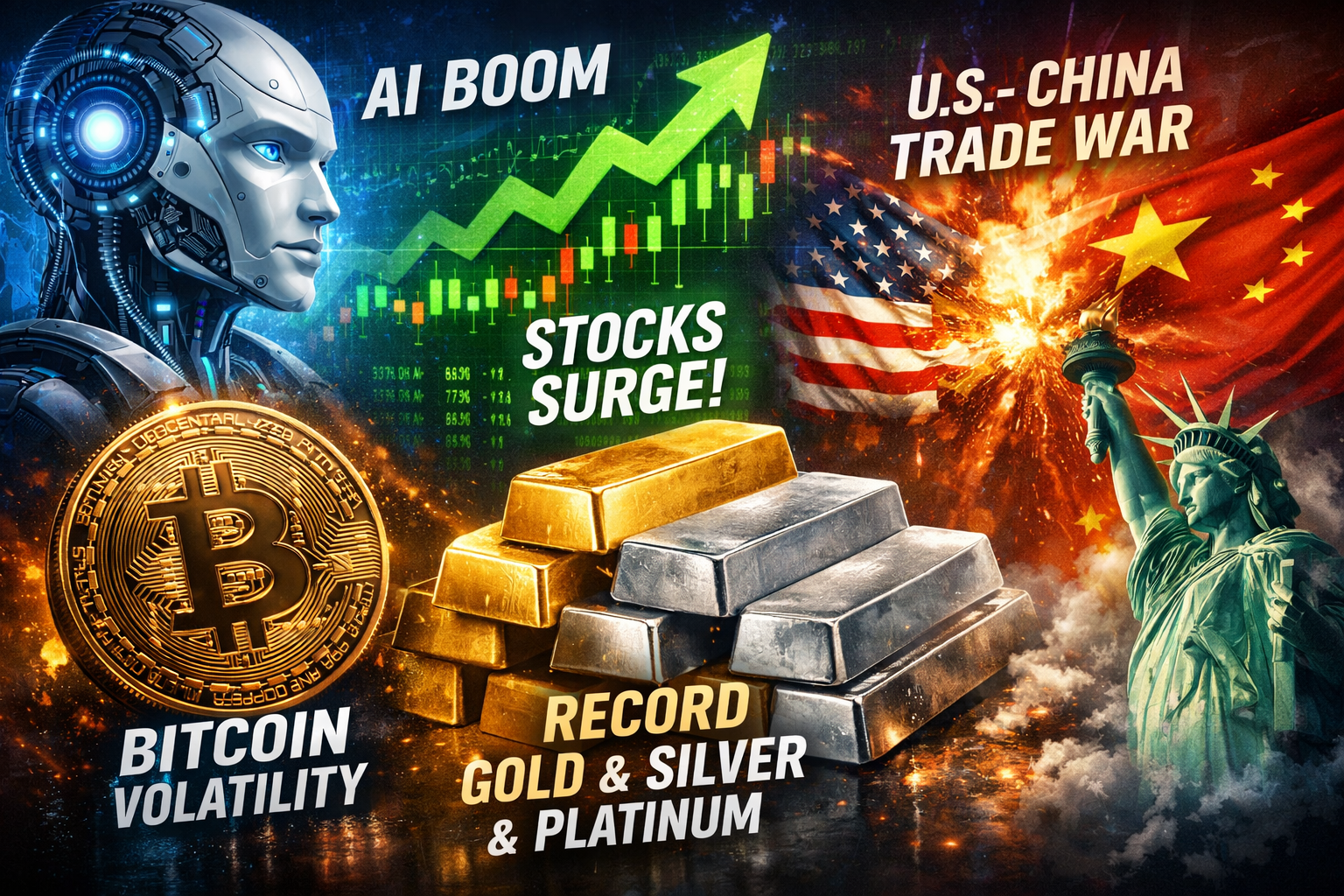
Gold and other precious metals surged dramatically, reflecting intensifying geopolitical instability, soaring public debt, and skyrocketing industrial demand driven by the AI boom.
Gold prices ended the year around USD 4,450–4,550 per ounce, up roughly 70% from the beginning of the year - its steepest annual rise since the 1970s.
Silver skyrocketed by an estimated 160–170%, reaching USD 75–79 per ounce, fueled by surging demand from solar battery manufacturing, electric vehicles, and AI data infrastructure.
Platinum also saw a significant spike, temporarily surpassing USD 2,400 per ounce - 2.6 times higher than the start of the year - due to tight supply from South Africa and rising demand in the automotive industry.
Although global GDP growth slowed in 2025, a widespread recession was narrowly avoided. The International Monetary Fund (IMF) projected a global growth rate of approximately 3% - a slowdown from 2024, but more stable than earlier fears. Forecasts for 2026 place growth at 3.1%.
Global inflation cooled to 4.2%, though its decline was uneven across regions.
Monetary policies diverged sharply. The U.S. Federal Reserve cut interest rates three times in 2025, bringing the federal funds rate down to 3.5–3.75%, with the final 25-basis-point cut in December following a long tightening cycle. The European Central Bank (ECB) lowered its rate to 2%, while Japan began tightening its own policy.
Public debt becomes the biggest systemic threat
Global debt hovered near 235% of GDP - higher than pre-pandemic levels. U.S. national debt exceeded USD 38 trillion, with a large tranche of bonds maturing in 2026, posing massive refinancing pressure.
Global trade was reshaped by escalating U.S.-China tensions. U.S. President Donald Trump implemented sweeping tariffs, pushing rates to their highest levels in decades. While this temporarily narrowed the U.S. trade deficit and generated hundreds of billions in revenue, it also increased costs for American consumers and businesses.
Meanwhile, investors witnessed the AI boom shift from stock markets to physical infrastructure. Investment in data centers surged, driving up demand for industrial metals. Digital infrastructure deals exploded, particularly in the United States.
Despite geopolitical tensions, U.S. stocks surged on expectations of falling interest rates and AI-driven growth. The S&P 500 climbed nearly 18%, closing above 6,900 points, while the Dow Jones soared to a record high above 48,700.
Oil prices swung sharply due to geopolitical factors. China maintained export-driven growth, though its real estate sector remained a major drag.
Cryptocurrencies saw a wave of institutional capital inflows. Bitcoin peaked at USD 125,000 before retreating to the USD 80,000–90,000 range due to leveraged liquidations and valuation concerns.
Key drivers and the outlook for 2026
In 2025, protectionism and divergence dominated, with U.S.-China trade tensions escalating into what many dubbed “Trade War 2.0.” Tariffs peaked at 145% on Chinese goods before a partial reduction. This disrupted supply chains and raised costs but also boosted U.S. revenues.
China retaliated by tightening control over rare earth exports and diversifying its trade partners, causing supply shocks that threatened Western manufacturing.
The ongoing tech and supply chain conflict fueled global instability. Companies relocated production to countries like Mexico, India, and Indonesia - creating opportunities but increasing costs.
Soaring U.S. public debt pushed bond yields higher, diverting capital into real assets like gold and silver. These metals emerged as safe havens amid mounting systemic risks, with central banks stepping up their purchases.
Looking ahead, global growth in 2026 is forecast to remain around 3.1%, though recession risks remain high due to prolonged tariffs and surging debt.
The EU faces dual pressures from U.S. tariffs and energy dependency. The U.S. economy benefits from fiscal stimulus, low rates, and public spending, but inflation could re-emerge.
Gold is expected to continue its ascent, buoyed by rising debt worldwide and a broad trend toward de-dollarization. Some institutions predict gold could break USD 5,000 per ounce in 2026.
Silver will likely benefit from continued demand in AI and clean energy industries.
U.S. equities (S&P 500) may climb further if interest rates fall, though market volatility is expected to increase due to geopolitical risks.
U.S.-China trade relations may remain tense but shift toward a managed conflict. Countries are expected to pursue greater technological and supply chain autonomy, especially in critical tech sectors.
All in all, 2025 marked a structural shift in the global economy, with capital flowing strongly into tangible assets.
The outlook for 2026 presents serious challenges but also new opportunities for early movers in an era of cheap money and geopolitical turbulence.
Manh Ha
.svg)
