 Vietnamnet.vn

 Podcast



After more than six months since its debut in Hanoi, the show - built on instruments made from ceramics, bamboo and other distinctly Vietnamese materials - has left a strong impression on both domestic and international audiences for its originality and creative depth. VietNamNet spoke with Han Thu Thao, a representative of the production.
Turning everyday objects into unique instruments
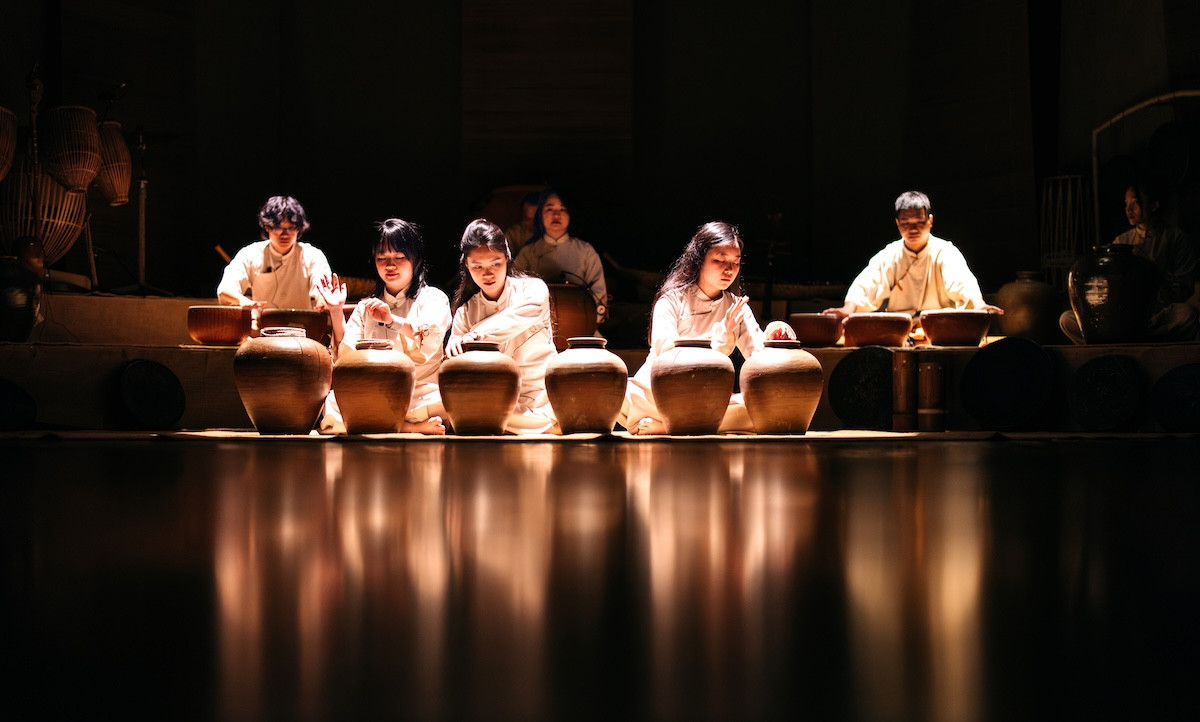
The show began with a simple yet profound question: how can materials deeply rooted in Vietnamese daily life be expressed in new ways in contemporary art?
GOm Show is structured as an immersive artistic experience, placing ceramics and indigenous culture at its core while redefining how Vietnamese culture is approached on stage.
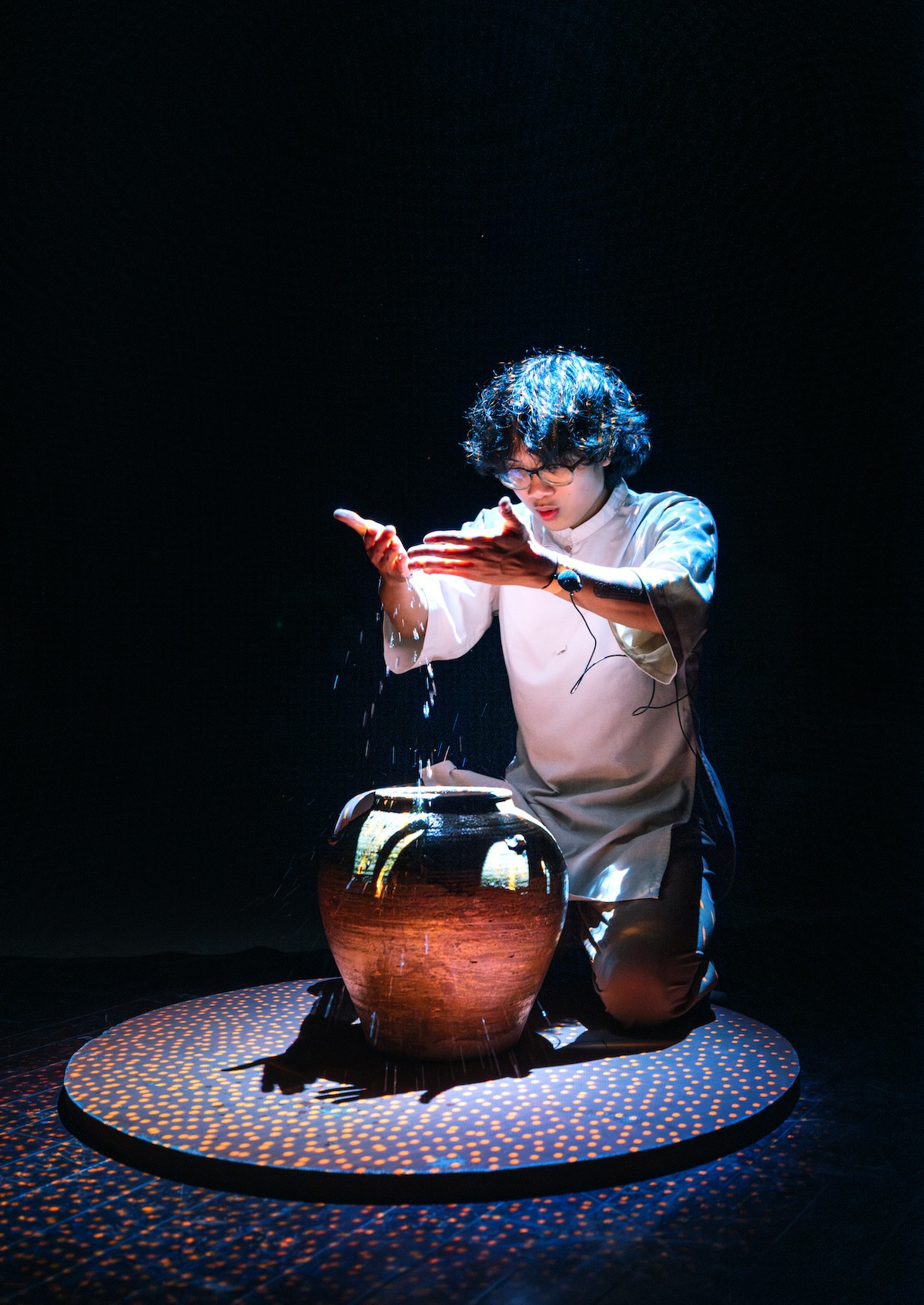
Familiar objects such as jars and pots, instead of serving their everyday functions, are transformed into instruments. Sound is no longer derived from standardized Western instruments but is drawn directly from materials - from the resonance of fired clay, the echo of water and the vibration of space itself - recreating natural, deeply evocative soundscapes.
The production officially premiered in June 2025 at the Hanoi Opera House, marking the first time a musical performance built on ceramic materials and indigenous culture was staged professionally for a broad audience.
Following its debut, the show quickly entered active circulation with notable milestones, including performances at the Ho Chi Minh City Opera House and participation in national-level events such as the 80th anniversary of the Vietnam People’s Public Security tradition at Ho Guom Theatre, the program “Vietnam Culture - Convergence and Spread” organized by the Ministry of Culture, Sports and Tourism, and appearances within the Hanoi Creative Spaces Network and the Hanoi Creative Design Festival.
Alongside touring and special events, GOm Show also ran regular performances at Khan Quang Do Theatre within the Hanoi Children’s Palace from August 2025 to March 2026.
Regular performances in Hanoi were maintained at two shows per week, in addition to private bookings. However, this schedule is currently paused due to a combination of objective and subjective factors. According to the organizers, this pause is not a halt but a necessary step to restructure and prepare for the next phase of development.
Ten artists, more than 30 handcrafted instruments
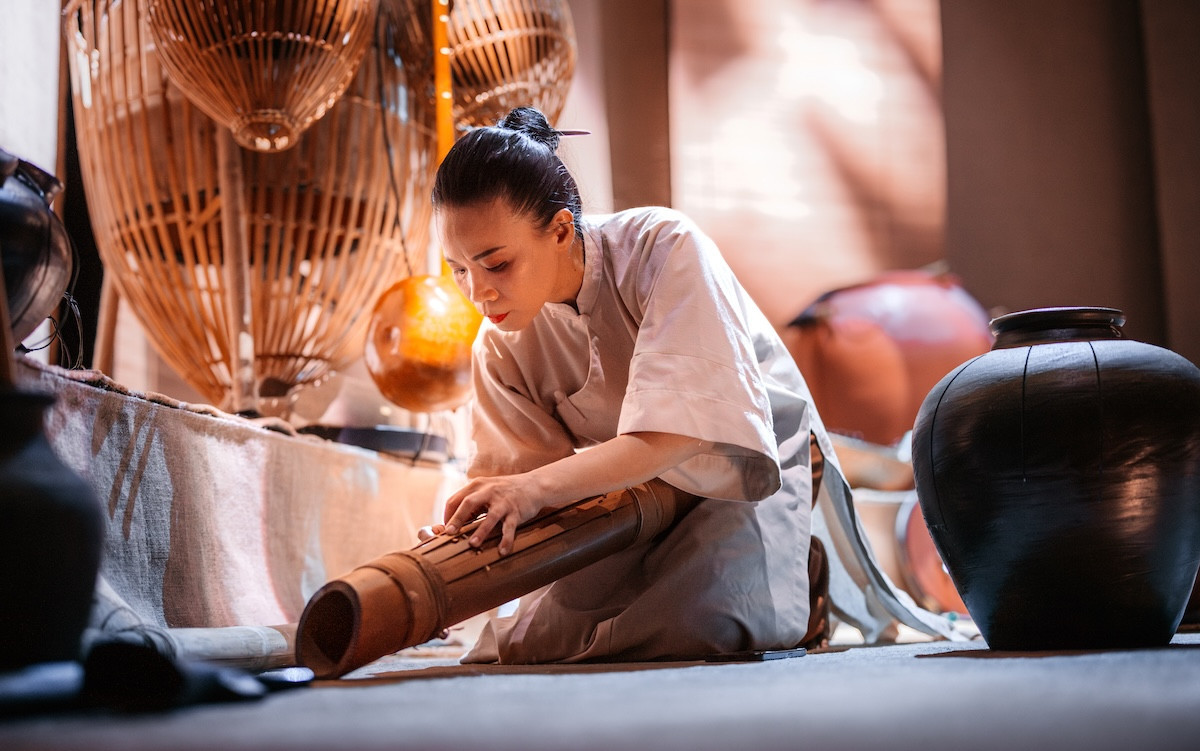
The show is performed by a core team of 10 artists who have been involved throughout the research, experimentation and development of both the instruments and the performance language.
The instrument system itself is the result of over 15 years of dedicated research and experimentation by the creative collective Dan Do. More than 30 instruments have been handcrafted from bamboo and clay, most of them entirely unique.
These instruments are not part of any traditional system but were developed through long-term experimentation to extract sound directly from materials.
The first instrument created by the group was the Dan Do, which later gave the collective its name. Initially unnamed, the instrument eventually took its name from its resemblance to a traditional fish trap, a familiar rural tool.
On stage, however, the focus shifts from bamboo to ceramics. Instruments such as the “drum jars,” “pot lutes,” and Ang Xoa - a particularly distinctive instrument in terms of experience - take center stage.
Towards a cultural signature for Hanoi
In many cities around the world, signature performances have become cultural identifiers. Hanoi has its Thang Long Water Puppet Theatre, Hoi An has “Hoi An Memories,” Phu Quoc offers nightly fireworks shows, while internationally, Seoul is known for the “Nanta Show.”
GOm Show is also being developed with the ambition of becoming a cultural product representing Hanoi’s night-time tourism, though with a different approach.
Rather than pursuing high-frequency, large-scale performances, the production prioritizes depth of experience, artistic quality and consistency in its expressive language. This approach reflects the show’s nature, with its unique instruments, experimental structure and demanding staging requirements.
Still, the goal of establishing a fixed performance venue remains part of its long-term strategy. The vision is to create a stable performance space in Hanoi that goes beyond a conventional stage - an integrated cultural environment where audiences engage with the art even before the show begins.
Visitors would enter through an exhibition space, exploring the story behind the sounds, listening to the resonant tones of the Dan Do, sensing the subtle scent of natural wood and interacting directly with the instruments.
At the same time, the show maintains flexibility through touring and collaborations in various venues. Each new space offers a different way of experiencing the same materials.
In the long term, the ambition is not only to become a must-see show in Hanoi but to evolve into a cultural experience capable of representing Vietnam on the regional contemporary arts map.
Huyen My
.svg)
