 Vietnamnet.vn

 Podcast


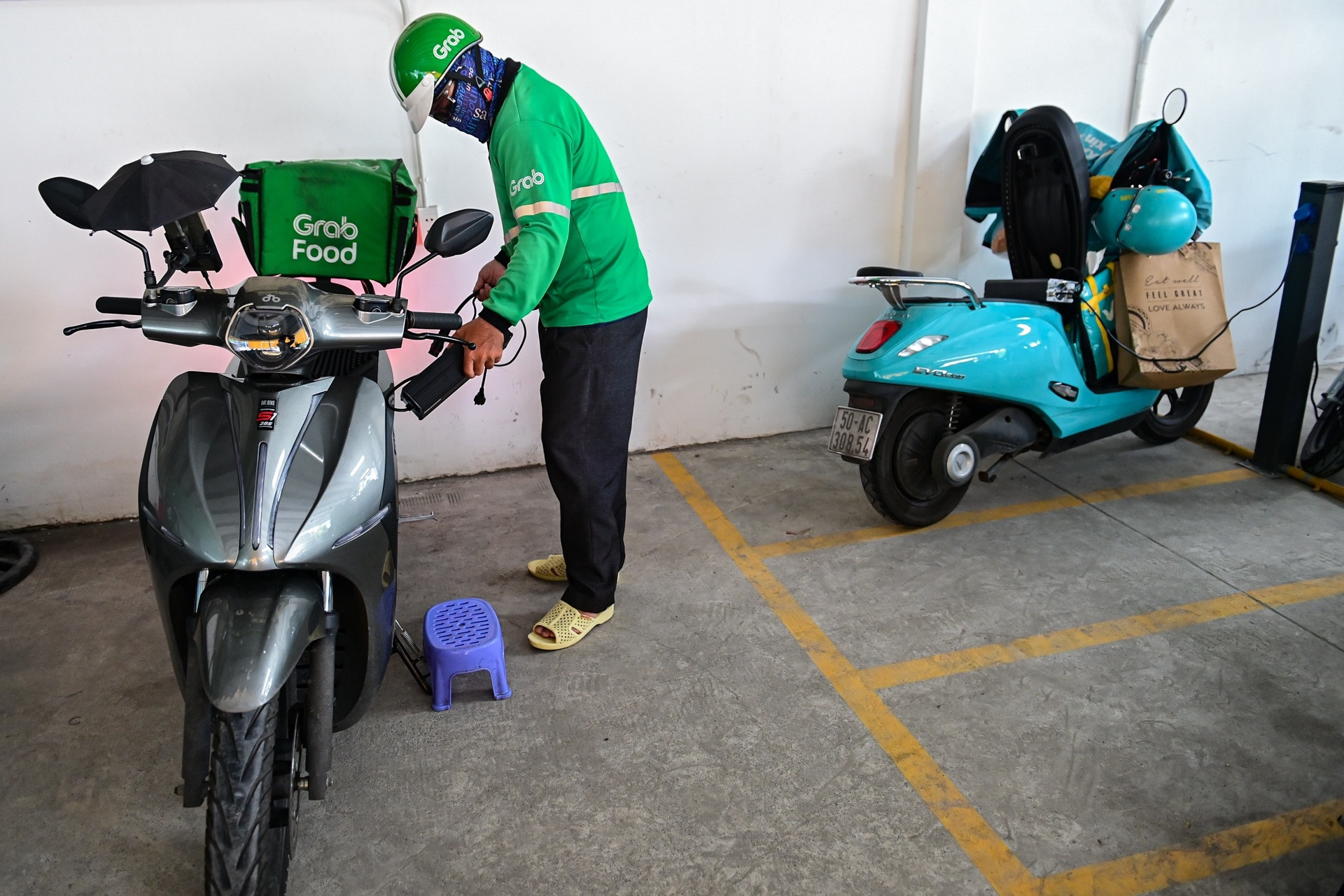
Vietnam's National Competition Commission (NCC) announced on November 5 that it had reviewed Grab's fare and fee policies following complaints from drivers between late August and mid-September 2026.
Drivers reported that fares for certain trips were low or declining, while rising operating costs and deductions were affecting their actual earnings.
Some also requested greater transparency regarding how fares were calculated and adjusted, as well as how changes to pricing policies were communicated.
In response, the NCC held discussions with Grab, driver representatives and several other ride-hailing companies. It also collected information on Grab's pricing and fee structures in other Southeast Asian countries for comparison.
Preliminary findings showed that Grab's pricing system comprises several components, including platform fees charged to passengers and variable app usage fees collected from drivers.
Following the review, Grab voluntarily proposed six groups of measures to adjust its pricing and fee policies and improve transparency.
The first five groups of measures have an estimated combined value of VND2.9509 trillion (approximately $112 million).
Grab cuts maximum driver-related fees to 32%
Starting November 10, 2026, Grab will reduce platform fees for certain short-distance GrabBike and GrabCar trips.
More significantly, the variable app usage fee charged to drivers will be reduced from a range of 0–28.76% to 0–25% of the total amount paid by passengers, including fares, surcharges, platform fees and taxes.
At the same time, the combined platform and app usage fees retained by Grab, excluding taxes and amounts collected on behalf of third parties, will be capped at 32% of the total passenger payment.
According to the NCC, before the adjustment, Grab's maximum share of revenue per trip could reach 40.60% for GrabBike and 39.81% for GrabCar.
Under the revised structure, the proportion will range from 7% to 32%.
After fees and taxes, GrabBike drivers are expected to receive between 60.59% and 85.59% of the total amount paid by passengers.
For GrabCar drivers, the corresponding range will be 59.68–84.31%.
Compared with the previous minimum take-home share of 52%, the minimum proportion retained by GrabBike drivers will increase by 8.59 percentage points, while that of GrabCar drivers will rise by 7.68 percentage points.
Grab also plans to introduce a 10% discount on total fares for trips of at least 10 kilometers, subject to program conditions, from February 26 through December 31, 2027.
Grab to reimburse VND3.9 billion for excessive deductions
One notable finding of the review was that approximately 0.13% of trips completed since 2024 had deductions exceeding 35% of the revenue shared with drivers.
According to Grab's explanation, these cases resulted from supply-demand fluctuations at certain times or algorithmic errors that caused fees to exceed the system's configured limits.
To address the issue, Grab plans to reimburse affected drivers approximately VND3.9 billion, with payments beginning November 5, 2026.
For active drivers, the reimbursement will be automatically credited to their digital wallets.
Drivers who have permanently stopped working with the platform will receive notifications by SMS and email requesting their personal bank account details before November 30 to receive the payments.
In addition to reimbursements, Grab plans to allocate approximately VND860 billion to driver rewards and support programs in the fourth quarter of 2026.
These include peak-hour earnings bonuses, meal allowances, uniforms and assistance for drivers facing financial hardship.
The company will also provide VND52 billion to help cover fuel costs for gasoline-powered vehicles and charging expenses for electric vehicles.
For passengers, Grab expects to spend approximately VND1.808 trillion on promotional campaigns and demand-stimulation programs during the fourth quarter.
Starting November 10, the Grab Driver app will also be upgraded to display detailed information on earnings, fees, taxes and deductions for each trip, making it easier for drivers to verify their payments.
Grab acknowledges concerns over variable fee structure
Speaking to VietNamNet, a Grab representative said the company introduced its variable app usage fee mechanism in 2024.
The fees are calculated based on factors including time, passenger pickup distance, weather conditions, supply and demand, and traffic conditions.
According to the company, the mechanism is designed to balance supply and demand, maintain service quality and support earning opportunities for drivers.
Grab's figures show that the number of driver partners on its platform increased by 76% between 2024 and 2026.
During the first eight months of 2026, drivers' total earnings, including bonuses, accounted for 71.6% of the total amount paid by passengers.
However, Grab acknowledged that its variable fee structure had not fully met drivers' expectations.
As a result, take-home earnings on certain trips, particularly short-distance journeys, were lower than drivers had anticipated.
To address these concerns, Grab plans to implement six groups of measures covering adjustments to platform fee calculations, reductions and caps on its revenue share, reimbursements for excessive deductions, increased driver bonuses and operating-cost support, passenger promotions, and improvements to app transparency.
Competition regulator to continue monitoring ride-hailing platforms
The NCC said it would continue requiring Grab to submit periodic reports on the implementation of its proposed measures.
If signs of violations of competition or consumer protection laws are detected, the regulator will consider appropriate action in accordance with legal provisions.
Beyond Grab, the commission has also inspected consumer protection compliance at several other ride-hailing applications.
The inspections identified shortcomings in how fares, fees and additional payments were displayed.
Some charges were not clearly or separately presented, while certain paid services were selected by default.
The regulator instructed the companies to address these issues and ensure that customers can actively choose optional services, such as trip insurance or carbon-offset contributions, before confirming transactions.
According to the NCC, the platforms have made initial adjustments to improve transparency.
However, regulatory monitoring will continue to protect consumer rights and maintain fair competition in Vietnam's ride-hailing market.
Tam An - Thu Ha

