 Vietnamnet.vn

 Podcast



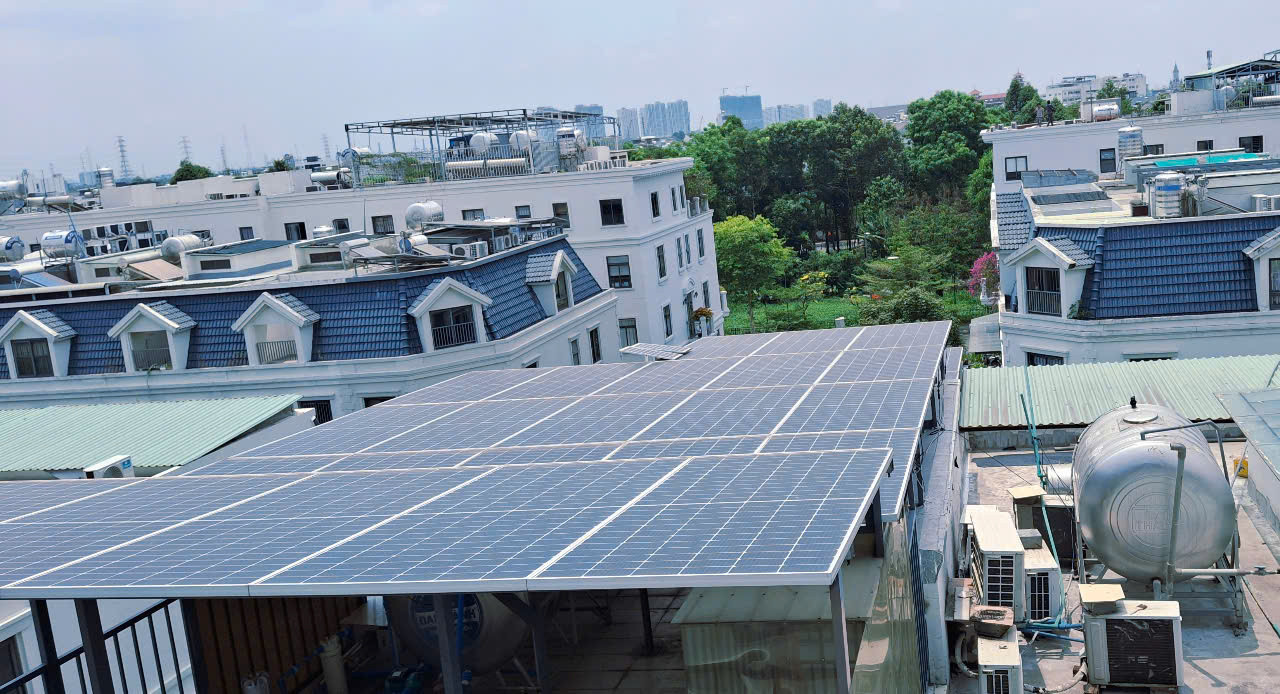
Renewable energy as an inevitable trend
According to experts, when GDP increases by 1 percent, energy demand may rise about 1.5 times faster than economic growth, equivalent to 12–14 percent per year if GDP grows at around 7 percent.
Although fossil energy remains low-cost, it carries significant risks to supply security and stability, especially amid ongoing global geopolitical conflicts. Therefore, developing renewable energy is not just a trend but an inevitable pathway to reduce shocks and disruptions in energy supply chains.
Speaking at a recent seminar, Nguyen Dinh Tho, deputy director of the Institute of Strategy and Policy on Natural Resources and Environment, said green trade barriers are increasing and becoming the “new rules” of global trade.
These barriers stem not only from environmental goals but also from elements of trade protectionism, forcing exporting countries to adapt or risk being excluded from global value chains.
At the same time, consumers are placing greater emphasis on environmental responsibility, viewing eco-friendly and biodiversity-conscious products as an ethical standard.
Despite challenges, Tho noted that green transition also creates new drivers for improving economic efficiency.
“Reducing emission intensity and energy consumption per unit of GDP is not only an international commitment but also a direct cost-saving solution for households and businesses. Applying green building standards helps reduce operating costs for electricity, water, and materials, thereby improving profit margins and long-term competitiveness,” he said.
In addition, the circular economy opens new development space by turning waste into resources.
However, he emphasized that realizing this model requires comprehensive reforms in standards, regulations, and legal frameworks.
“In practice, many types of industrial waste such as ash and slag can be reused as construction materials, but still face regulatory barriers. Meanwhile, models such as direct power purchase agreements (DPPA), rooftop solar, and integrating energy storage with electric vehicle infrastructure can create new economic value and better utilize resources within households and businesses,” he added.
Green transition as a mandatory requirement for businesses
Pham Phan Dung, energy expert from the Ministry of Industry and Trade (MOIT), said that amid rising energy prices, businesses are facing dual pressure: increasing input costs and stricter green standards from export markets.
As a result, green transition is no longer optional but a mandatory condition to maintain competitiveness.
He highlighted that the effectiveness of energy-saving solutions is reflected in three aspects: reducing operating costs, improving productivity and product quality, and cutting emissions.
More importantly, these factors help businesses maintain access to international markets, especially those with high environmental standards such as the EU.
Green transition is not only about changing energy sources but also involves technological innovation, process optimization, and energy recovery in production.
Specific solutions such as switching from incandescent bulbs to LED lighting, using inverter air conditioners, or recovering heat in industrial processes show that green transition can start with small changes but deliver significant long-term cumulative benefits.
Therefore, the requirement for energy transition stems not only from market pressure or environmental standards but is also linked to the goal of improving the resilience of the economy.
Dung said MOIT is designing a fund to support businesses in energy transition. One of its key components is interest rate support for bank loans (through entrusted lending), thereby helping enterprises reduce costs in technology conversion.
The fund will have charter capital sourced from medium-term public investment allocated by the state budget to MOIT.
Once established, the fund is expected to mobilize between 200–300 million euros. It will not provide direct lending but will instead entrust commercial banks to disburse the funds.
The expert said that a working delegation from the World Bank (WB) has met with several commercial banks to explore mechanisms for entrusted interest rate support for businesses.
According to Pham Thi Thanh Tung, Deputy Director General of the Credit Department for Economic Sectors at the State Bank of Vietnam, credit institutions are currently offering preferential loans for green projects based on their own support, without any state budget funding for this purpose.
Implementing the Politburo’s Resolution 68 on private sector development, which includes a provision to support interest rates at 2 percent per year for enterprises undertaking green and circular projects, the State Bank of Vietnam has drafted and submitted a draft decree to guide implementation.
“Currently, credit institutions are waiting for the green list and ESG portfolio to serve as a basis for disbursement,” Tung stated.
Tuan Nguyen
.svg)
