 Vietnamnet.vn

 Podcast



The economic message delivered by Prime Minister Le Minh Hung in the early days of his tenure is more than a promise of high growth. It is a commitment to fundamentally reshape how Vietnam’s economy operates.
Macroeconomic stability as a red line
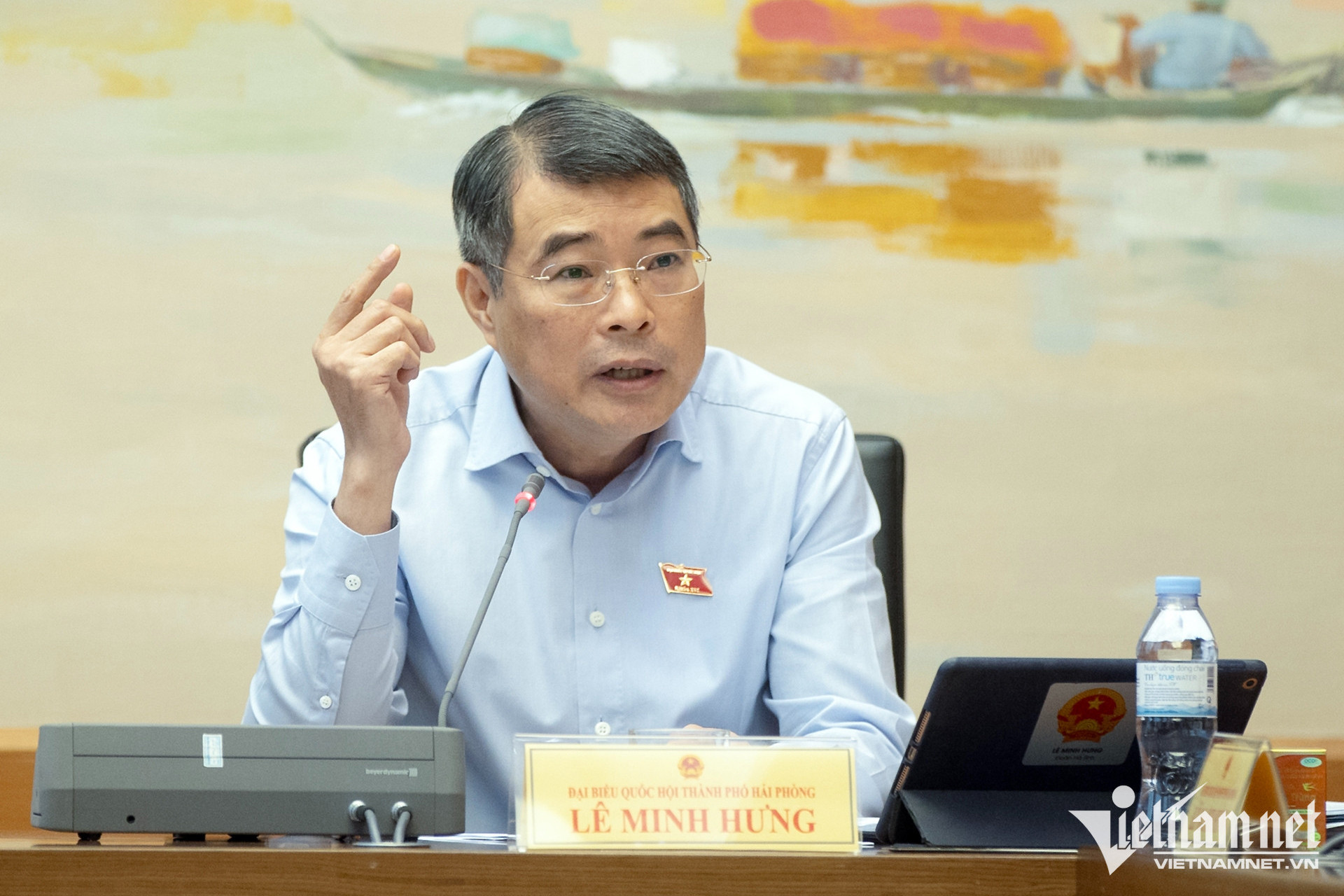
Across his inaugural address, the government’s first socio-economic report to the National Assembly, and particularly his remarks before lawmakers on April 10, a consistent line of thinking emerges: safeguard macroeconomic stability, remove bottlenecks in resource allocation, unlock new development space, and push forward institutional reform to pave the way for sustained high growth.
In essence, double-digit growth will not come from administrative directives or excessive expansion of investment. Instead, it must be driven by deep institutional reform, productivity gains, the full mobilization of social resources, the activation of private investment, and advances in innovation, human capital, and real economic competitiveness.
More than just a policy framework, this reflects a defining declaration of the new term: achieving average GDP growth of over 10% annually during 2026-2031 is a “development mandate” tied to the country’s long-term strategic goals.
This framing is particularly significant. High growth is no longer merely an economic target, but a national imperative - to overcome the middle-income trap, expand opportunities for domestic enterprises, create fiscal space for social welfare, education, science and technology, and strengthen resilience against global shocks.
Yet embedded within this ambition is perhaps the most critical governing principle of the new administration: a strong aspiration for growth without compromising stability.
The Prime Minister’s message is unequivocal: “We will not allow macroeconomic instability or economic crisis under any circumstances.”
He further stressed on April 10: “We do not accept rapid growth at the cost of macroeconomic instability.”
This stands as a red line for all policy decisions.
Notably, the early policy signals contain no indication of administrative monetary easing, no directive push to lower interest rates, and no willingness to tolerate higher inflation for short-term gains.
This is a deliberate and reassuring choice for the market.
It signals a clear departure from past approaches that relied on liquidity expansion or aggressive rate cuts. Instead, growth will rest on confidence in stable inflation, exchange rates, interest rates, and predictable policy frameworks.
In a world marked by uncertainty - from oil prices and logistics disruptions to tariffs and supply chain fragmentation - maintaining macroeconomic stability becomes the essential foundation for business confidence and long-term investment.
Growth through market expansion
While macroeconomic stability is a necessary condition, it is not sufficient. What markets are expecting from this term is a more decisive move to expand market space and restore the natural flow of resources.
Institutional reform emerges as a central theme. In peacetime, the economy can no longer operate under administrative command. It must follow objective laws of supply and demand, value, competition, and profit. The legal framework must serve as the ultimate regulator - protecting property rights and ensuring a level playing field for all economic actors.
In other words, sustainable high growth requires not just more capital, but more open and efficient markets.
This begins with a more transparent land market, where resources are no longer locked in stalled projects. It extends to deeper medium- and long-term capital markets, allowing idle funds in society to flow into production rather than remain dormant within the banking system.
It also includes the development of markets for science and technology, data, and digital assets, where innovation is properly valued. Equally critical is a labor market that rewards skills appropriately, turning productivity into a genuine growth driver.
According to the Prime Minister’s calculations, total social investment over the next five years must reach around 40% of GDP, equivalent to VND38.5 quadrillion (US$1.57 trillion), significantly higher than the roughly 33% recorded in the previous term.
Public investment alone is expected to exceed VND8 quadrillion (US$326 billion), compared to VND2.87 quadrillion previously. Budget mobilization must reach VND6.5 quadrillion (US$265 billion), 2.7 times higher than before.
More striking, however, is that roughly 80% of total resources must come from domestic enterprises, social investment, foreign direct investment (FDI), and international capital flows.
This underscores a critical point: achieving over 10% growth cannot rely solely on the public sector or bank credit.
Mobilizing such vast resources requires clearing market bottlenecks, implementing supply-side reforms, and building a transparent legal environment that gives investors the confidence to commit long-term capital.
Awakening dormant resources
A key highlight in the government’s report is the emphasis on mobilizing and efficiently utilizing all available resources as a decisive factor in achieving double-digit growth.
The logic is clear.
First, expand fiscal space by increasing budget revenues by around 10% while cutting recurrent spending to prioritize development investment. This reflects a disciplined approach, where growth begins with fiscal prudence rather than unchecked expansion.
Second, broaden medium- and long-term capital channels through government bonds, local bonds, project bonds, and official development assistance (ODA). This shift is essential for sustaining rapid growth over multiple years without over-reliance on short-term credit.
More importantly, the government calls for stronger investment from state-owned enterprises, greater private sector participation, and incentives for FDI firms to reinvest retained earnings in Vietnam. At the same time, FDI attraction must be tied to technology transfer and a balanced approach to foreign ownership.
In this model, the burden of growth financing is shared across the entire economy, rather than concentrated in any single sector.
Looking further ahead, developing capital markets, improving national credit ratings, and upgrading the stock market’s status will be crucial to attracting international investment funds and portfolio flows. This is how idle capital can be transformed into productive investment, technology, infrastructure, and ultimately, higher productivity.
Perhaps the most compelling detail in the government’s strategy is the call to swiftly resolve long-standing stalled projects.
This is not merely about clearing administrative backlogs. It is about unlocking vast amounts of land, public assets, capital, and, importantly, restoring market confidence.
And therein lies the most powerful message of Prime Minister Le Minh Hung’s early term: double-digit growth is not about imposing new pressure on the economy, but about unlocking the resources already trapped within it.
When laws are transparent enough to protect property rights, when markets allocate resources based on efficiency, and when the private sector gains fair access to land, capital, technology, and business opportunities, growth above 10% will no longer be an administrative target.
It will become the natural outcome of an economy operating on its true fundamentals.
And perhaps the most enduring promise of this new term lies in preserving stability while opening the door to a new growth cycle - one where dormant resources are awakened and transformed into the driving force of national development.
Tu Giang
.svg)
