 Vietnamnet.vn

 Podcast


From building boats to constructing wooden houses
Duc Minh Commune in Ha Tinh Province has long been known for its carpentry and traditional wooden boatbuilding industries.
Born and raised in this craft-making community, Nguyen Van Minh, born in 1969, became familiar with the sounds of saws and chisels at an early age and began learning carpentry while still young.
In 1993, as demand for traditional wooden boats gradually declined, Minh realized he needed to find a new direction to sustain his livelihood.
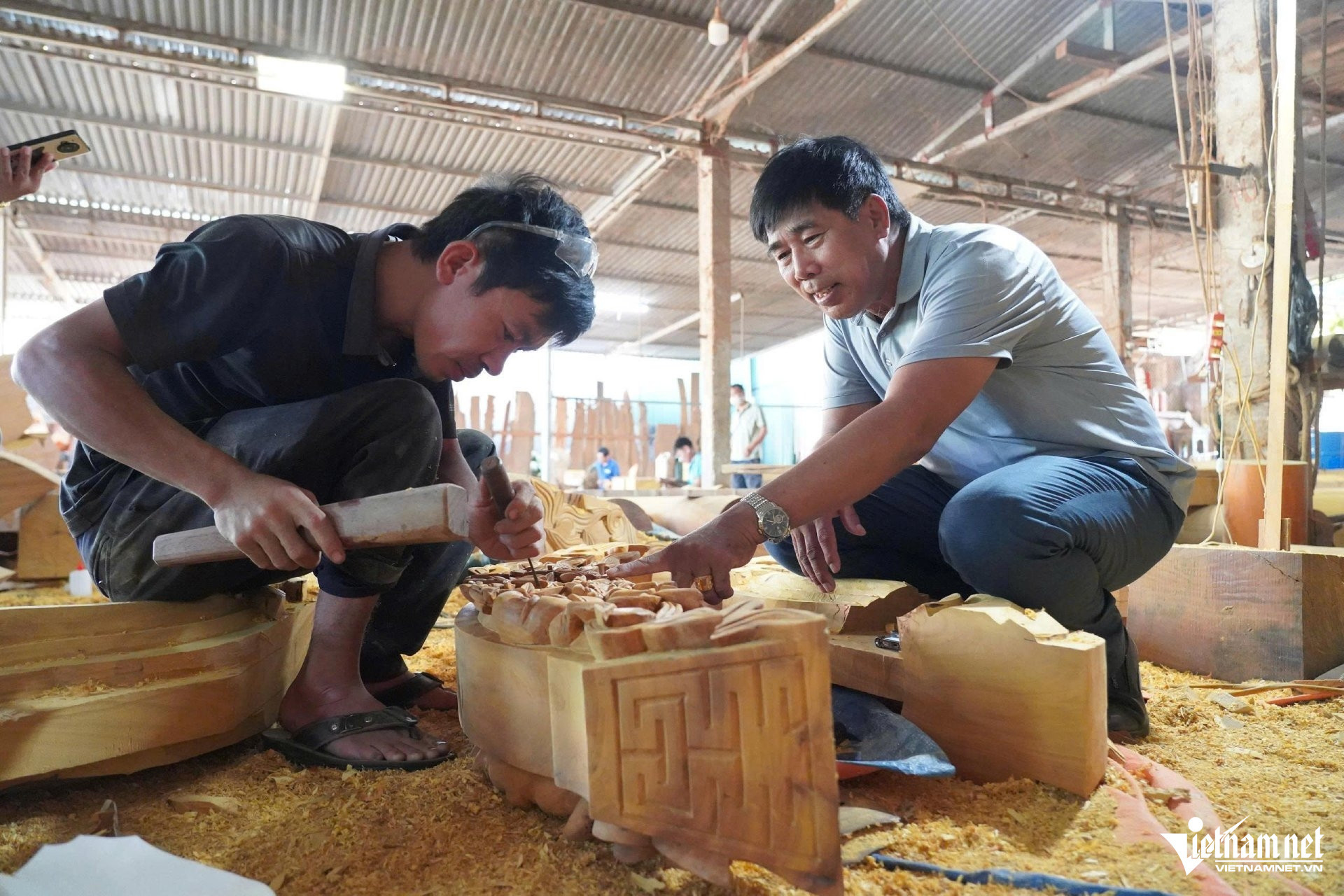
Noticing growing demand for wooden homes, ancestral worship houses and family clan temples, he decided to specialize in constructing buildings from jackfruit wood.
His Minh Mit carpentry workshop was established around that time.
According to Minh, jackfruit wood is relatively durable, has an attractive natural color and is particularly suitable for religious and ancestral worship structures, making it a popular choice among Vietnamese families.
"Jackfruit wood is valued for its durability and practical uses, as well as its spiritual significance, so many people prefer it," Minh said. "Switching to building jackfruit-wood houses has provided more stable work than traditional boatbuilding and created regular employment for local carpenters."
In the woodworking industry, jackfruit timber is primarily sourced from trees grown in household gardens and purchased directly from local residents.
As a result, large quantities of suitable timber are not always readily available, especially for projects requiring substantial columns and beams of consistent quality.
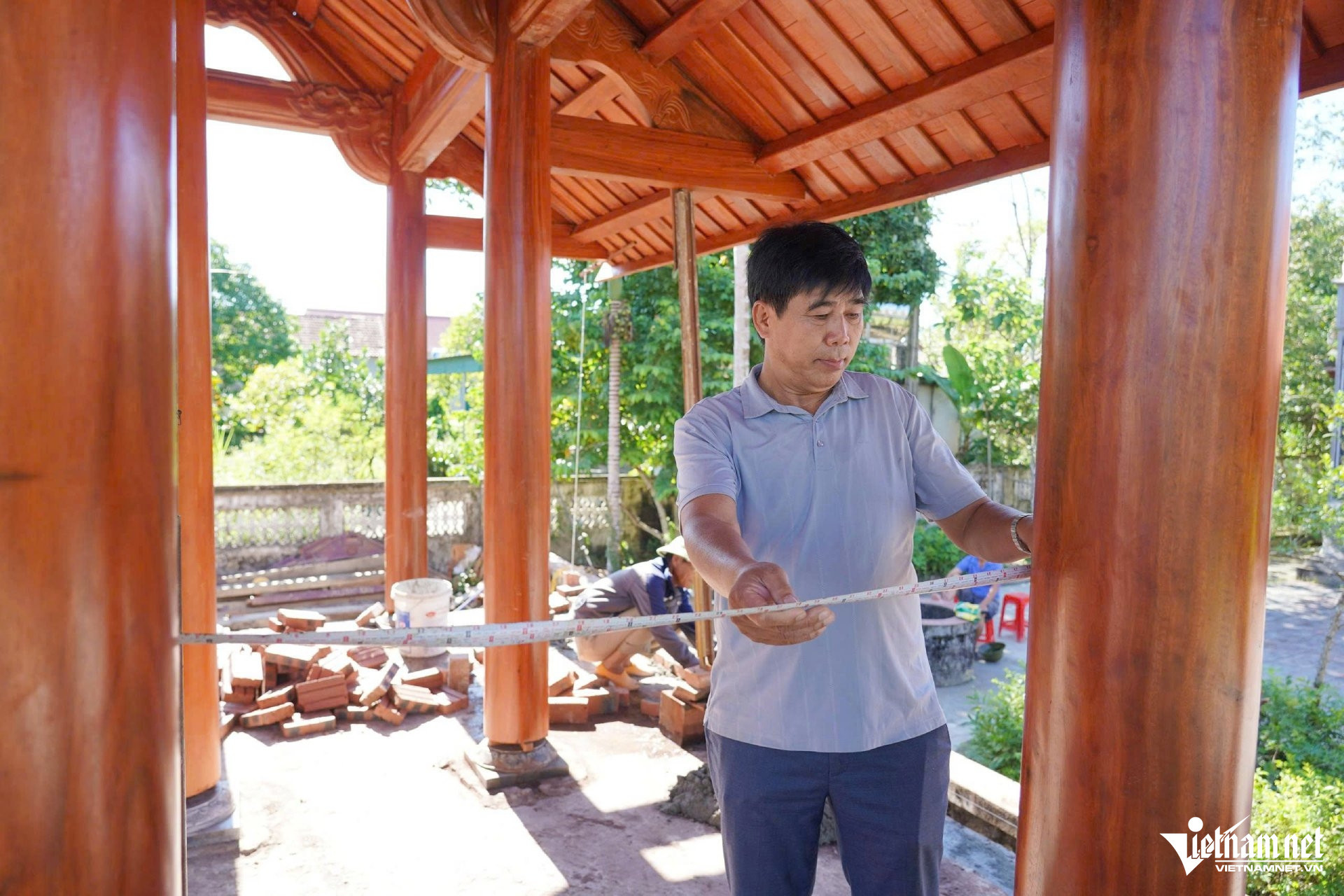
Minh explained that while shaping wooden components and assembling the structural frame of a house may take only around two months, finding and selecting enough suitable timber can take several months or even an entire year.
Carpenters often have to travel through numerous rural areas searching for mature jackfruit trees with the right dimensions and quality for each project.
Wooden houses cost hundreds of millions to billions of dong
According to Minh, one of the most challenging aspects of his work is developing construction plans when customers do not have detailed architectural drawings.
In such cases, he personally discusses the building's size, architectural style and intended use with the homeowner.
He also studies traditional architectural designs before proposing an appropriate construction plan.
On average, the Minh Mit workshop undertakes dozens of projects each year.
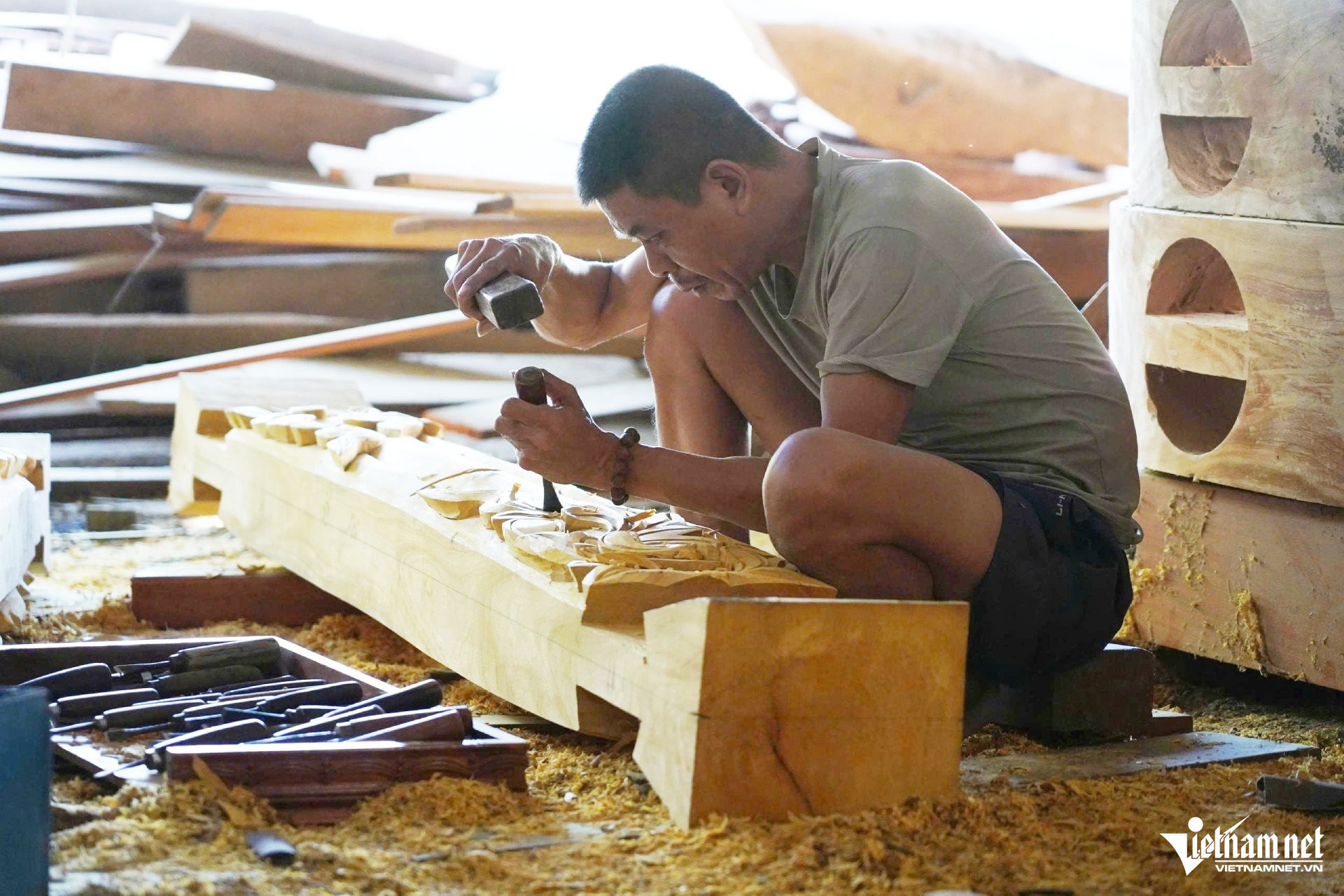
The cost of each wooden house ranges from approximately VND400 million (US$15,200) to several billion dong, depending on its size, scale, timber selection and the complexity of its design and decorative carvings.
In addition to constructing wooden houses, the workshop produces traditional horizontal lacquered boards, parallel couplet panels, altars, carved statues and other items used in ancestral worship buildings.
Its customers come not only from Ha Tinh but also from Nghe An, Thanh Hoa and several other provinces and cities.
Tran Hong, a resident of Toan Luu Commune, is among the customers who commissioned the workshop to build a family clan worship house.
He said his family approached Minh's workshop in 2024 after receiving a recommendation from a friend.
"During construction, Minh and his team carefully advised us on the architectural design and selected suitable jackfruit timber," Hong said. "Nearly a year after completion, the building has met our family's expectations."
Beyond maintaining a traditional craft business, Minh's workshop also provides employment opportunities for skilled local workers.
Doan Xuan Tien, a carpenter who has worked at the workshop for many years, said approximately 15 craftsmen are regularly employed there.
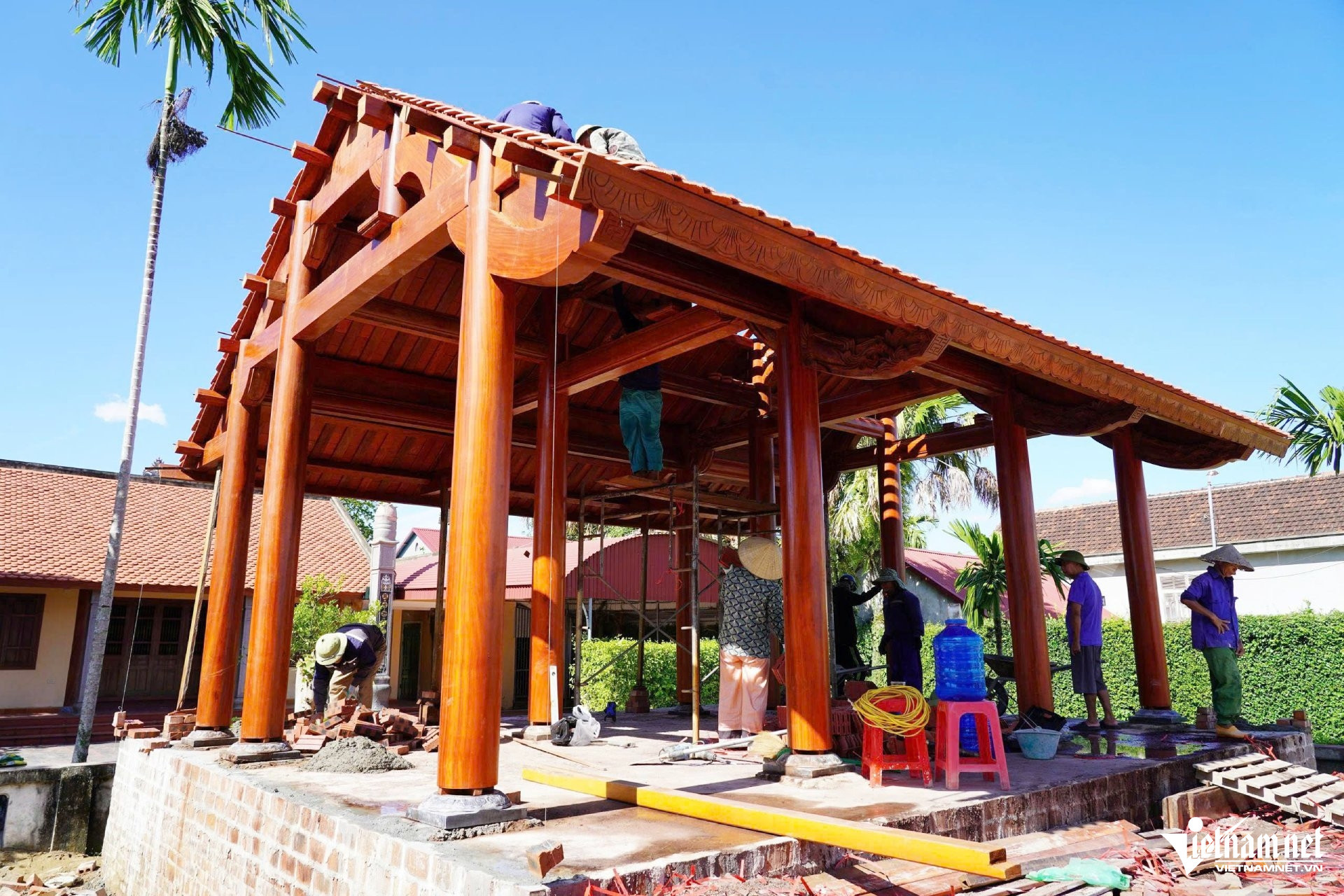
"Workers' earnings depend on their skills and assigned tasks, ranging from around VND15 million to VND35 million (US$570-1,330) per month," Tien said.
According to the craftsmen, constructing wooden houses requires meticulous attention to detail, from preparing raw materials to shaping, carving and assembling structural components.
New workers receive instruction in basic techniques before gradually improving their skills through hands-on experience with actual construction projects.
Nguyen Tien Thang, Chairman of the Duc Minh Commune People's Committee, said Minh's workshop is among the local businesses helping preserve traditional carpentry.
In addition to supplying wooden products, particularly traditional houses, to customers in various localities, the business provides jobs for approximately 40-50 workers.
Thien Luong

