 Vietnamnet.vn

 Podcast



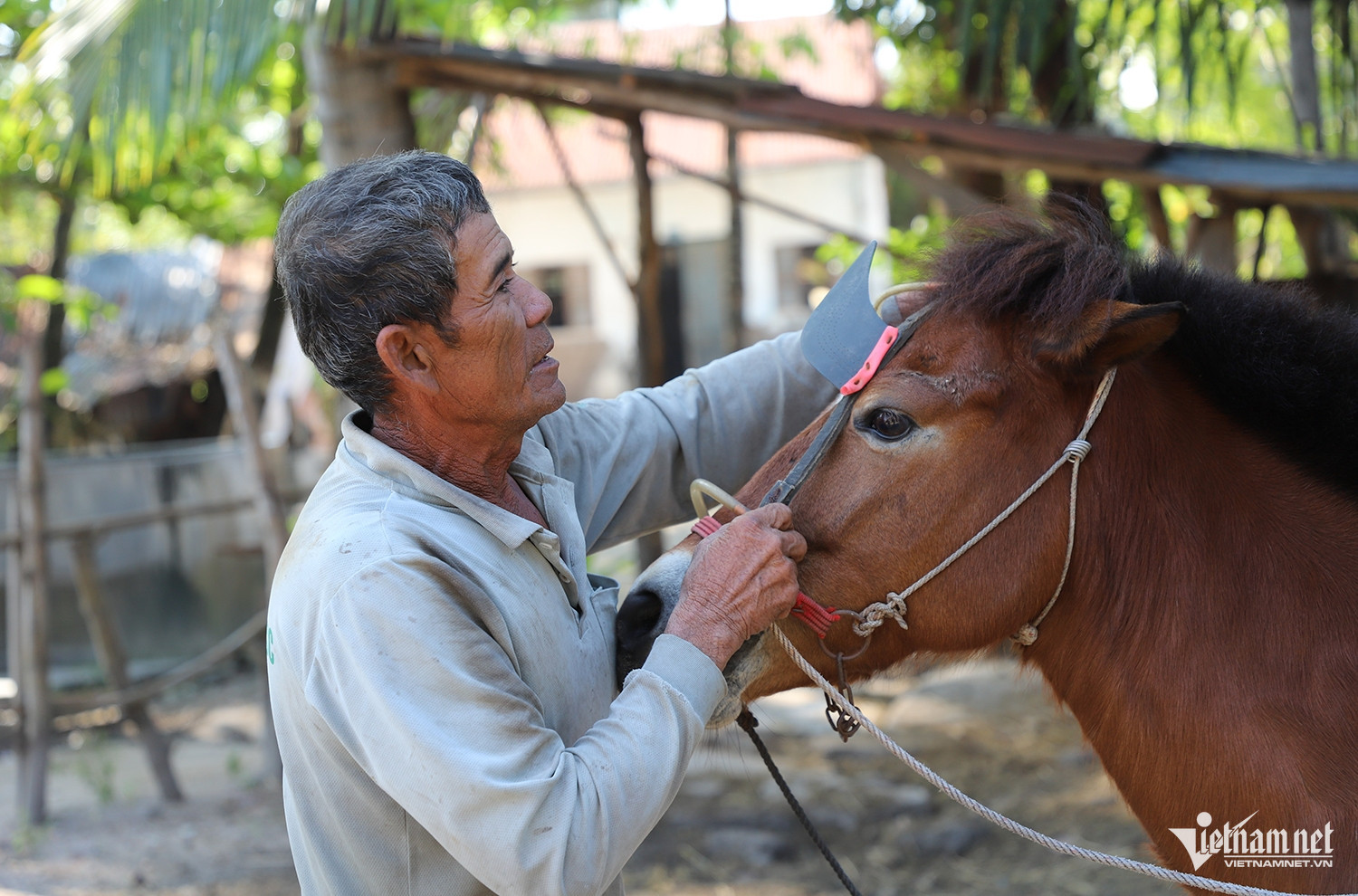
Before dawn fully breaks, Chau Nghia, 69, steps into his yard in An Cu commune, An Giang province, opens the stable, and gently leads his horse out - a routine he has followed for decades.
“Now, I might be the only one left in this hamlet still doing this job,” he says quietly.
For Nghia, the horse is more than a means of transport. It is a livelihood, a legacy, and a reminder of a time when horse-drawn carts were indispensable across Vietnam’s southwestern border regions.
A life shaped by the horse

Born into a poor family, Nghia’s childhood was tied to farming and livestock. After 1975, when motorbikes and trucks were still rare in border areas, owning a horse was considered a valuable asset. For him, it was also an inheritance from his father - the starting point of a lifetime of work.
From then on, his days were marked by long journeys hauling goods. He transported rice, fertilizer, timber, and agricultural produce. Some trips covered just a few kilometers within the village, while others stretched dozens of kilometers along rough, slippery dirt roads.
“Back then, if you had a horse, you had work,” he recalls.
On average, he now earns around VND100,000 to VND200,000 (US$4 to US$8) per day - a modest but meaningful income in the border region.
Yet the job has never been easy. Maintaining a working horse requires constant care, from feeding and shelter to regularly replacing horseshoes worn down by long hours on the road.
“If the horse works continuously for more than a week, the horseshoes must be changed. Otherwise, it will be in pain and unable to stand,” Nghia explains.
He gestures toward a scar on his abdomen - a lasting mark from a time when a startled horse bit him. “There are moments when the horse kicks or bites. But you can’t bring yourself to sell it, and you can’t abandon it either,” he says.
The horse he keeps today was bought from Cambodia for nearly VND8 million (approximately US$320). In the past, he owned several, gradually selling them as age and strength declined. Now, the remaining horse is both his livelihood and a keeper of memories.
Fewer carts, fading echoes

Not far from Nghia’s home, Chau Can, 49, leads his horse to an open roadside area, waiting for the first job of the day.
“I’ve been doing this for more than ten years,” he says, his eyes fixed on the animal grazing quietly.
At its peak, An Cu commune had hundreds of horse carts. Today, only a handful remain.
Before turning to this trade, Can worked various jobs to make ends meet. About a decade ago, seeing that many narrow alleys and garden paths were inaccessible to motor vehicles, he decided to invest in a horse and start transporting goods.
His current horse, also purchased from Cambodia for around VND25 million (US$1,000), has been with him for over two years.
“I don’t really know the breed. As long as it’s strong, steady, and gentle, that’s enough for me,” he says.
His first trip of the day involves carrying fertilizer. Amid busy traffic, he carefully guides the horse along the roadside, waiting for a quiet moment before crossing. A journey of nearly 3km earns him VND100,000 (US$4).
Returning to his usual spot, he finishes a half-drunk glass of tea and waits for the next job.
He typically transports timber, construction materials, and agricultural goods. Distances of 2-3km are routine, while some trips stretch over 20km, crossing narrow paths and field edges where trucks cannot reach.
According to local drivers, horses can even work at night, as they are familiar with the routes and unafraid of the dark. This flexibility is why some customers still rely on horse carts for urgent deliveries.
On average, a horse can pull about 400kg of goods. Payment is not fixed per kilometer but depends on distance, load, and road conditions. Each day, Can and his wife earn around VND150,000 to VND200,000 (US$6 to US$8).
“It’s not a lot, but we can make a living,” he says.
A practical choice in a changing time

Nguyen Van Tien, 66, a longtime carpenter in An Cu, is a regular customer of horse cart drivers. For him, the choice is practical rather than nostalgic.
“When transporting wood or furniture, hiring a horse cart is both cheaper and more convenient. It can reach places trucks cannot. A delivery to Tinh Bien, about 20km away, costs around VND300,000 (US$12). A truck would cost twice as much and still struggle with narrow roads,” he explains.
According to Hoang Ngoc Son, Vice Chairman of the Vietnam Fatherland Front Committee in An Cu commune, horse cart driving was once widespread in the area. However, as roads have been upgraded and motor vehicles have become more accessible, the trade has gradually declined.
“There are fewer customers now. People sell their horses and switch to other jobs. Today, only just over 10 Khmer households in the commune still keep horse carts, mostly older residents who have been in the trade for many years,” Son says.
Amid the fast pace of modern life, the sound of horse hooves still echoes faintly along the border roads of An Giang.
For those who remain, each journey is not just about transporting goods, but about holding on to a way of life that once sustained entire communities - a quiet resilience carried forward, one trip at a time.
Tran Tuyen
.svg)
