 Vietnamnet.vn

 Podcast



In a mountainous commune near Vietnam’s border with Laos, a Ha Tinh farmer has abandoned traditional muddy ponds to raise eels in a closed, high-tech tank system. His innovative model is earning him a steady annual profit of thousands of dollars and attracting the attention of farmers across the region.
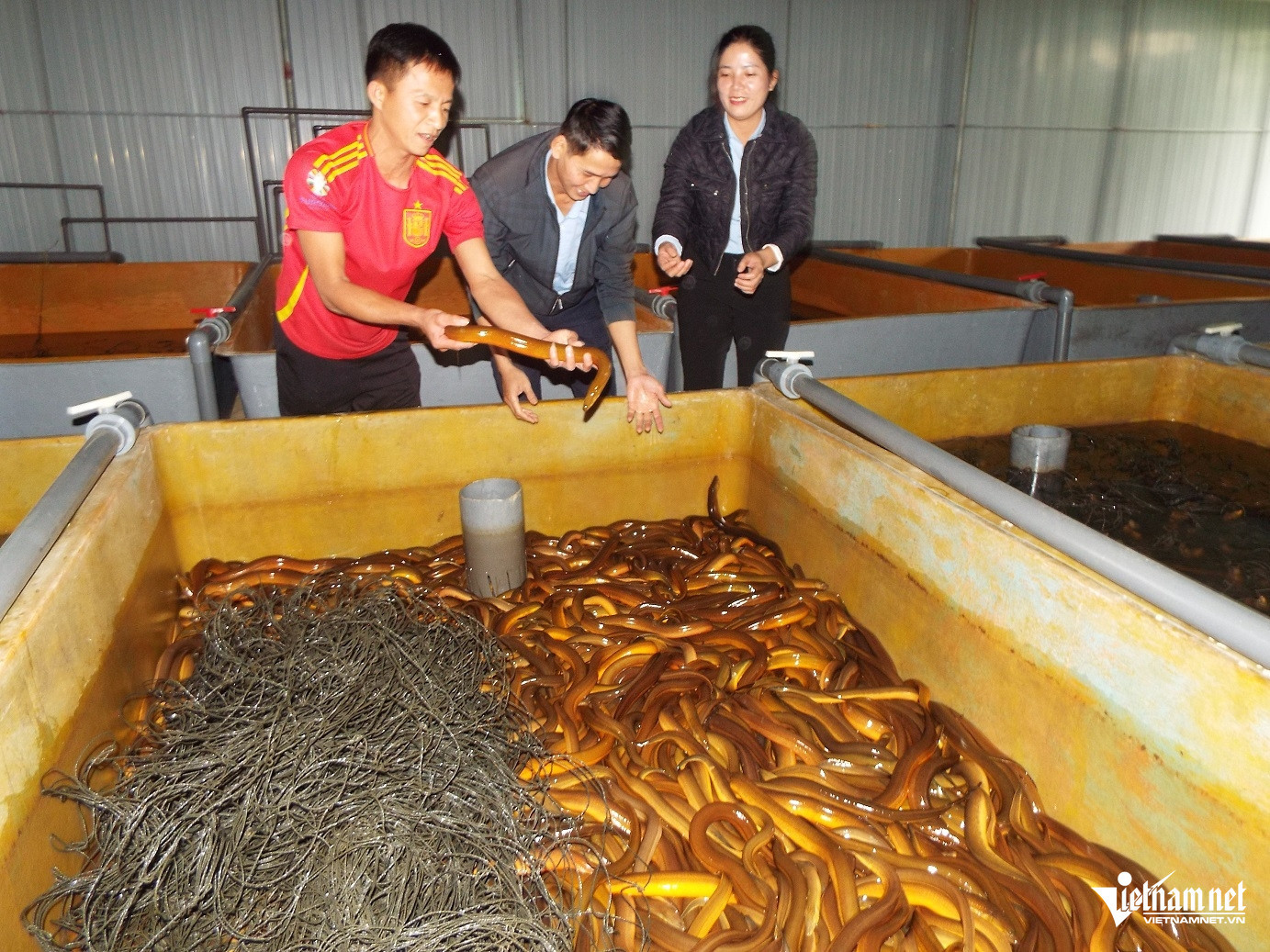
Located in Son Hong commune, Ha Tinh province, agriculture in this highland area has long faced serious limitations. But in recent years, as local mindsets around economic development evolve, new production models have emerged - one of the most promising being mud-free eel farming.
Doan Hong Phong, born in 1986 and a resident of Hamlet 10 in Son Hong, is a pioneer of this new approach.
Phong shared that before turning to eel farming, he worked in the trade of collecting acacia and melaleuca wood. However, the labor was strenuous and income unstable, prompting him to seek a new path.
Driven by a passion for farming and a desire to build a prosperous life in his hometown, he began researching and learning mud-free eel farming techniques in 2024 from models within and beyond the province.
After extensive study, Phong took a bold step: borrowing nearly 700 million VND (around 28,000 USD) to invest in a system of 15 composite tanks. These were equipped with water supply and drainage lines, aeration units, and a recirculating filtration system.
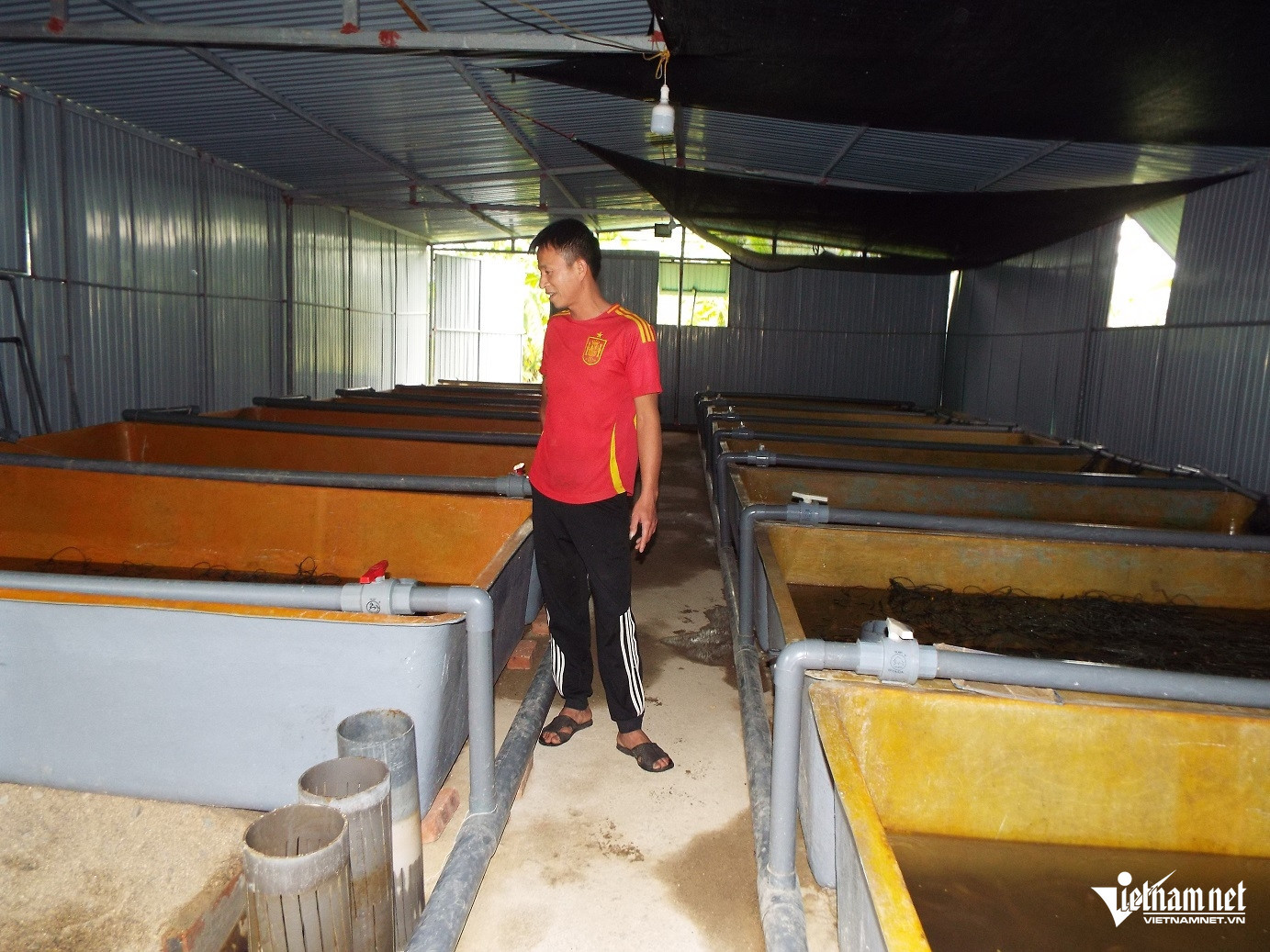
“In the beginning, I bought 30,000 baby eels, each just the size of a toothpick, at 4,000 VND each (around 0.16 USD). Lacking experience, many died, causing significant financial losses. But the more I did, the more I learned,” he recalled.
Gradually mastering the process from breed selection to care and disease prevention, Phong raised the survival rate to over 90 percent.
He emphasized that mud-free eel farming demands strict adherence to technical standards, especially regarding feed and water quality. The diet must have moderate protein levels, primarily made up of mixed trash fish meal and industrial feed, ensuring even growth and minimal disease risk. The tanks must be cleaned regularly, and water temperature maintained at stable levels for optimal eel development.
“Taking care of the eels doesn’t require too much time. I just need to change the water twice a day, in the morning and late afternoon, each time taking about two hours,” Phong explained.
Unlike traditional farming methods that use earthen ponds, his model utilizes tarpaulin-lined tanks. Instead of burrowing into mud, the eels use tightly stretched mesh netting to hide. The tanks’ aeration and filtration systems allow close monitoring of the aquatic environment, reducing risk and saving space. After 10 to 12 months, the eels reach an average weight of 250 to 300 grams.
With his 15-tank system, Phong harvests about 4 to 5 tons of market-ready eels annually, generating an estimated revenue of 500 million VND (approximately 20,000 USD). Importantly, he divides the eels into three age groups to enable continuous harvesting, ensuring a steady supply to the market.
“Buyers are already offering deposits to secure the next harvest. The hatchery that sells me the fingerlings also helps connect me to traders, guaranteeing stable demand. After deducting costs, I expect to net around 200 million VND - roughly 8,000 USD - this cycle,” Phong noted.
According to Tran The My, Chairman of the Farmers’ Association in Son Hong commune: “Doan Hong Phong’s model is a promising new direction, in line with the current trend toward clean and sustainable agriculture. Beyond financial success, it reflects the spirit of bold innovation among rural entrepreneurs here.”
Beyond being a successful farmer, Phong is also known for his generosity in sharing knowledge. He regularly guides fellow members of the commune in farming techniques. Looking ahead, he plans to expand production and begin breeding eels to reduce input costs and provide more jobs for local workers.
Thien Luong
.svg)
