 Vietnamnet.vn

 Podcast



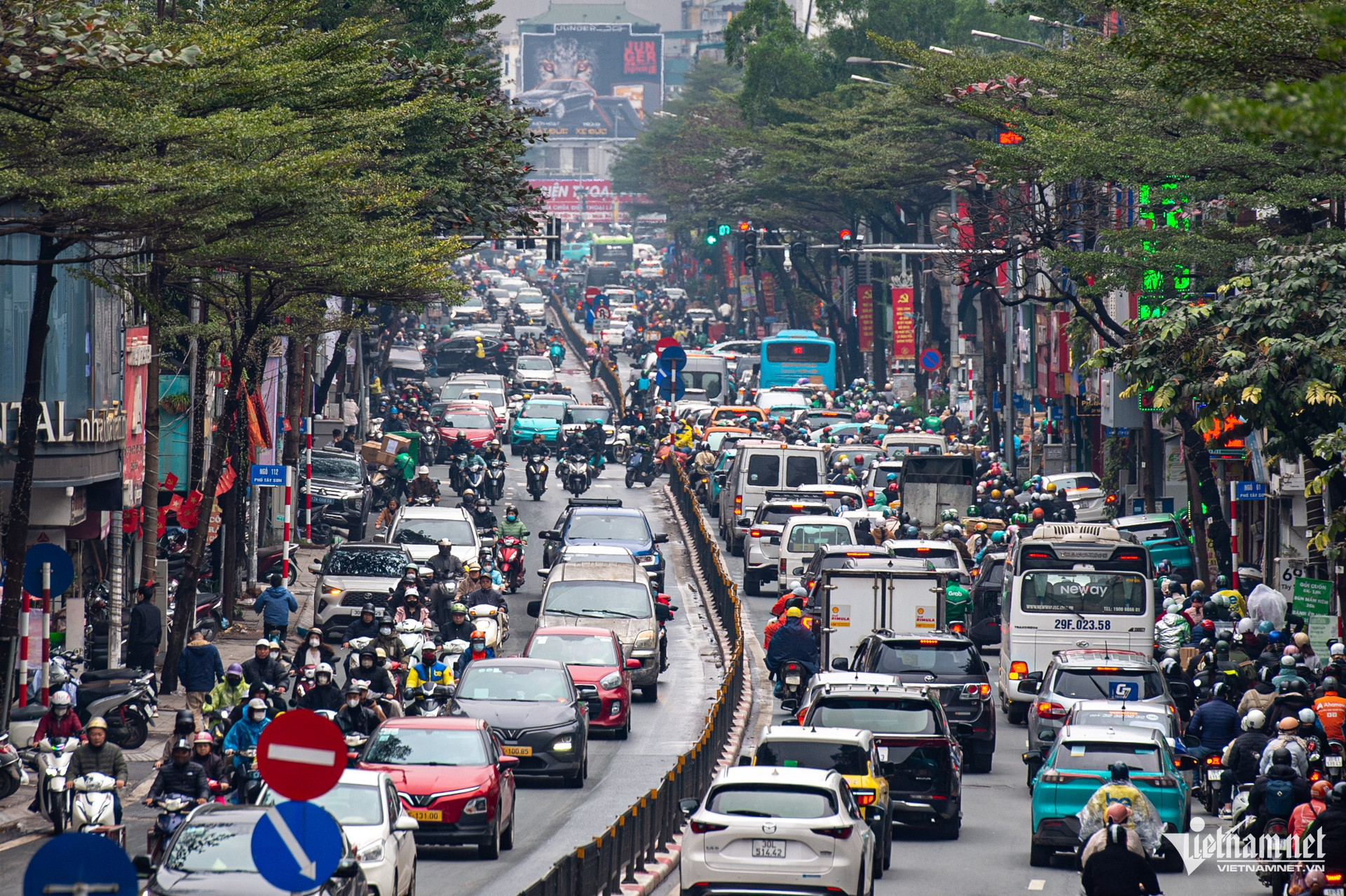
Under a draft resolution currently open for public consultation by the Hanoi People's Committee, charges on motor vehicles entering the city center would be introduced in phases. The scheme would apply within Ring Road 1 from 2028, expand to Ring Road 2 in 2030, and reach Ring Road 3 by 2032.
The city says the measure is intended as an economic tool to regulate demand for private vehicle use, ease traffic pressure in central areas and encourage greater use of public transportation.
Speaking to VietNamNet, Nguyen Van Quyen, Chairman of the Vietnam Automobile Transportation Association, said authorities need to conduct extensive research before adopting such a policy in Hanoi.
According to Quyen, the objectives of reducing traffic congestion and environmental pollution are entirely reasonable. However, policymakers must determine whether the proposed charging system would actually achieve those goals in practice.
"The issue requires comprehensive analysis and evaluation," he said.
Quyen noted that if congestion charges are introduced while transport infrastructure remains largely unchanged, higher-income residents may simply absorb the additional cost and continue driving into central areas, while lower-income citizens would bear a disproportionate burden.
"That could easily trigger debates over the fairness of the policy," he said.
He argued that if the city intends to restrict private vehicles in specific areas, it may be preferable to implement clear regulatory measures rather than a system perceived as allowing access only to those who can afford the fee.
"A model where those with money can enter while others cannot may create a sense of inequality in society," Quyen warned.
Asked what level of charge would be sufficient to influence travel behavior, Quyen said the dilemma is straightforward: a low fee may fail to discourage vehicle use, while a high fee could provoke strong opposition from residents and businesses.
"This is a very difficult calculation. A low charge may be ineffective, while a high charge could significantly affect people's lives and economic activity. That is why a thorough impact assessment is essential before any decision is made," he said.
Public transport is the key
According to the chairman of the association, restrictions on private vehicles can only succeed if public transportation systems are capable of meeting people's mobility needs.
International experience shows that cities that have successfully introduced congestion pricing generally already possess extensive public transport networks, including metro systems, buses, park-and-ride facilities and integrated transport connections.
In contrast, given the current pace of urban railway development in Vietnam, metro systems are unlikely to become a dominant mode of transportation capable of replacing private vehicles in major cities within the next five to six years.
"The prerequisite is the simultaneous development of metro lines, bus services, parking facilities and transport hubs. When residents have convenient alternatives, restrictive measures are more likely to gain public support," Quyen said.
He also described Hanoi's proposed timeline as relatively ambitious for a policy that could affect millions of vehicles.
The city, he said, should carefully evaluate the readiness of transport infrastructure and public transport services before implementing restrictions through either administrative or economic measures.
According to official figures, Hanoi currently has around 8.1 million road vehicles, including approximately 1.1 million cars and nearly 7 million motorbikes.
Given this enormous volume of traffic, congestion pricing is not merely a transportation issue but one that could affect livelihoods, travel habits and public acceptance.
"If Hanoi wants to move forward, it must carefully study international experience, fully assess the economic and social impacts, and most importantly evaluate the policy within Vietnam's specific conditions before making a final decision," Quyen said.
International examples show that many countries only introduce congestion charges or restrictions on private vehicles after public transportation systems have reached a relatively mature stage.
Singapore, for example, implemented its Electronic Road Pricing (ERP) system in 1998 while simultaneously investing heavily in its rail and bus networks and maintaining strict controls on vehicle ownership.
Japan does not generally impose congestion charges in city centers. However, major cities such as Tokyo limit private vehicle use through requirements for legal parking spaces and the high cost of parking.
These examples suggest that congestion pricing and vehicle restrictions are most effective when accompanied by convenient and reliable public transportation alternatives.
Vu Diep
.svg)
