 Vietnamnet.vn

 Podcast



Vietnamese technology group FPT broke ground on Digital Technology Building 01 on October 15, part of its Digital Technology Park urban development in Hanoi’s Phu Dien and Tay Tuu wards.
The groundbreaking marks a concrete step in delivering FPT’s commitments to the Hanoi People’s Committee. The building will provide space for technology professionals to work, study, conduct research and collaborate, helping attract skilled workers, connect domestic and international resources, and contribute to innovation in Hanoi and across Vietnam.
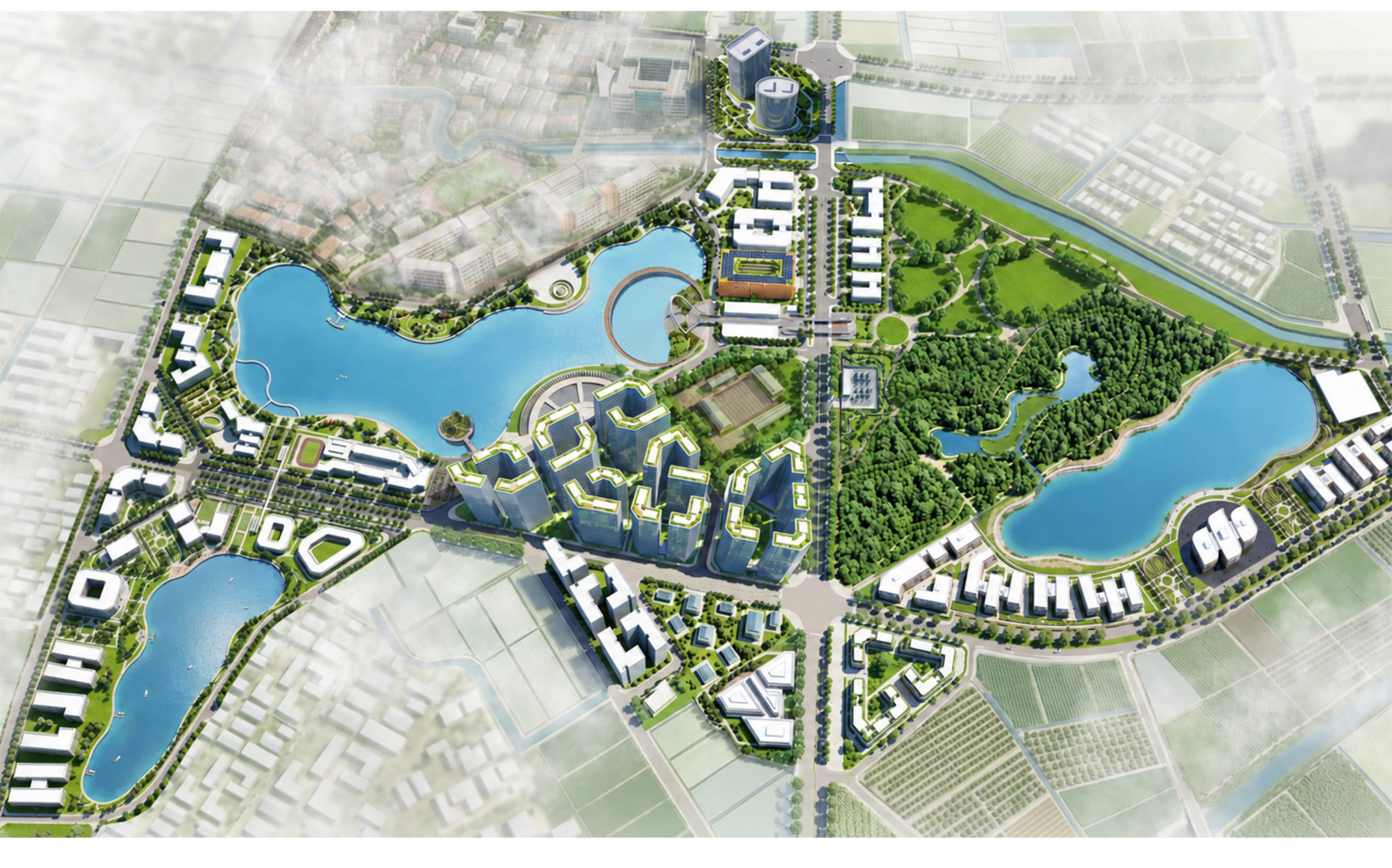
Hanoi authorities and FPT launched construction of the wider technology park project earlier in 2026. The group pledged to commit the resources needed to deliver the development as planned, on schedule and to the required quality standards.
Work on Digital Technology Building 01 takes part of that commitment from planning and investment preparation into construction.
The building is expected to accommodate around 6,000 digital technology specialists and support staff. FPT envisages more than an office: it will be a place where engineers, experts, students, scientists and businesses can meet, learn, research, test ideas and work together on practical technological challenges.
Through the project, FPT hopes to help develop a highly skilled technology workforce and strengthen research and development capabilities in strategic technologies.
Speaking at the ceremony, Hanoi People’s Committee Vice Chairman Truong Viet Dung described the groundbreaking as an important milestone and a model of cooperation between a government that enables development and a pioneering business. It also marks the start of a longer journey, he said.
What the city now wants to see is not simply timely construction, but the rapid emergence of a competitive technology centre capable of attracting talent, mastering technologies and generating new economic value.
Dung said the wider park would cover nearly 200 hectares, with planned investment exceeding $3.3 billion and around 75,000 staff, engineers and specialists.
“We are laying the foundations here for a new growth engine for Hanoi’s digital economy,” he said.
Digital Technology Building 01 is the first building block of that ambition. It will provide space for work, production, business activities and the development of digital products and services, opening the way for a broader ecosystem that brings together research, training, innovation and technology commercialisation.
“Hanoi aims for the digital economy to contribute at least 40% of its gross regional domestic product by 2030. This is a major ambition that requires a fundamental change in how the capital’s economy grows,” Dung said.
“Hanoi needs technology companies strong enough to export software, artificial intelligence and digital solutions worldwide. More importantly, it needs those companies’ technologies to be used in factories, hospitals, schools, banks, logistics systems and urban management, so that businesses can operate more efficiently, economic sectors can become more productive and residents can enjoy better services.”
FPT envisions a “living exhibition” of strategic technologies
FPT chief executive Nguyen Van Khoa said Hanoi had long been a centre of knowledge, science and highly skilled talent.
“We value that strength and are grateful to Hanoi’s leaders, departments, agencies and local authorities for working with us and helping resolve difficulties so that the project could reach today’s groundbreaking,” he said.
“This site is now beginning a new journey as a place to develop people, nurture technology and knowledge, and create new resources for the capital’s socioeconomic development.”
Khoa said he wanted the site to become a place that cultivates talent in the fullest sense: somewhere technology professionals can study, work and grow, and where knowledge connects with research, production and the market to generate new technologies and resources for Hanoi’s development.
Drawing on the image of Tay Tuu’s flower gardens, FPT aims to gradually turn the site into a “living exhibition” of strategic technologies.
School and university students would be able to visit, learn and gain practical experience; scientists, engineers and businesses could exchange ideas and collaborate; and residents could see new technologies being researched and put to use.
Under this vision, artificial intelligence, semiconductors, quantum technology, unmanned aerial vehicles and other emerging strategic technologies would go beyond displays and events. The aim is to research, develop, test and apply them within the park itself.
FPT hopes Tay Tuu and Phu Dien will gradually become associated with Hanoi’s identity as a city of science, technology and the future.
Khoa said the project supports the objectives of Resolution 57-NQ/TW on science, technology, innovation and digital transformation. It would also help Hanoi attract skilled technology professionals, bring research, education and business closer together, generate new technology products and progressively strengthen the ability to master strategic technologies.
Digital Technology Building 01 will cost more than $50.7 million and occupy the 17,217-square-metre CNS1 plot. It will comprise seven above-ground floors, one basement and a rooftop structure, with a total gross floor area of approximately 69,831.5 square metres.
Classified as a Grade I office building under Vietnam’s construction classification system, it will have a design service life of at least 50 years. The project is expected to take around 12 months to complete.
The design is intended to blend with the surrounding landscape, make efficient use of space and create an open working environment that encourages interaction, collaboration and creativity.
The building is planned for efficient operation, sensible energy use and coordinated connections to the wider development’s infrastructure. Features will include supplementary solar power, electric vehicle charging stations, partial rainwater collection for irrigation and street cleaning, and wastewater treatment before discharge into the shared system.
Thai Khang
.svg)
