 Vietnamnet.vn

 Podcast



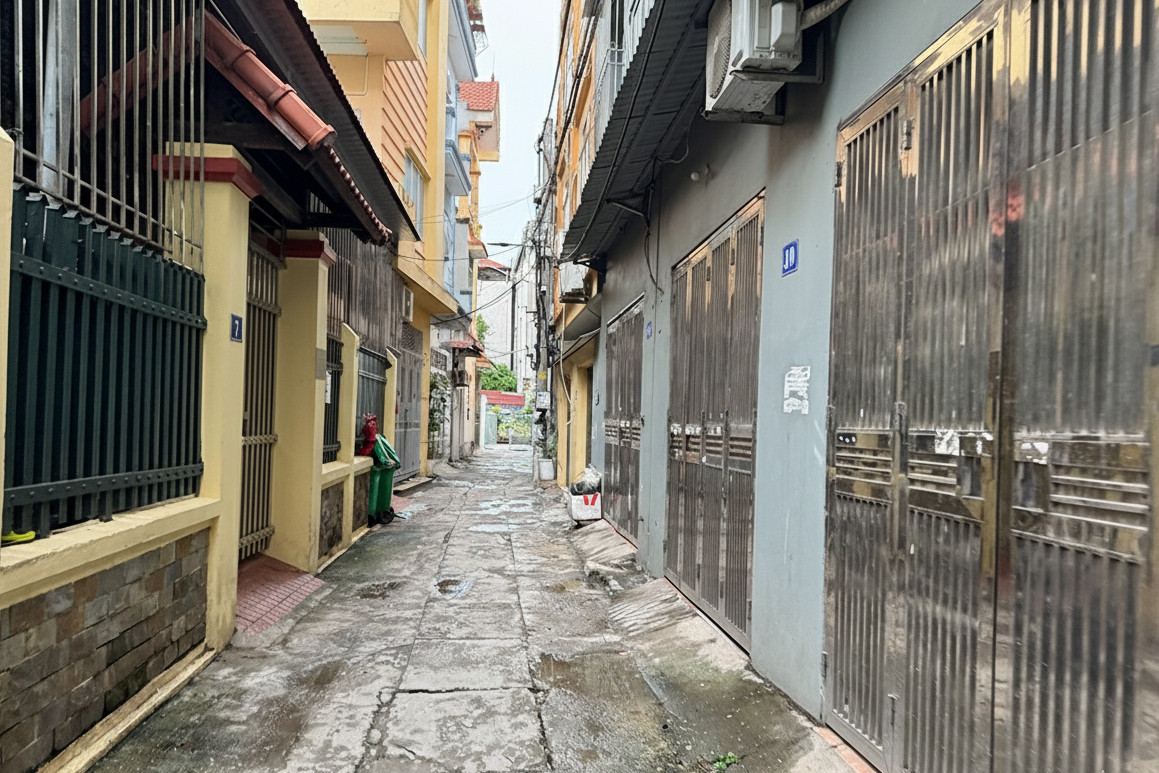
After more than three months searching for a house in Hanoi’s narrow alleys, Le Quang Viet, an IT engineer, is still undecided. With a budget of VND6 billion, he’s aiming for a house around 30 sqm in alleys near Giai Phong Street. However, most listings within his budget are small homes, deep in narrow alleys, or require major renovations.
"I’ve spent nearly three months wandering through alleys from Dinh Cong, Hoang Van Thu to Giap Bat. At VND6 billion, the market mostly offers houses under 30 sqm, deep inside alleys, some even at the end of dead-end lanes, with narrow facades and poor infrastructure. Some homes are listed at VND6.5 billion for just 25 sqm, and even upgrading them is difficult," Viet said.
In Dong Da area, Thu Phuong, a bank employee, also struggles to find a suitable home. “I thought with nearly VND7 billion, things would be easier, but that’s not the case. Decent homes in good locations are priced at VND8-9 billion. The others within my budget are mostly unsatisfactory options, either too small or in cramped alleys. Paying this much for something tiny and inconvenient just doesn’t make sense,” Phuong said.
According to several real estate platforms, listings for homes priced at VND6-7 billion in central districts are limited. These properties typically have small floor areas under 30 sqm, are located in deep or narrow alleys, have facades under 2 meters long, or require significant repairs. Previously, such homes were priced around VND3-4 billion.
On a real estate website, one seller in Van Huong Alley is offering a 26 sqm house for nearly VND7 billion, equivalent to over VND265 million/sqm. On Ton Duc Thang Street, a 24 sqm house in a small lane is listed at VND258 million/sqm. In Van Chuong Alley, a 19 sqm house is being offered at VND289 million/sqm.
In areas of Hoang Mai, Ha Dong, and Thanh Xuan, a VND6-7 billion budget also only gets homes under 30 sqm, buried deep in alleys.
Sky-high prices, frozen transactions
Nguyen Dinh Thang, a real estate agent in Hoang Mai, said that it's currently very difficult for buyers to find satisfactory properties worth VND6-7 billion. Buyers can’t find what they want, while sellers expect prices to continue rising, especially those with slightly better locations already listing above VND8 billion.
According to Thang, this market segment sees few transactions for several reasons. From the seller’s side, homes with decent locations and areas (over 30 sqm, wider alleys accessible by car) are rarely listed for VND6-7 billion.
Homeowners tend to hold onto properties in anticipation of further price increases, or if they do list, they often set prices much higher than the actual market value. As a result, real supply in this segment is extremely limited.
Meanwhile, buyers spending this much expect properties with good utility value, adequate living space, and potential for future appreciation. Spending such a large sum for a sub-30sqm house in a narrow alley feels like a poor trade-off.
Thang believes that Hanoi real estate prices are unlikely to drop due to accelerating urbanization, rising land valuation tables, and increased construction material costs. "No one can predict the future with certainty. However, with tight supply and strong real housing demand, prices may remain high for a long time," he said.
To enable real transactions, both buyers and sellers need to realign their expectations. Sellers should price their properties more realistically, based on specifics like alley width, proximity to main roads, legal status, and actual market demand. Unrealistically high prices only leave properties sitting unsold.
Buyers, on the other hand, need to clarify whether they’re buying to live in or to invest. If buying to live, they should balance their budget with essential living space needs. Expanding their search to suburban areas like Dan Phuong or Hoai Duc, or accepting homes that require renovation, could yield better options at more reasonable prices.
Alternatively, if comfort, convenience, and modern living space are top priorities, buyers should consider switching to apartments. The most important thing is not to rush into a decision without finding a property that matches both lifestyle needs and financial capabilities.
Duy Anh
.svg)
