 Vietnamnet.vn

 Podcast



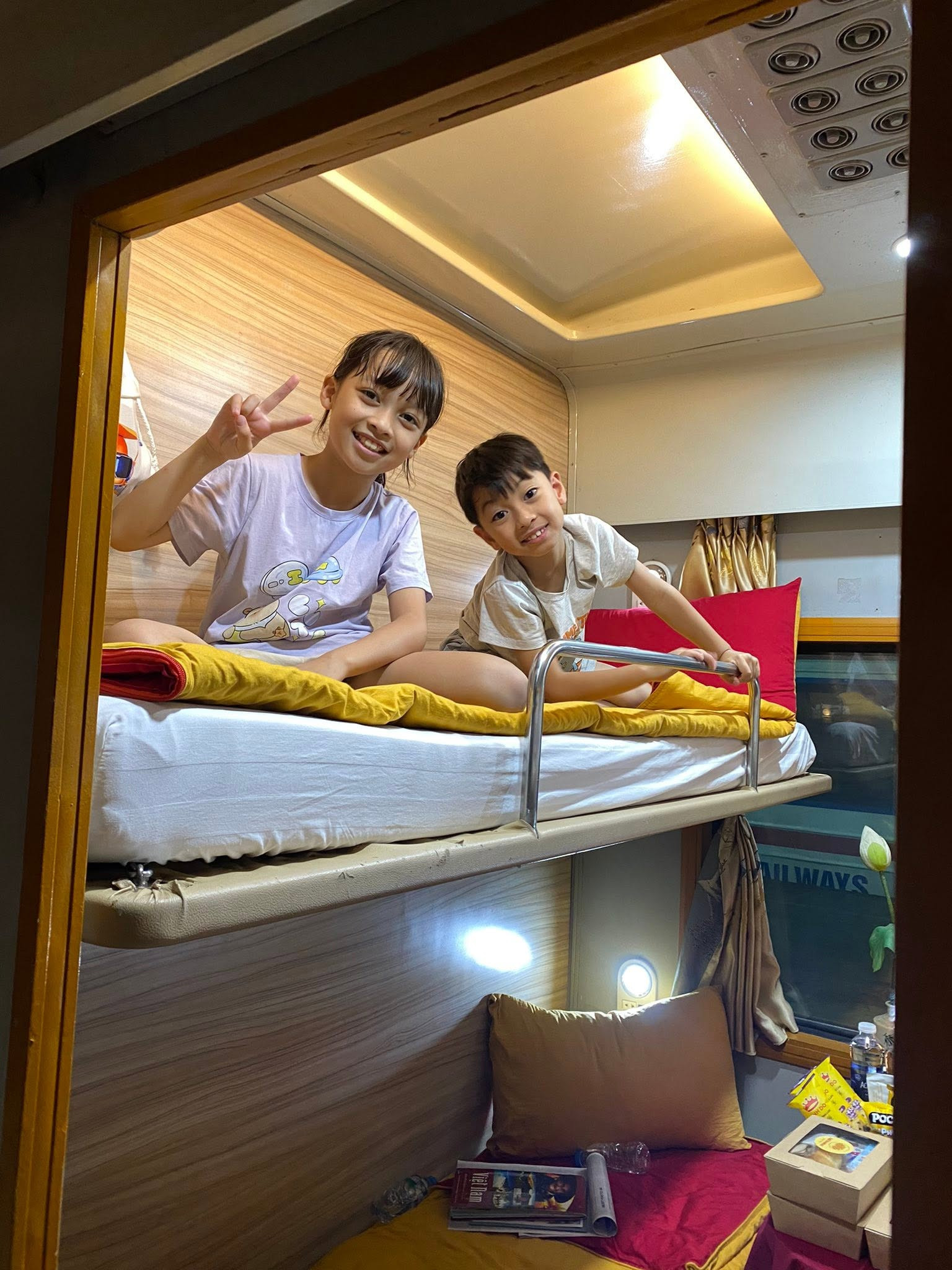
For three consecutive summers, Linh has arranged her work and spent time taking her two children, An Chi, 10, and Minh Duc, 7, on summer travels. The goal of the mother and her children is not to visit resorts or check in at beautiful spots, but to immerse themselves in the life of each locality they pass through, learning how to adapt and handle arising situations.
‘Transforming’ into local residents
This year, the journey of the mother and her children lasted a month, passing through Hue, Quang Ngai, Gia Lai, and Dak Lak.
"My husband and I educate our children according to a semi-homeschool program (a form combining traditional school attendance and homeschooling); we always want to find opportunities for our children's learning to be attached to practical experiences. There are things we say many times at home that the children do not remember. But when placed in the exact context, they learn very quickly," Linh said.
Linh spent about three months researching each destination. As soon as An Chi and Minh Duc finished their school year, the mother and her children began their "summer semester".
Baggage was prepared following a minimalist approach. Each person only brought a few sets of clothes, personal items, and some basic medicines. The two children prepared their own belongings, while the mother was in charge of shared items.
The main means of transport for the mother and her children was the train, and they usually chose to travel at night to save time. According to Linh, the train also offers a spacious environment for the children to walk around, observe, and talk with people.
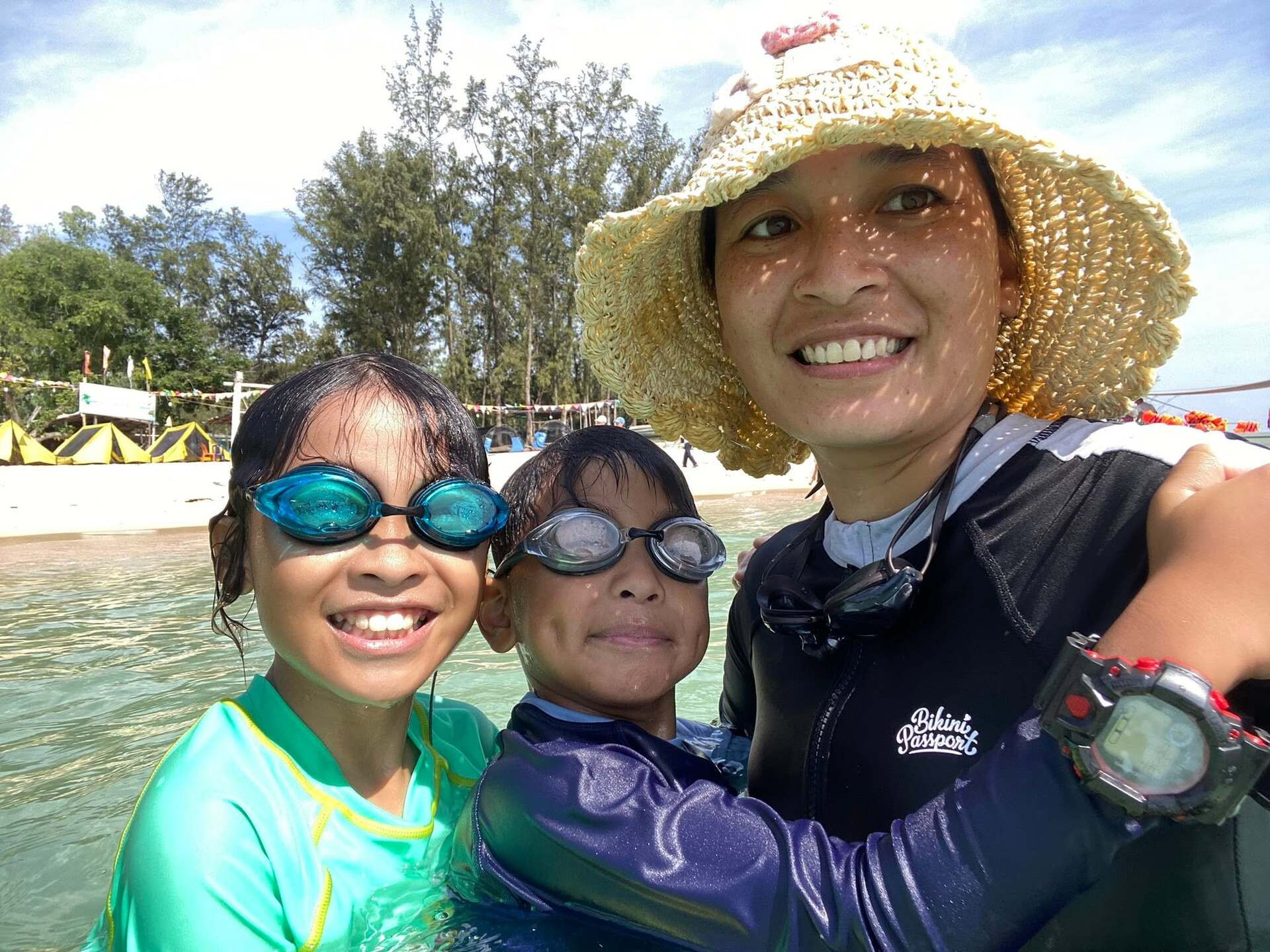
Unlike many families who choose hotels or resorts, Linh prioritizes homestays and community tourism villages. She wants her children to have the opportunity to live close to local people, observe how they labor and live daily, and better understand the culture of each land.
In Hue, the mother and her children spent four days exploring the Imperial Citadel, tombs, Tam Giang Lagoon, and Ru Cha Forest. Afterward, they continued by train to Quang Ngai, Gia Lai, and Dak Lak, staying for multiple days in coastal villages such as Go Co, Nhon Hai, Nhon Ly, Phuoc Dong, and Long Thuy.
The mother and her children immersed themselves in the rhythm of local life. Early in the morning, the whole family woke up to watch the sunrise and went to the fish market to see boats docking. In the afternoon, they walked along the rocky shore as the tide receded to look for crabs, ghost crabs, snails, and starfish, and to observe marine life. Chi and Duc also spent a few hours each day swimming in the sea.
In the middle of the journey, Linh's husband flew in for a few days to reunite with his wife and children. He could not accompany his wife and children for the full 30 days but always followed closely and supported the "summer semester".
The final stop was Buon Don and Buon Lak (Dak Lak). After many days attached to the sea, the two young ones had the opportunity to experience life amid the mountains and forests of the Central Highlands.
The mother and her children stayed in stilt houses within the villages, followed local residents to learn about Ede culture, visited Yok Don National Park, watched elephants bathe, made pottery, and rode horses.
"We were guided by an Ede girl to explore the village. She told us about the Elephant Hunting King, longhouses, and the matriarchal culture. Returning home after the trip, the children still excitedly retell those stories," Linh shared.
Among the many experiences of the trip, what Linh remembers most is a small incident in Go Co village (Quang Ngai).
Every day, Linh assigned her children a new "homework assignment". For instance, in Phu Yen, she gave her daughter VND100,000 to go to the market by herself to buy ingredients for lunch, while she only quietly observed from behind.
That day, the girl not only bought enough ingredients but also saved money to buy extra breakfast food. After the trip, the child frequently takes the initiative to go to the market with her mother, plans the menu, and cooks simple meals by herself.
For Linh, the biggest challenge in each journey is not taking care of her two children, but restraining herself from doing things on behalf of her children.
Linh Trang
.svg)
