 Vietnamnet.vn

 Podcast


Hanoi is preparing to develop five urban railway lines simultaneously under a special implementation mechanism, with substantial investment requirements and strict cost controls.
Speaking at a meeting of the Hanoi People's Council on November 4, Chairman of the municipal People's Committee Vu Dai Thang said metro lines 1, 2, 8, 10 and 14 would require approximately VND900 trillion ($34 billion) between 2026 and 2030.
The city intends to cap the average contract price for underground sections at $120 million per kilometer.

According to Thang, the scale and demanding construction schedules of these projects require a new approach to implementation.
Hanoi therefore needs appropriate mechanisms for contract management, capital allocation, payment arrangements and project execution.
While drafting the relevant resolution, the municipal administration instructed specialized agencies to examine existing legislation and consult central government authorities responsible for finance, budgeting, investment, construction and contract management.
Hanoi caps underground metro costs at $120 million per kilometer
For projects implemented under turnkey contracts, Hanoi has established a maximum average contract price of $120 million per kilometer for underground sections.
Thang explained that this ceiling excludes certain expenses falling outside the contractual scope under applicable regulations.
He emphasized that $120 million per kilometer represents an absolute ceiling, with no provision for price escalation or additional costs within the capped contract price.
Throughout implementation, the city will continue reviewing and controlling expenditure based on engineering designs, approved investment estimates, audit findings and contractual conditions to ensure compliance with the ceiling.
In a report explaining the proposed mechanism, Hanoi Vice Chairman Truong Viet Dung said the investment benchmark resulted from years of research into urban railway development in major cities.
The figure has undergone reviews at multiple administrative levels and has been updated to reflect practical conditions in Vietnam and international experience.
For comparison, Ho Chi Minh City's Metro Line 2, connecting Ben Thanh and Tham Luong, is approximately 11.3km long, including 9.3km underground.
Its total investment is estimated at $2.2 billion, equivalent to an average of $188 million per kilometer across the entire route.
In Hanoi, the underground section of Metro Line 3 stretches approximately 4km, with construction costs of around $141.3 million per kilometer, including value-added tax.
International comparisons also show substantial differences in metro construction costs.
In China, Guangzhou Metro Line 1 recorded an average cost of approximately $136.5 million per kilometer, while Shanghai Metro Line 14 averaged $208 million per kilometer.
Mumbai Metro Line 3 in India had an average investment cost of approximately $131 million per kilometer.
Hanoi metro funding to combine public budgets, loans and TOD revenues
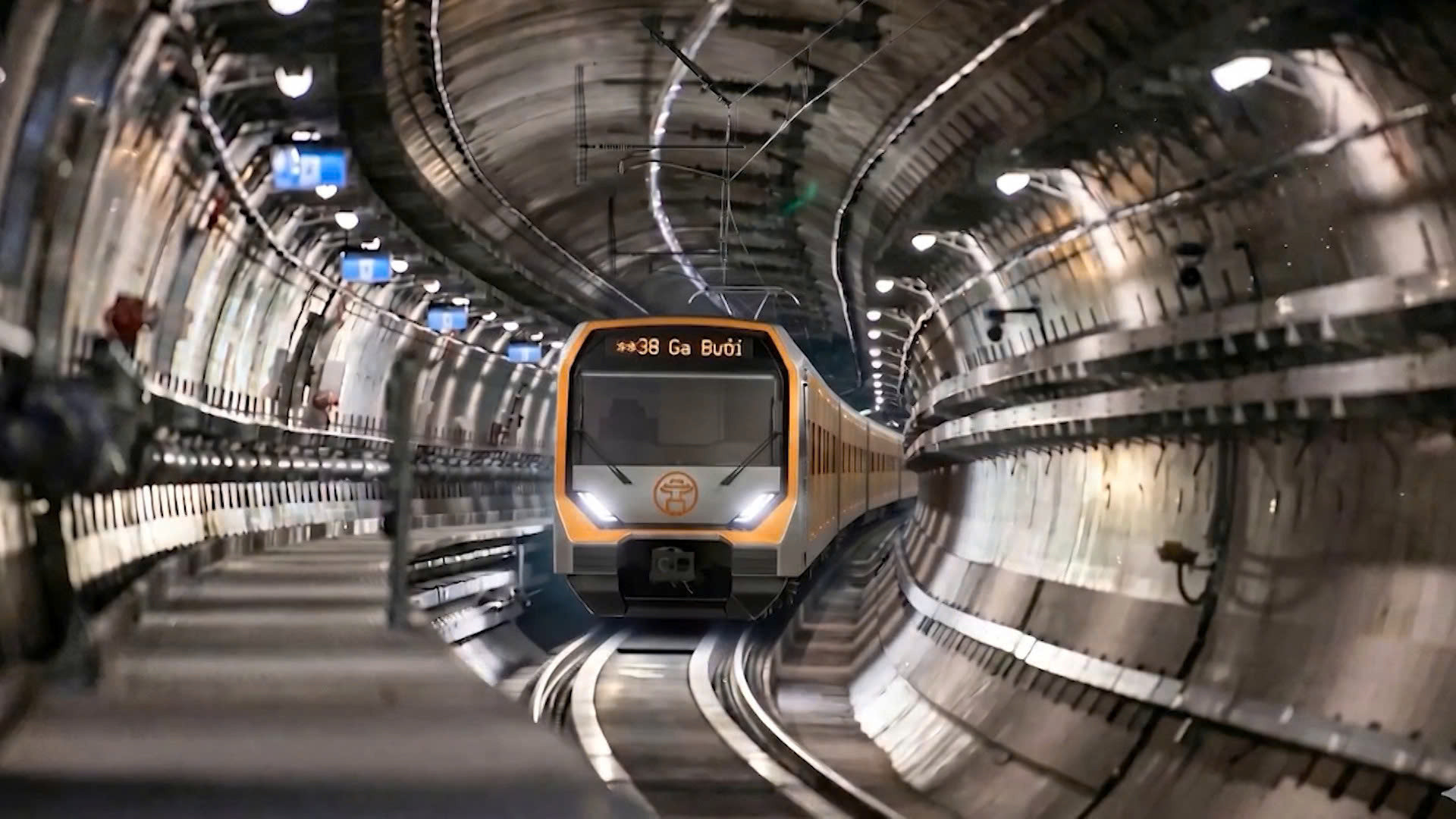
Addressing the financing requirements, Thang said Hanoi's proposed urban railway development program would require more than VND1 quadrillion (approximately $38 billion) between 2026 and 2030.
Of that amount, the five lines currently being advanced would account for approximately VND900 trillion ($34 billion).
"This is an investment of enormous scale," Thang said.
He explained that strict expenditure controls and early preparation of financing resources had been priorities from the outset.
The municipal government is developing a diversified financing strategy combining the city budget, central government support, official development assistance (ODA) loans, bond issuance and revenues generated from land development around public transport corridors.
The latter will come from transit-oriented development (TOD), an urban planning model that concentrates housing, commercial activities and public services around mass transit stations.
Funding requirements and potential sources are being calculated according to investment needs and the city's capacity to mobilize capital during each implementation phase.
Hanoi will continue coordinating with central ministries and agencies to finalize financial support arrangements and capital allocations.
At the same time, the city will manage its public investment program and prepare the necessary conditions to generate revenue from TOD projects.
According to Thang, TOD areas will serve two purposes: generating financial resources for urban railway construction and reshaping the city's urban development.
They are also expected to improve land-use efficiency and support the creation of new urban areas connected to public transportation.
With the financing options already under preparation, expected central government support and Hanoi's own resource-mobilization capacity, Thang expressed confidence that the city could gradually balance its finances and meet investment requirements according to project schedules.
During implementation, municipal authorities will regularly update capital requirements and disbursement capacity for each project, allowing resources to be allocated proactively and efficiently.
Hanoi plans to develop all five metro lines simultaneously, prioritizing funding to bring them into operation by 2030. The city considers the program an important and urgent infrastructure priority.
Thanh Hue

