 Vietnamnet.vn

 Podcast



According to Dr. Le Dong Phuong, former official at the Vietnam Institute of Educational Sciences, the shortage of public school seats is the root cause behind the intense pressure surrounding Hanoi’s class 10 entrance exam.
He said the competition has become even more stressful than university entrance exams.
Nearly 40% of students forced to seek alternatives
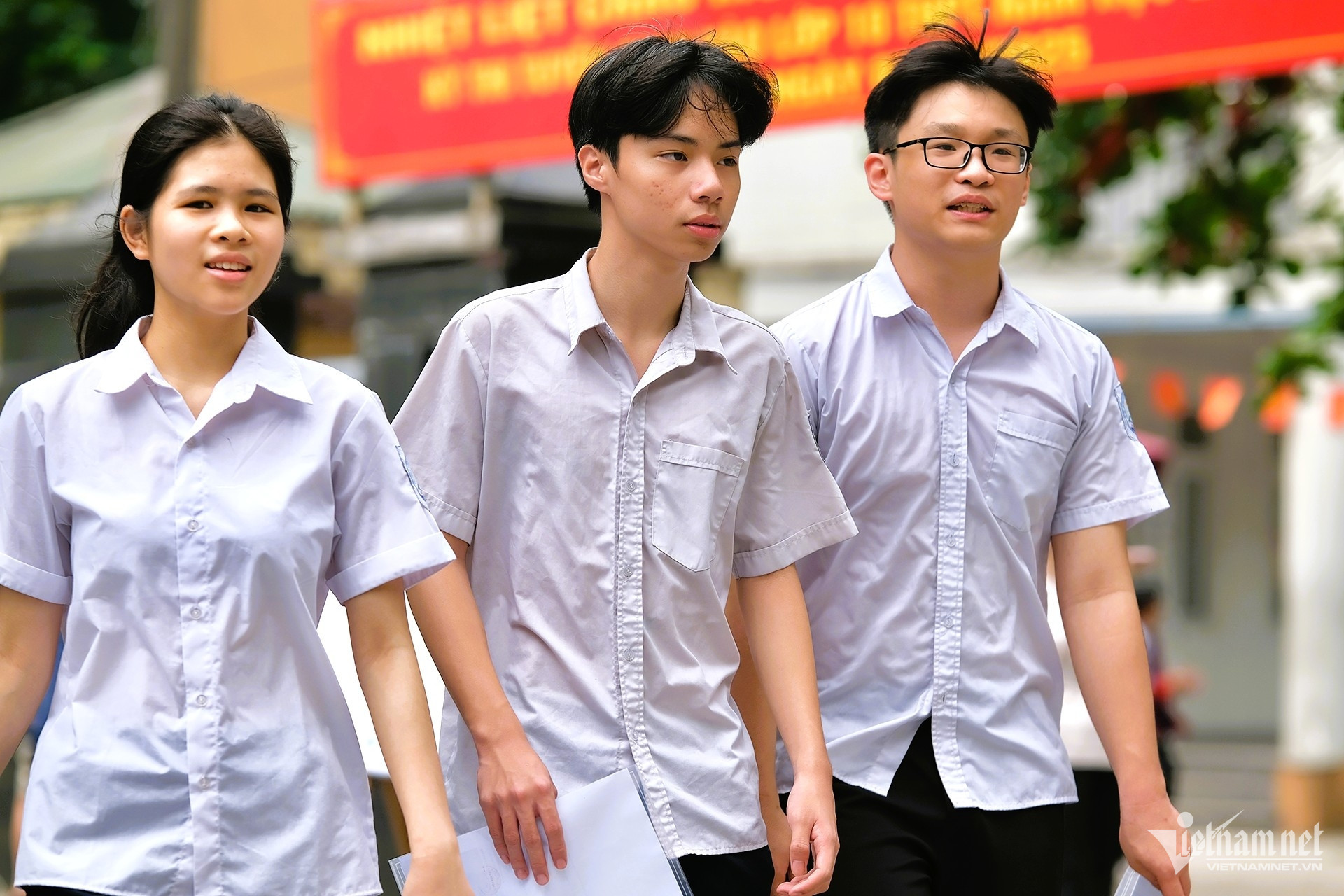
Hanoi currently has 127 public high schools, but the city is projected to need an additional 91 schools between 2031 and 2045. Photo: Manh Hung
According to Hanoi’s Department of Education and Training, around 147,000 students are expected to complete lower secondary education in the 2025-2026 academic year.
However, only about 88,000 students will be admitted to public educational institutions, equivalent to nearly 60%.
That means roughly 40% of students will have to attend private schools or pursue other educational pathways.
The reality has intensified competition for public high school places, driven not only by educational quality but also by financial pressure.
For many middle-income families, public schools remain the only financially feasible option, causing class 10 entrance exams to remain highly stressful year after year.
Speaking to VietNamNet, a Hanoi parent identified as N.T said tuition fees at private schools typically range from 5 million to 12 million VND ($190-$455) per month, excluding additional expenses.
“If both children attend private school, monthly costs could reach 20 million to 25 million VND ($760-$950), which is beyond the ability of many civil servant and office worker families, even when both parents have stable jobs,” she said.
She added that living costs in Hanoi are already high, making it impossible for many households to devote all income to education expenses.
“For families with limited financial resources, public schools are almost the only option,” she said.
Dr. Le Dong Phuong said a situation in which only slightly more than half of ninth-grade graduates can enter public high schools is difficult to accept for a large urban center.
“A major city having such a ratio is truly concerning,” he said.
According to Phuong, Hanoi has rapidly expanded high-rise residential areas and new urban zones but has failed to adequately address school overcrowding.
At the same time, many residents still have modest incomes, making fierce competition for public school places inevitable.
Calls for urgent expansion of public high schools

Dr. Le Dong Phuong said Hanoi urgently needs to accelerate the construction of additional public high schools.
He also suggested the city could mobilize private schools to help educate part of the student population, provided those schools meet standards for facilities and teaching staff.
However, he emphasized that Hanoi should introduce financial support mechanisms to ensure tuition costs at private schools do not exceed those at public institutions.
Currently, Hanoi has 127 public high schools, including 122 regular schools, four specialized schools, and one high-quality institution.
Under the capital city’s draft master plan, Hanoi will need an additional 91 high schools between 2031 and 2045 to meet educational demand.
Dr. Dao Ngoc Nghiem, former director of Hanoi’s Department of Planning and Architecture, said the shortage of schools is partly due to rapid population growth outpacing infrastructure development.
“The population has increased while land allocated for social infrastructure, especially schools, remains very limited,” he said.
Nghiem acknowledged that solving the problem would be extremely challenging because most urban land has already been allocated for other projects.
Still, he suggested Hanoi could temporarily utilize vacant office buildings left unused after administrative mergers and restructuring.
Repurposing surplus government facilities could help increase the number of high schools in the short term and ease land shortages for school construction, he said.
In the longer term, however, Nghiem noted that converting office buildings into schools would not fully solve the issue because many facilities lack sufficient space.
Another possible solution, he added, would be redistributing population density away from overcrowded urban areas.
However, he stressed that decentralizing the population would require synchronized investments in jobs, housing, and social infrastructure.
“It requires strong determination and sufficient resources from both the state budget and society,” Nghiem said.
He also called for stricter management of new urban developments to ensure social infrastructure planning, including schools, is implemented properly.
National leaders call for reducing exam pressure
At a voter meeting in Hanoi on May 4, General Secretary and President To Lam acknowledged that entrance exams for class 10 had become even more stressful than university admissions.
“Students must be tested, but exams should not be used as a tool to exclude children from school,” he said.
According to To Lam, the current admissions pressure stems from a shortage of schools and teachers, forcing authorities to rely on administrative screening methods.
He reiterated Vietnam’s policy goal of universal education from preschool through grade 12 alongside tuition support measures.
The General Secretary and President said exams should primarily assess teaching and learning quality rather than create anxiety and heavy pressure for students, parents, and teachers.
He added that each exam season brings stress and even negative consequences, which could be resolved if school capacity were expanded sufficiently.
Local governments, he said, can rely on population data to forecast annual student demand and invest in school construction accordingly.
Thanh Hung
.svg)
