 Vietnamnet.vn

 Podcast



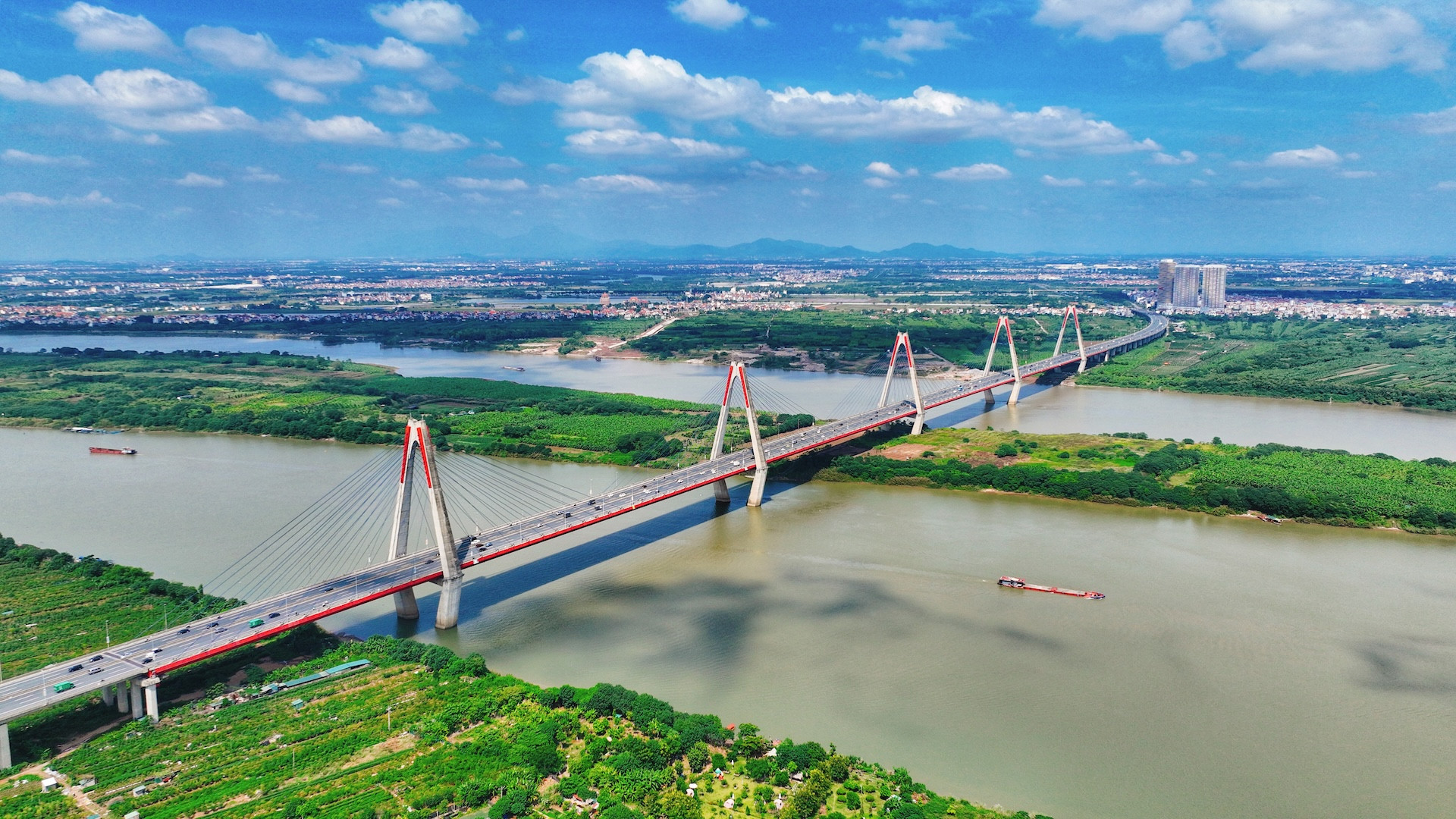
On May 11, the Hanoi People’s Council approved a resolution on the investment policy for the Red River Landscape Boulevard project across Hanoi.
Covering more than 11,000ha, stretching roughly 80km along both banks of the Red River, requiring preliminary investment capital of more than VND736 trillion, and affecting around 200,000 residents, this could become the largest urban redevelopment project in modern Hanoi’s history.
Hanoi appears to have made a century-defining choice: bringing the Red River back to the center of the city’s development structure.
The Red River
Vietnam is entering a new development period with ambitions for very high growth over many consecutive years. As the country’s leading city, Hanoi cannot stand outside that pressure.
However, the problem is that Hanoi’s current urban core is gradually reaching its development limits. Inner-city land is becoming increasingly scarce, infrastructure overloaded, traffic heavily congested, and public space insufficient.
If Hanoi wants to maintain rapid growth for many years ahead, it has no choice other than opening up a new development space.
And the Red River is the last space large enough within the city for Hanoi to reinvent itself.
The map shows one interesting reality: the river runs through the center of Hanoi yet for decades it has resembled a “development void”. Meanwhile, many major cities around the world have transformed themselves by reconnecting with their rivers.
Hanoi is now seeking to do the same with the Red River - turning it into the front facade of the capital.
Hanoi’s new power
For many years, Hanoi’s major ideas often became trapped in overlapping planning systems, fragmented authority, prolonged investment procedures, and regulations involving dikes, land, site clearance, and financial mechanisms.
But today’s situation is different. The revised Capital Law, together with stronger decentralization and delegation mechanisms, is giving the city government far greater autonomy in urban governance and development.
For the first time in many years, Hanoi has enough authority to pursue such a mega urban project.
The city now holds much greater decision-making power. Hanoi’s People’s Council approved the investment policy with 100 percent support from delegates. The city has also reached agreement with the Ministry of Agriculture and Environment on hydrology, flood drainage, and river flow management approaches.
Even Hanoi’s decision to revise the project by reducing nearly VND120 trillion in investment costs, narrowing the scope from 19 to 16 wards and communes, and dividing implementation into two phases lasting until 2038 demonstrates a shift from the mindset of a “symbolic mega-project” toward a more practical and long-term urban redevelopment program.
The consortium implementing the project includes THACO, Dai Quang Minh, and Hoa Phat, the major private corporations that are rapidly expanding into infrastructure and urban development.
THACO is Vietnam’s largest automobile industrial group, Hoa Phat is the country’s largest steel producer, while Dai Quang Minh previously participated in infrastructure and urban development projects in Thu Thiem.
Dealing with displaced residents
The approach toward residential areas outside the dike system also reveals the scale of this transformation. For the first time, very strong language has appeared: “gradually relocating, reorganizing, and replanning all residential areas outside the dikes,” signaling that Hanoi is preparing for an unprecedented urban redevelopment campaign along the Red River.
But when implementing a project of the century, Hanoi must face the challenge of social consensus.
About 200,000 people are expected to be affected by the project. This is not just a story of site clearance; it is the displacement of entire residential communities, livelihoods, and urban memories that have existed for decades by the Red River.
For many residents in Bat Trang or Nhat Tan, the area outside the dikes by the river is not just a place to live. It is also a place of livelihood, traditional craft villages, alluvial land, tourism, and community relationships accumulated over generations.
What people fear most is perhaps not just losing their homes but losing their future in the very city where they have always lived.
In many urban projects in Vietnam, residents often receive a one-time compensation and leave, while land values after planning can increase manifold. This leaves many feeling excluded from the development process taking place on land that once belonged to them.
The important thing is not just how much money is compensated, but whether the people get to share the benefits from that urbanization process.
Tu Giang
.svg)
