 Vietnamnet.vn

 Podcast



Hanoi is planning to pilot a time-based ban on gasoline-powered motorbikes in Hoan Kiem Ward, covering the area enclosed by Hang Dau, Phung Hung, Trang Thi, Hang Khay, Trang Tien, Tran Quang Khai and Tran Nhat Duat streets, starting July 1.
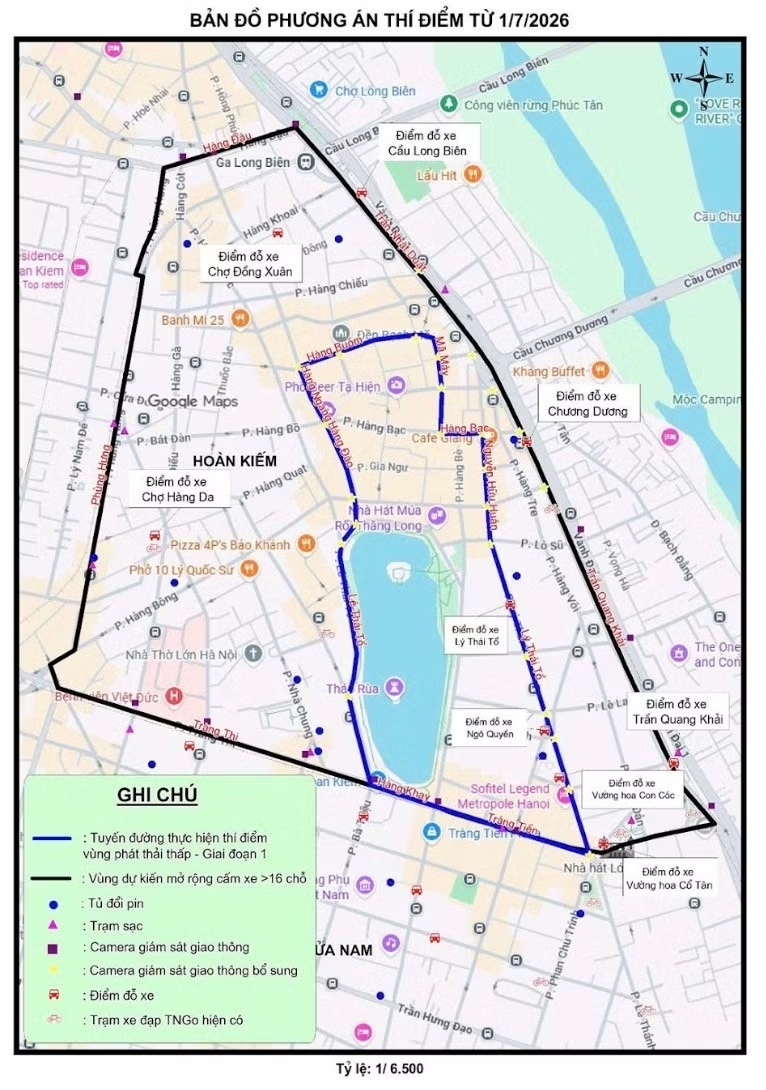
Map illustrating the proposed pilot low-emission zone in Hanoi.
The Hanoi People’s Committee is finalizing a draft proposal to submit to the municipal People’s Council for approval of a resolution on a “low-emission zone within Ring Road 1.” The policy will apply to organizations and individuals using transport within the designated area.
Under the draft, the low-emission zone will span nine wards within Ring Road 1: Hoan Kiem, Cua Nam, Ba Dinh, Giang Vo, Ngoc Ha, Hai Ba Trung, O Cho Dua, Tay Ho and Van Mieu - Quoc Tu Giam.
Pilot phase in Hoan Kiem from mid-2026
The city plans to implement the scheme in three phases.
In phase one, from July 1 to December 31, 2026, a pilot will be conducted in Hoan Kiem Ward. The buffer zone will cover approximately 1.65 square kilometers, with a perimeter of 5.5 kilometers, encompassing the streets of Hang Dau, Phung Hung, Trang Thi, Hang Khay, Trang Tien, Tran Quang Khai and Tran Nhat Duat, extending inward to the old quarter.
The core zone within Hoan Kiem Ward will include 11 streets: Trang Tien, Hang Khay, Le Thai To, Hang Dao, Hang Ngang, Hang Buom, Ma May, Hang Bac, Hang Mam, Nguyen Huu Huan and Ly Thai To. This area spans 0.5 square kilometers, with a perimeter of 3.5 kilometers and a population of around 20,000 residents.
Within the low-emission zone, gasoline motorbikes will be banned from 6pm to midnight on Fridays, and from 6am to midnight on Saturdays and Sundays. Gasoline motorbikes used for ride-hailing services via app-based platforms will also be prohibited.
Light trucks under 2 tons that meet Level 4 emission standards will only be allowed to operate outside peak hours. Trucks weighing between 2 and under 3.5 tons, also meeting Level 4 standards, may operate from 9pm to 6am the following day with written approval from the city’s police. Trucks over 3.5 tons will be banned entirely.
Vehicles with 16 seats or more, except buses and school transport, will be prohibited from operating on streets in the old quarter and around Hoan Kiem Lake in Hoan Kiem and Cua Nam wards during peak hours, from 6am to 9am and from 4pm to 7:30pm daily. These vehicles must also meet Level 4 emission standards under national technical regulations.
Buses and school transport vehicles must comply with Level 4 emission standards, while cars under 16 seats using fossil fuels must also meet the same requirement.
Expansion across Ring Road 1 by 2028
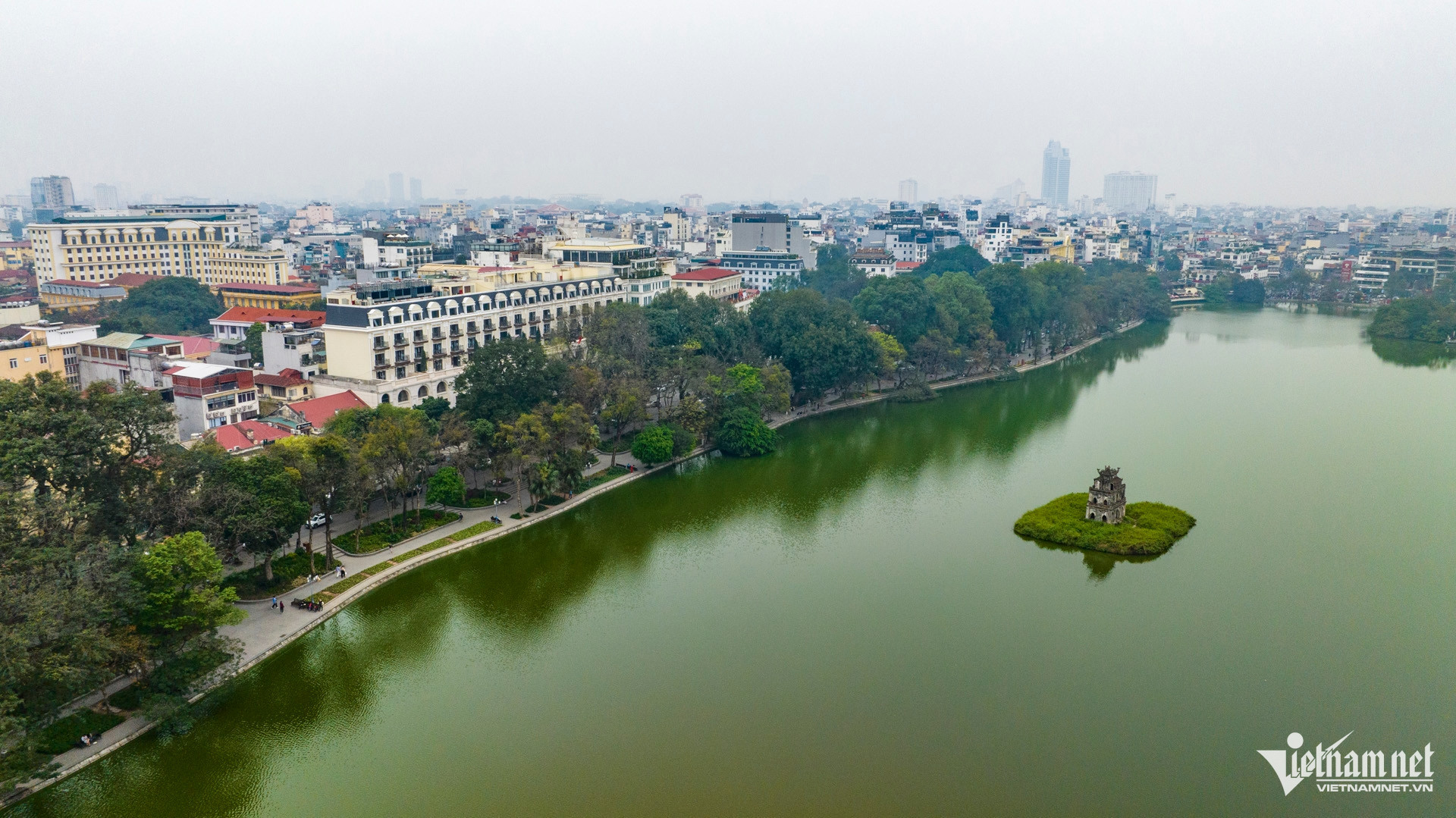
In phase two, from January 1 to December 31, 2027, the pilot will expand to include both Hoan Kiem and Cua Nam wards, covering approximately 3.6 square kilometers with a perimeter of 8.3 kilometers and a population of about 136,000 people.
The core zone in this phase will include 14 streets such as Nguyen Du, Han Thuyen, Tran Hung Dao, Tran Khanh Du, Tran Quang Khai, Tran Nhat Duat, Hang Dau, Cua Dong, Ly Nam De, Ton That Thiep, Dien Bien Phu, Hang Bong, Cua Nam and Le Duan.
In phase three, from January 1, 2028 to December 31, 2029, the low-emission zone will be expanded to cover the entire area within Ring Road 1, spanning 26.07 square kilometers, with a perimeter of 25 kilometers and a population of around 625,000 people.
This broader zone will be bounded by major roads including Hoang Cau, De La Thanh, O Cho Dua, Xa Dan, Dai Co Viet, Tran Khat Chan, Nguyen Khoai, Tran Khanh Du, Tran Quang Khai, Tran Nhat Duat, Yen Phu, Nghi Tam, Au Co, An Duong Vuong, Lac Long Quan, Buoi and Cau Giay.
To support the rollout of the low-emission zone, Hanoi plans to develop green transport infrastructure and public transit systems, including electric buses, urban railways, bicycles, electric bicycles, shared electric motorbikes and battery-swapping stations.
The city will also establish monitoring and control systems for vehicles entering the zone through license plate recognition cameras, traffic signage, surveillance infrastructure and centralized data management systems.
In parallel, Hanoi aims to encourage residents to transition to clean-energy vehicles while increasing public transport usage. Support policies to facilitate this transition are also under consideration.
The low-emission zone initiative is designed to control and gradually reduce emissions from motorized vehicles in the city center, contributing to improved air quality, better public health and a higher quality of urban life.
Thanh Hue
.svg)
