 Vietnamnet.vn

 Podcast


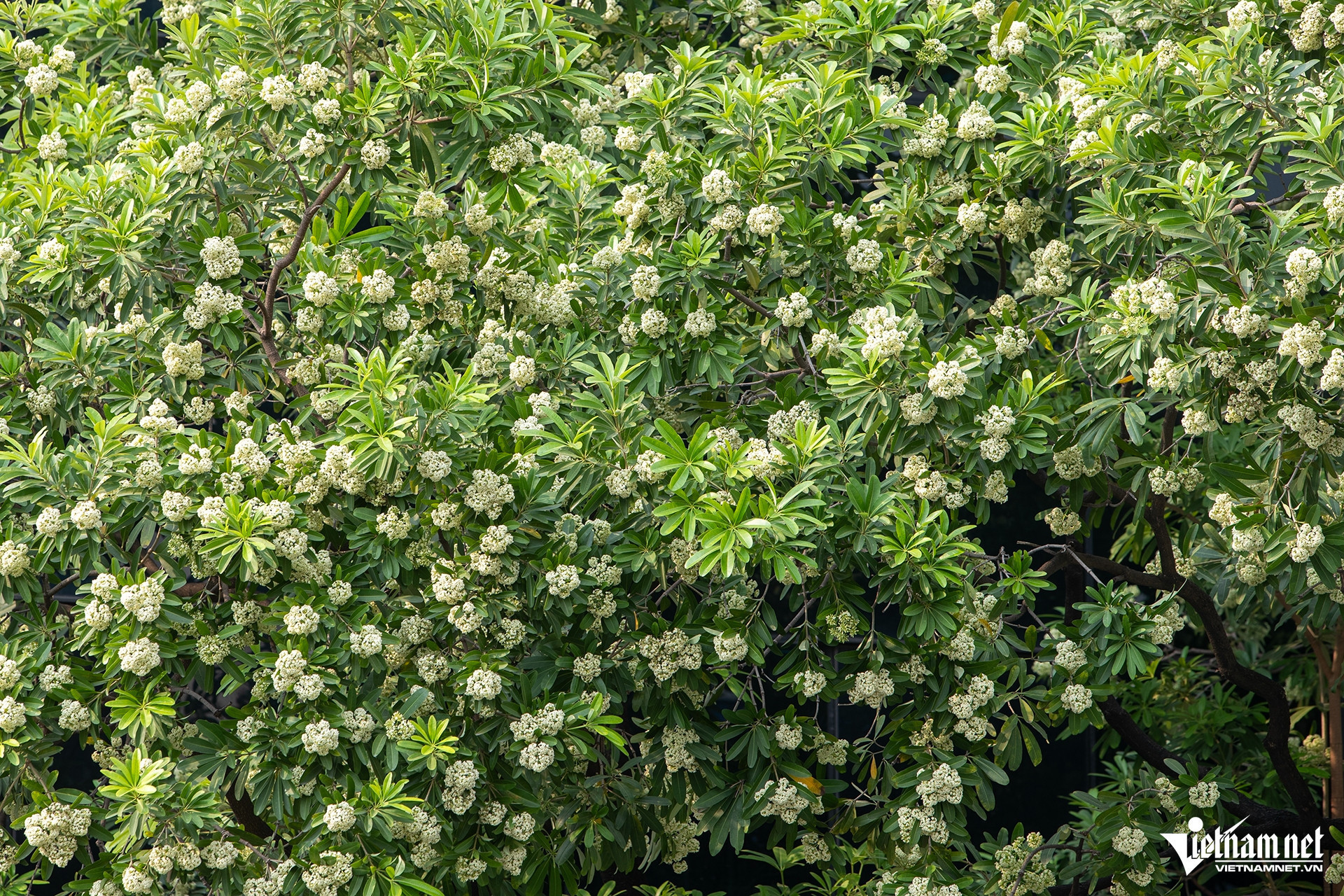
Hanoi plans to preserve its iconic milkwood trees while adjusting their distribution in densely planted areas, as part of a broader strategy to improve urban greenery and residents' quality of life.
More than 1,300 streets to undergo tree planting review
Under Hanoi's proposed development plan for urban trees, parks and public spaces, the city will review more than 1,300 streets and identify 33 suitable tree species for planting.
Each street is expected to feature one or two dominant tree species, creating a distinctive identity while ensuring a more consistent urban landscape.
Speaking to VietNamNet, Tran Anh Tuan, Deputy Director of the Technical Infrastructure Management Center under the Hanoi Department of Construction, said tree selection must take into account more than planting numbers.
Species must be suited to local climatic conditions, environmental factors and the specific characteristics of individual streets.
In recent years, Hanoi has planted several varieties, including vuong, muong and small-leaved tropical almond trees.
The city prioritizes species that grow well, remain green throughout the year, withstand extreme weather and pose a low risk of falling or breaking during storms.
These criteria are intended to protect pedestrians, road users and surrounding infrastructure.
Hanoi is also developing a list of recommended tree species while identifying those that should be restricted or prohibited to minimize risks and maintain urban safety and aesthetics.
One notable aspect of the plan concerns milkwood trees, locally known as hoa sua, which have long been associated with Hanoi's autumn atmosphere.
Although the city intends to preserve these trees, it does not plan to maintain them unchanged in every location.
Areas with particularly high concentrations of milkwood trees will be reviewed, especially where their strong fragrance affects nearby residents.
Depending on local conditions, authorities may reduce planting density, prune branches or relocate selected trees.
The adjustments are intended to limit discomfort during the flowering season, particularly among residents who are sensitive or allergic to the trees' intense scent.
The approach reflects a broader shift in urban tree management, emphasizing not only conservation and planting numbers but also compatibility with residential environments and public health.
Hanoi plans hundreds of pocket gardens and neighborhood parks
Alongside improvements to roadside greenery, Hanoi will work with local authorities to assess 517 proposed locations for pocket gardens and small landscaped spaces.
Commune- and ward-level administrations will be encouraged to develop implementation plans and allocate resources for managing and expanding parks and public gardens under their delegated responsibilities.
They will also strengthen inspections and address activities that damage urban trees.
These include driving nails into trunks, attaching advertisements, covering tree bases with concrete, cutting roots without authorization, illegally felling trees and relocating them in violation of regulations.
Between now and 2030, Hanoi plans to review available public land and develop small parks and gardens covering approximately 500-2,000 square meters each.
These spaces are intended to provide accessible areas for recreation, relaxation and community activities within residential neighborhoods.
Priority will be given to areas where public green spaces remain limited, particularly newly developed urban neighborhoods.
The city will also continue implementing larger park projects, gradually working toward a target of 10 square meters of green space per resident.
According to the development plan, the objective extends beyond increasing tree numbers or expanding parkland.
Authorities also aim to ensure that newly planted trees can grow sustainably, contribute to environmental improvements and enhance the city's urban landscape over the long term.
Hanoi targets greener urban development by 2045
Hanoi's roadmap for developing urban greenery, parks and public spaces is divided into two main phases.
From now until 2030, the city will prioritize reviewing and replacing unsuitable or potentially hazardous trees.
It will also develop additional green spaces within residential communities and gradually improve the street tree network.
During the 2030-2045 period, Hanoi will focus on implementing park development projects, expanding green areas and connecting roadside greenery with parks, public gardens and other open spaces.
The goal is to establish an interconnected network of green infrastructure across the capital.
Through these measures, Hanoi aims to improve environmental conditions, enhance residents' quality of life and gradually transform itself into a greener, more livable and sustainably developed city by 2045.
Vu Diep

