 Vietnamnet.vn

 Podcast



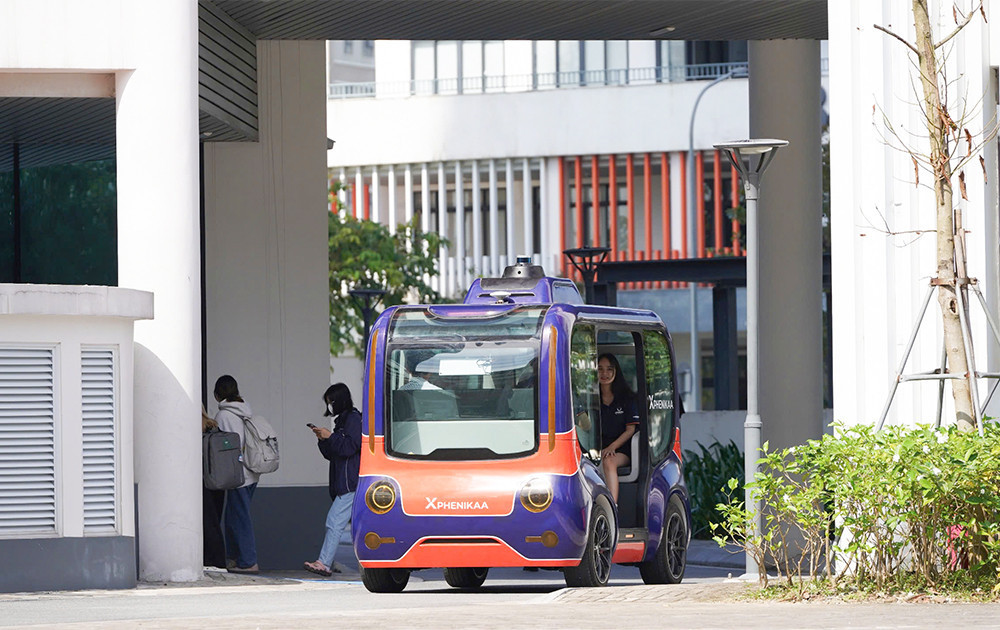
Under the approved plan, each self-driving bus may carry no more than eight passengers per trip, while robotaxis will be limited to four passengers.
Although the vehicles are designed with Level 4 autonomous-driving technology, the buses and robotaxis must operate in a controlled mode, with a safety supervisor seated in the driver’s position.
Cleaning and delivery robots must also have supervisors present at their operating sites.
Each vehicle will only be allowed onto the road after receiving written confirmation from the Hanoi Management Board of Hi-Tech Parks and Industrial Zones covering its hardware configuration, software version, technical inspection results, independent safety assessment and permitted operating area.
Information on routes, speeds, operating hours, weather conditions, maximum passenger numbers, emergency-stop procedures, rescue arrangements, fire prevention and firefighting measures, and insurance must also be confirmed before operations begin.
Trial vehicles must display identification signs, while their operating areas must have warning notices, hotlines and data connections for monitoring. If a vehicle moves beyond its designated operating area or exceeds established safety thresholds, it must automatically stop or enter a minimal-risk condition.
The trial system will use LiDAR, cameras, high-resolution digital maps, high-precision GPS positioning and artificial intelligence algorithms. The project will be implemented by Phenikaa-X Joint Stock Company.
The results will provide a basis for researching and developing smart mobility services, autonomous buses, robotaxis and automated logistics within controlled environments. The initiative is also expected to contribute to Hanoi’s development of a smart city, green and connected transport, and transit-oriented development, or TOD, in the next phase.
The trial will be tightly controlled, with vehicles limited to a maximum speed of 40 kilometers per hour and permitted to operate only between 9am and 4.30pm.
Thanh Hue
.svg)
