 Vietnamnet.vn

 Podcast



Mornings in Co Hon begin early. While dew still clings to the tea leaves, groups of villagers leave their homes, shouldering woven baskets and heading into the hills. Their hands move swiftly, carefully picking tender tea buds and dropping them into baskets carried on their backs. Bright work clothes stand out against the endless green tea plantations, creating a scene that is both simple and breathtaking.
This year, unpredictable weather delayed the rainy season, pushing the tea harvest back by nearly a month. Yet the delay has done little to dampen local spirits.
"This year's tea buds are beautiful, with thick leaves. Although the harvest starts later than usual, everyone is happy because tea brings extra income for our families," said Lo Thi Phieng, a resident of Co Hon village.
Seen from above, the tea plantations stretch across the mountainsides like a vast green carpet. The hills echo with the cheerful conversations of villagers working among the rows of tea bushes, bringing liveliness to this peaceful border community.
According to Phieng, tea is far more than just another crop for many families in Co Hon. It has become their "poverty reduction tree." After the rice planting season finishes, villagers spend much of their spare time harvesting tea.
"The work isn't too physically demanding, but it provides stable income. Each worker can harvest about 40 kilograms of fresh tea leaves a day," she said.
Tea processing facilities in the area provide regular employment for dozens of local residents, who earn around VND200,000 per day.
For many households in the mountainous region, that income makes a significant difference, helping cover daily living expenses, purchase household necessities and support their children's education.
From tender tea buds to products infused with mountain flavors
In the past, many young people had to leave the village to find temporary work elsewhere. Today, the growth of the tea industry allows many of them to remain in their hometowns while earning stable incomes and caring for their families.
Lo Van Thuong, head of Co Hon village, said: "In the past, villagers depended almost entirely on corn fields and rice paddies. Now, tea has made life much easier. Young people have greater motivation to stay in the village and continue farming their land."
The story of Co Hon reflects a broader trend seen across many ethnic minority communities, where crops suited to local natural conditions are creating new economic opportunities.
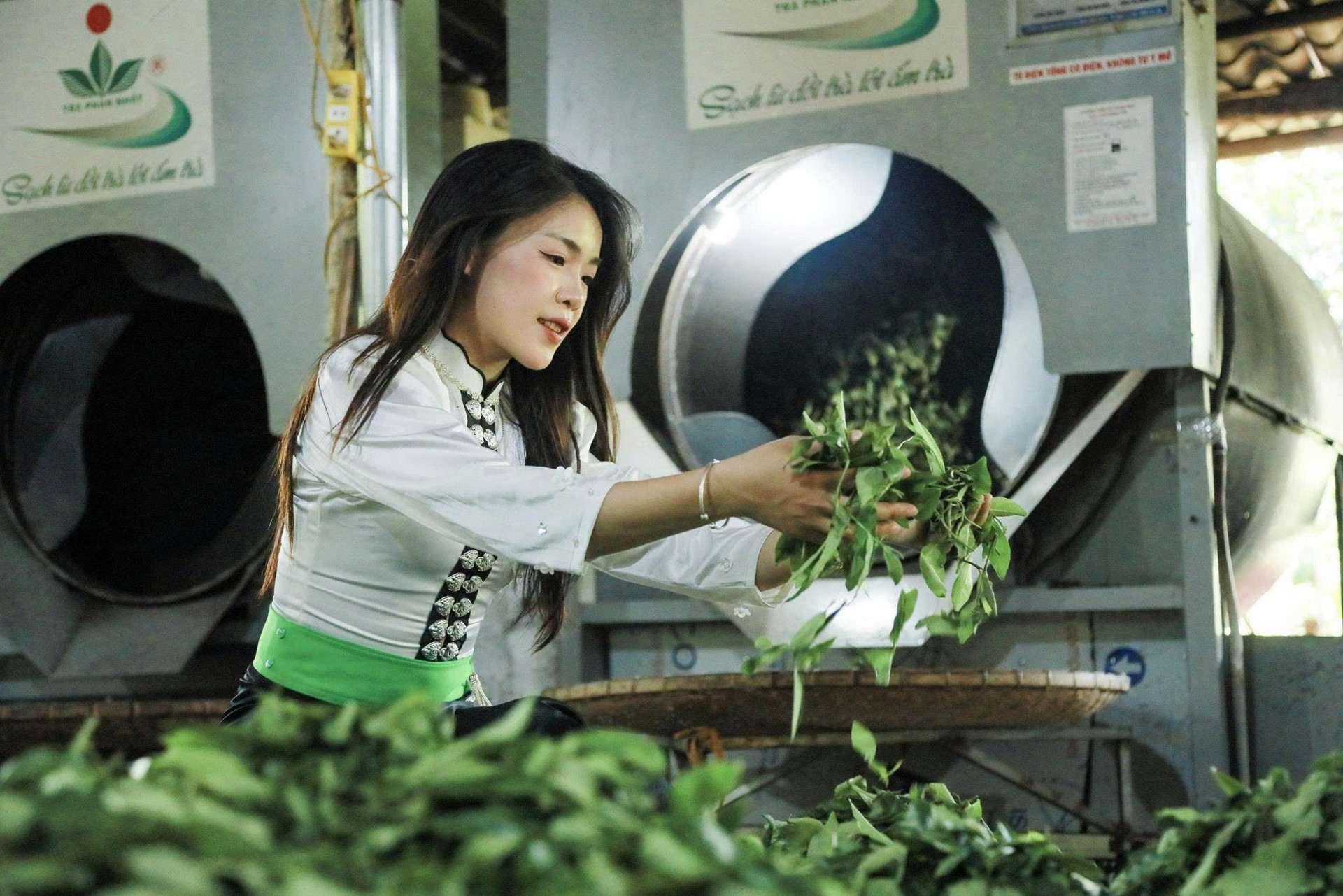
Producing high-quality tea is far from simple. After harvesting, fresh tea leaves undergo carefully controlled processing stages, including initial heating, rolling, repeated heating and drying. Each step requires experience, precision and patience.
Drying machines run continuously as the aroma of fresh tea fills the air. Once completed, the finished tea displays a distinctive golden-green color, delivering a gentle bitterness followed by a lingering natural sweetness.
Tea producers estimate that more than five tons of fresh tea leaves are needed to produce one ton of finished dried tea. Every harvested tea bud represents the dedication and hard work of local farmers.
A sustainable path for ethnic community
In recent years, alongside macadamia, coffee and medicinal plants, tea has become one of the most valuable cash crops in many mountainous provinces.
In Dien Bien Province, besides the famous Shan Tuyet tea-growing areas in Tua Chua area, plantations in places such as Co Hon are gradually establishing their own reputation in the market.
Tea cultivation not only creates jobs but also helps conserve land, protect the environment and promote more sustainable agricultural development.
With greater investment in cultivation techniques, branding and market expansion, Co Hon tea has the potential to become one of the region's signature products while providing higher incomes for ethnic minority communities.
As the afternoon sun slowly disappears behind the mountain ranges, baskets overflowing with freshly picked tea are carried down from the hills. Faces glisten with sweat, but they also reflect satisfaction and hope.
In this remote border region of Dien Bien, tea is quietly telling a story of renovation. From the fresh green buds covering the hillsides, more prosperous harvests are gradually taking shape in every household and every village.
The Co Hon tea season carries the fragrance of the mountains and the promise of a brighter future for the people living along Vietnam's frontier.
Hoang Quy
.svg)
