 Vietnamnet.vn

 Podcast



Two-lane expressways were once seen as vital arteries to unlock regional development. However, lacking hard medians and emergency lanes, many are now accident-prone stretches.
VietNamNet launches the series “Challenges of Two-Lane Expressways” to spotlight infrastructure bottlenecks, raise safety concerns, and push for improvements to ensure these major roads are truly safe for all travelers.
Part 1: Two-lane expressways emerge as Vietnam’s new traffic danger zones
Part 2: Vietnam’s expressways: Built with half the budget, facing full risk
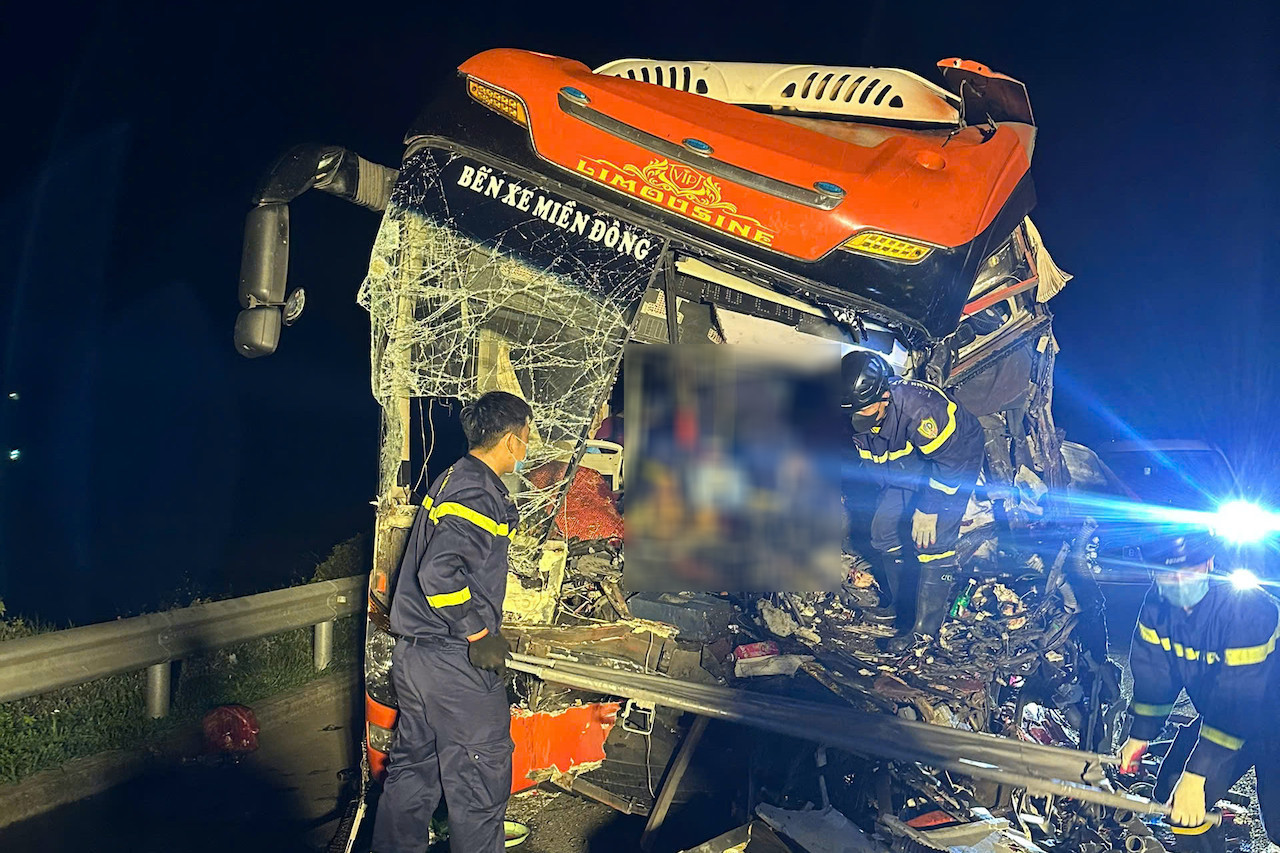
In response to growing concerns over hazardous conditions on two-lane expressways, the Traffic Police Department under the Ministry of Public Security said it is collaborating with the Vietnam Road Administration to conduct a thorough review of infrastructure and traffic organization along these routes.
For expressways lacking emergency lanes or with narrow driving lanes, traffic police have proposed lowering the speed limit to enhance safety.
As an immediate step, the department has instructed its expressway patrol units to maintain a 24/7 presence, rotating shifts every eight hours to monitor and penalize violations. They are also coordinating with other agencies to handle reckless driving, lane encroachment, and mobile phone use while driving.
From another perspective, Dr. Khuong Kim Tao, former deputy chief of staff at the National Traffic Safety Committee, emphasized that in addition to road expansion, an immediate solution could involve more rational speed lane segregation.
“For instance, on a two-lane expressway without an emergency lane, the left lane can maintain the maximum allowable speed, while the right lane should be assigned a lower speed to create a safety buffer, giving vehicles more time to respond during incidents,” said Tao.
He also highlighted the need to improve drivers’ skills. According to Tao, the Ministry of Transport (now the Ministry of Construction) has mandated that training centers enhance instruction on highway driving, especially in handling situations on phased-investment expressways.
However, current training still lags behind real-world demands. Many drivers, especially of passenger buses and heavy trucks, remain inattentive on the job, increasing accident risks.
“Raising awareness among road users is a critical step in ensuring highway safety. Strict compliance with traffic rules such as maintaining safe following distances, adhering to speed limits, and wearing seat belts is essential for minimizing accidents,” Tao stressed.
The Traffic Police Department also advises drivers and vehicle owners to carry additional safety gear such as reflective vests and warning cones to use in case of breakdowns.
Tao also recommended that authorities promptly add vital features like rigid medians, emergency lanes, rest stops, and lighting systems to ensure safety. Simultaneously, expressway expansion efforts must be expedited.
Plans to expand 15 expressway segments
Acknowledging the shortcomings of two-lane expressways, in late March 2024, the Prime Minister issued an urgent directive requiring relevant ministries to finalize and issue a national technical standard for expressways. The directive also called for detailed investment plans to upgrade two-lane expressways to full standards, including through public-private partnerships (PPP).
Recently, the Ministry of Construction submitted a proposal to the government requesting approval to expand 15 segments of the North-South Expressway through public investment, across two phases. This does not include the Cao Bo - Mai Son and Cam Lo - La Son routes, which are already under upgrade.
The ministry proposed two options:
Option 1: Combine the 15 segments into a single project spanning 966 km, with an estimated investment of approximately USD 5.04 billion (excluding construction loan interest).
Option 2: Divide the segments into two regional projects:
Project 1 would cover eight segments from Mai Son to Cam Lo, totaling 415 km, with an estimated investment of about USD 2.13 billion.
Project 2 would include seven segments from Quang Ngai to Dau Giay, totaling 551 km, with an estimated cost of around USD 2.91 billion.
Following the Prime Minister’s directive and the Ministry of Construction’s proposal, several major infrastructure companies such as Xuan Truong, Deo Ca, Son Hai, Phuong Thanh, and the Vietnam Infrastructure Development and Finance Investment Corporation (Vidifi) have expressed strong interest in participating in the expansion projects.
As a leader in expressway investment, management, and operations, the Vietnam Expressway Corporation (VEC) has endorsed the second option proposed by the ministry.
According to VEC, this option involves a lower total investment, making it easier to attract investors. However, challenges include lack of synchronized construction across the entire route and increased management costs due to dispersed construction areas. VEC proposed proceeding with the second option and phasing the investment into two stages.
N. Huyen-Dinh Hieu
.svg)
