 Vietnamnet.vn

 Podcast


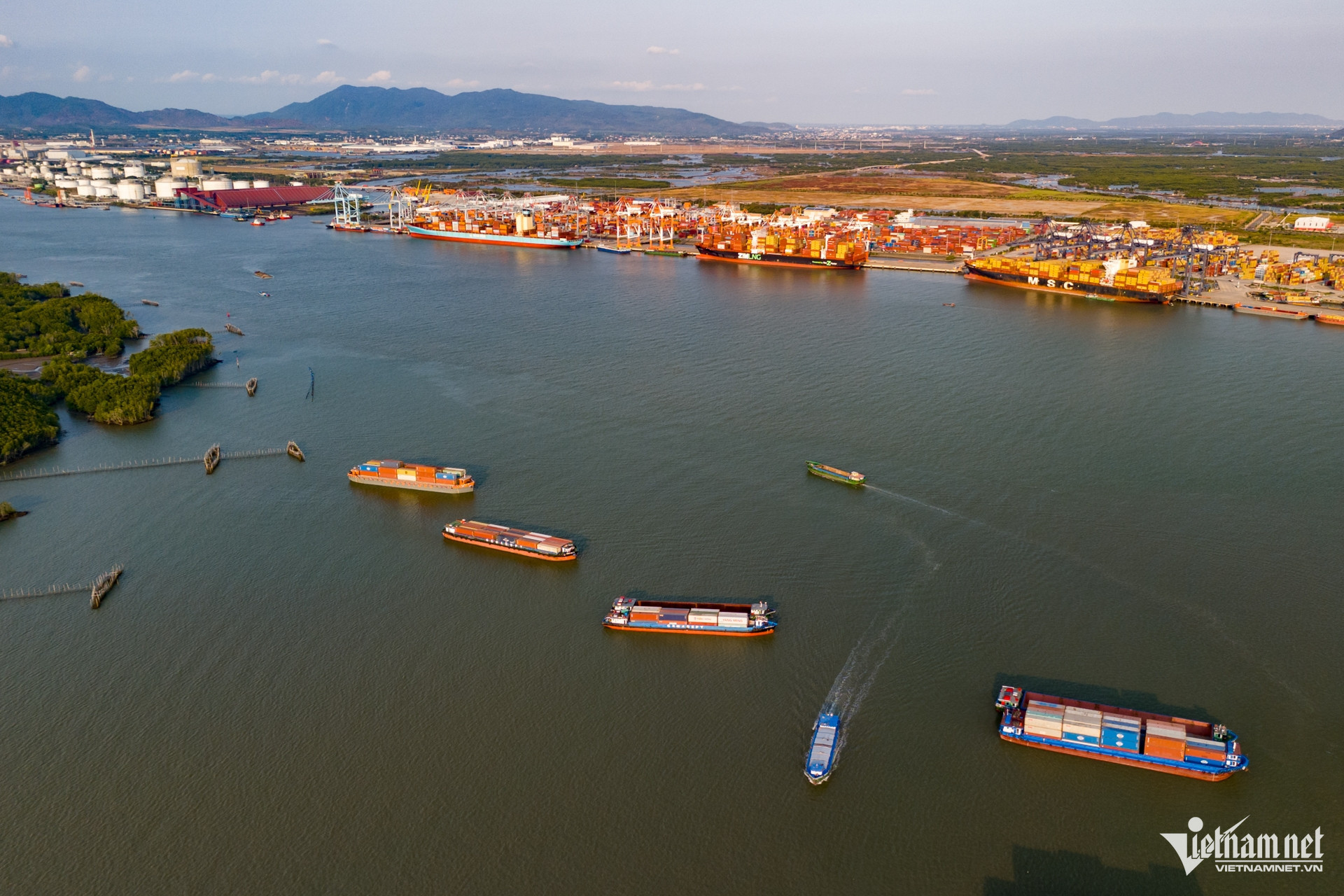
Ho Chi Minh City has issued a comprehensive action plan to accelerate the development of its marine economy, setting out specific implementation timelines and expected outcomes.
The initiative is designed to translate Resolution No. 20-NQ/TW of the 14th Party Central Committee and the municipal Party Committee's Plan No. 126-KH/TU on sustainable marine economic development into concrete measures.
City authorities expect the strategy to maximize Ho Chi Minh City's geographical advantages following administrative restructuring, positioning the marine economy as a major driver of overall economic growth.
Can Gio international port to drive maritime expansion
Under the plan, Ho Chi Minh City aims to become a modern, green, smart and internationally competitive maritime center by 2030.
Priority sectors include shipping, logistics, trade, finance, coastal tourism, marine science and technology, and innovation.
A key component of the strategy is the development of major growth projects, particularly the Can Gio International Transshipment Port, which will be linked to a free trade zone.
The city also plans to strengthen an interconnected maritime growth corridor linking Can Gio, Cai Mep, Thi Vai and Con Dao.
This network is expected to support the integration of port operations, logistics services and other marine economic activities.
By 2045, Ho Chi Minh City aims to establish itself as an internationally recognized Asian center for maritime services, finance, logistics, and marine science and technology.
Ambitious economic and environmental targets for 2030
To achieve these objectives, the city has established specific economic, social and environmental targets for 2030.
Revenue from coastal and island tourism is expected to grow by an average of 14% annually.
In the fisheries sector, the production value of marine aquaculture is targeted to increase by an average of 8% per year, accounting for 15% of the industry's total production value.
Alongside economic expansion, the city will invest in coordinated coastal infrastructure and environmental protection measures.
It aims to complete the entire planned coastal road network, subject to available financial resources and implementation capacity.
Digital transformation is another major priority.
Ho Chi Minh City plans to digitize all data relating to marine resources, the environment, infrastructure and maritime cultural heritage.
The city also targets the collection and treatment of 100% of coastal plastic waste, reflecting its commitment to balancing economic development with environmental sustainability.
Nine priority areas and a phased implementation roadmap
The action plan identifies nine groups of priority tasks, including improving institutional frameworks, attracting strategic investors, strengthening human resources, and ensuring national defense and security.
Implementation will take place in two main phases.
During 2026, the city will focus on completing the necessary policy mechanisms, finalizing planning arrangements and preparing conditions for major investment projects.
From 2027 to 2030, Ho Chi Minh City will accelerate coordinated implementation, concentrating resources on infrastructure development and the expansion of key marine economic sectors.
The strategy is intended to lay the foundation for a stronger maritime economy while helping the city enhance its competitiveness in regional and international logistics networks.
Tuan Kiet

