 Vietnamnet.vn

 Podcast



The heritage train offers passengers not only a means of transport, but also a sense of connection linking destinations across central Vietnam, tourism with transport, and nostalgic memories with contemporary experiences. While older travellers are reminded of journeys from decades ago, younger passengers and international visitors are discovering a greener, culture-rich way to explore the region.
A standout feature of the journey is the community carriage, transformed into a moving cultural space amid the dramatic scenery of central Vietnam. Traditional art troupes from Hue and Da Nang cities perform onboard, bringing the distinct cultural identities of each locality directly to passengers.
Regional cuisine also plays a central role in shaping the experience. Local specialties served on the train introduce travellers to the stories, ingredients and traditions behind each dish, allowing passengers to savour both flavours and cultural heritage throughout the journey.
Behind the service is the coordinated effort of railway engineers, operational staff and service personnel who work together to ensure both smooth operations and a memorable passenger experience.
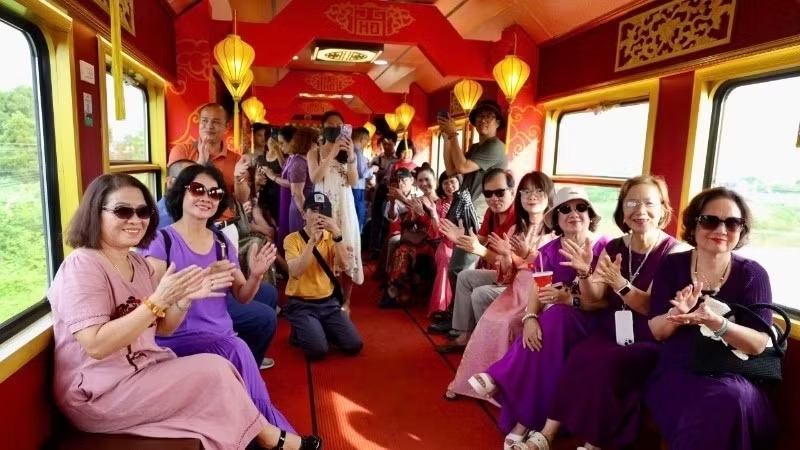
Vietnam’s railway sector is seeking to modernise its image by integrating tourism, culture and experiential elements into rail services. Rather than focusing solely on infrastructure, the industry is paying greater attention to details such as clean carriages, welcoming community spaces, attentive onboard service and reliable operations.
The Hue–Da Nang heritage route is considered especially unique thanks to its passage through iconic destinations such as Hai Van Pass and Lang Co Bay, which are renowned for both natural beauty and cultural richness. These advantages provide strong potential for experiential tourism development.
The success of the train also relies on close cooperation among transport operators, local authorities, artists and onboard service teams. Cultural performances, regional culinary offerings and community-focused activities have helped create a travel experience distinct from other forms of transport.
However, maintaining such a service presents considerable challenges. The railway section crossing Hai Van Pass is known for difficult terrain and unpredictable weather, particularly during the storm season in central Vietnam. At the same time, organising performances and onboard catering requires seamless coordination among technical, logistics and service units.
Railway workers are also under constant pressure to innovate as passengers increasingly expect not only safe and punctual travel, but also comfort, cultural engagement and emotional value. Balancing strict operational standards with service innovation has therefore become a key task for the industry.
Looking ahead, the “Central Heritage Connection” train is expected to evolve beyond a transport-tourism product into a creative cultural space. Writers and artists joining railway-organised journeys have already found inspiration in the passing landscapes of Hai Van Pass, Lang Co Bay and the changing scenery outside the train windows.
Ideas under consideration include broadcasting poetry, essays and music inspired by central Vietnam and the railway journey through the train’s audio system, helping immerse passengers more deeply in the atmosphere of the heritage region.
Additional cultural products such as travel journals, illustrated postcards and collections of writings inspired by the route are also seen as potential souvenirs for visitors.
With such initiatives, the heritage train is gradually being shaped into a unique cultural ecosystem where each journey leaves passengers with lasting memories of central Vietnam’s heritage landscape./.
.svg)
