 Vietnamnet.vn

 Podcast



Nguyen Thi Lan in Vinh Hung Commune, Phu Tho, told VietNamNet on July 8 that when she got the June electricity bill she was shocked because it was double the May bill.
Lan's family uses many electrical appliances. In May, the weather was hot and the electricity bill jumped to nearly VND2.9 million, and in June, the bill shot up to over VND5.8 million, about two times that of May.
Every year, during peak summer months, the family’s electricity bill tends to rise sharply compared to early-year months. However, during last year’s peak heat month, the family’s bill was only around VND4.5 million.
“More than VND5.8 million in a single month is the highest electricity bill our family has ever paid,” Lan said.
Hoang Thi Hien, who lives in Dinh Cong Ward, Hanoi, said her June electricity bill rose sharply compared to previous months. Her household paid nearly VND2.35 million in June, compared with VND1.6 million in April and VND1.97 million in May.
“Our household's electricity usage habits have barely changed, yet the bill still increased,” she said. During the daytime, both she and her husband are at work, while their child stays with grandparents. “Most electrical appliances are used only in the evenings.”
Many other households also told VietNamNet that their June electricity bills increased by 30-40 percent compared to May.
Regarding the sharp increase in June bills, the Northern Power Corporation (EVNNPC) said it had advised residents to use electricity efficiently before the 2026 hot season. The corporation also guided customers on monitoring their electricity consumption and explained factors that could affect electricity bills during periods of extreme heat.
Northern Vietnam experienced consecutive and prolonged record-breaking heat waves throughout May and June.
Electricity demand within EVNNPC's service area remained above 20,000 MW for many consecutive days, repeatedly setting new records, with the peak reaching 21,142 MW on June 24. Daily electricity output also hit a record 447.6 million kWh on June 25.
Electricity of Vietnam (EVN) also reported that during the heat wave from June 22 to June 25, the national power system recorded an all-time high daily electricity output of 1.215 billion kWh on June 25, while peak capacity reached 57,537 MW on June 24.
“These figures show that electricity demand across the region rose sharply during the heat wave, causing consumption to increase,” EVNNPC said.
In addition, June coincides with school summer holidays, meaning children spend more time at home. This leads to greater use of air conditioners, electric fans, household appliances and other electrical equipment.
The utility noted that for residential customers subject to Vietnam's tiered electricity pricing system, additional electricity usage may fall into higher-priced tariff brackets under current regulations.
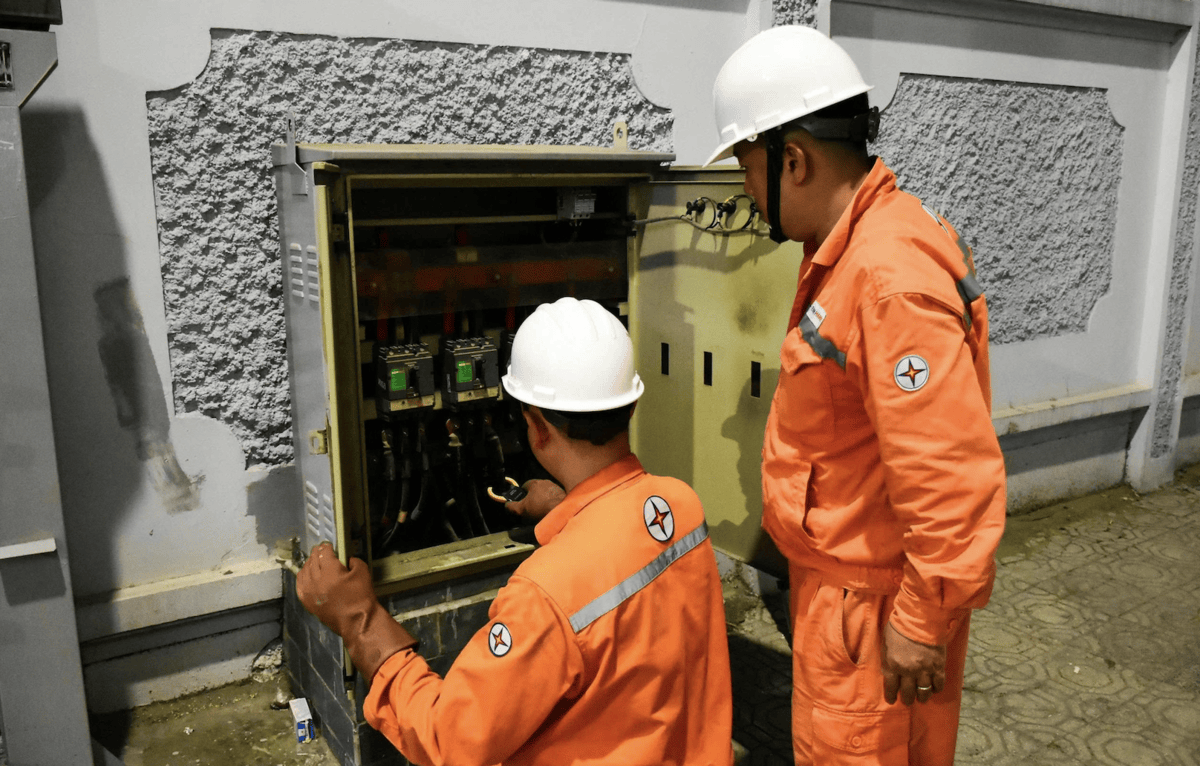
Regarding customer feedback and complaints, EVNNPC said it reviews all inquiries. Its Customer Service Center analyzes each customer's actual electricity consumption, compares it with usage and billing history from previous months, explains the reasons for any increase, and advises customers on efficient electricity use.
If customers remain concerned or request further verification, the local power company will inspect metering equipment, electricity meter readings, and conduct on-site verification to ensure all complaints are handled transparently and promptly.
Explaining why many households saw higher electricity bills in June, Bui Quoc Hung, Deputy Director General of the Electricity Authority under the Ministry of Industry and Trade (MOIT), said the main reason was a sharp increase in electricity demand during the heat waves.
At the same time, Vietnam's residential electricity pricing follows a progressive tiered tariff system. The lowest rate in Tier 1 is VND1,940 per kWh, with prices increasing gradually across higher tiers of consumption. The highest rate applies to Tier 6 at VND3,460 per kWh.
Hung emphasized that when electricity demand rises, especially during hot weather as households use more air conditioners and cooling devices, electricity consumption may move into the higher-priced tiers under the progressive pricing system. This is the main reason why electricity bills increase during periods of extreme heat.
To prevent electricity bills from surging, MOIT has consistently advised households to use electricity efficiently, reduce unnecessary consumption, and minimize electricity usage in higher tariff tiers, thereby lowering electricity costs, Hung said.
Tam An
.svg)
