 Vietnamnet.vn

 Podcast



On the morning of August 19, 2025, red ribbons were cut simultaneously at 80 locations across the nation. At the same time, 250 projects were inaugurated or broke ground across Vietnam. From Hanoi to Da Nang, from Ho Chi Minh City to Nghe An and Kien Giang, the country witnessed an unprecedented “day of projects” in its investment history.
The event coincided with the 80th anniversary of the August Revolution and National Day, adding symbolic weight. Eight decades after independence, Vietnam now enters a new phase: striving to secure its position in the global value chain.
If in 1945 independence was won with arms and determination, today the tools for progress are capital, infrastructure, and institutions.
Symbolic projects unveiled
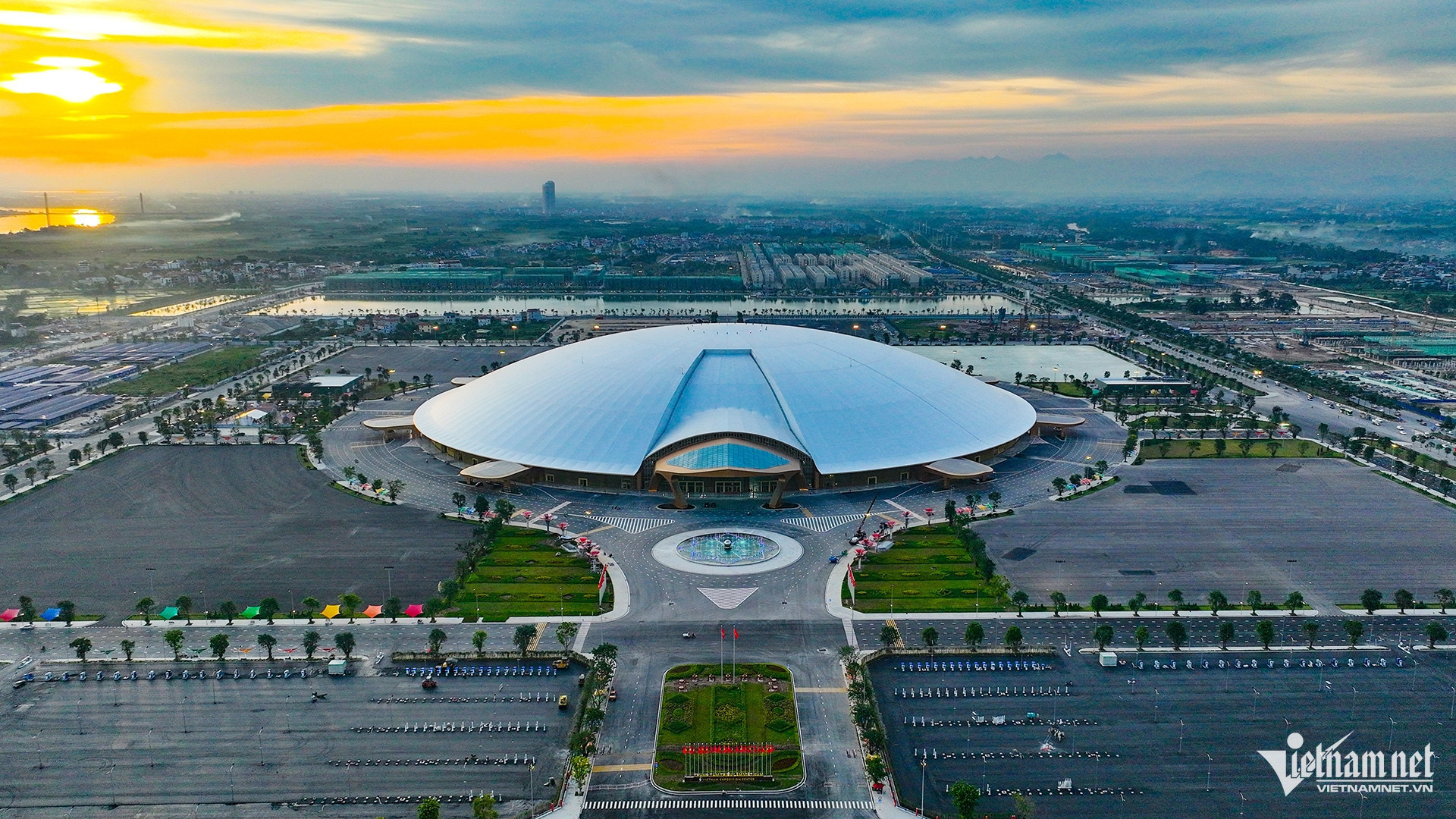
Among the 250 projects, several stood out as milestones.
The National Exhibition and Fair Center in Hanoi, developed by Vingroup, broke ground in August 2024 with an expected completion date in 2027. Yet, the project has been completed two years ahead of schedule. Designed in the form of the sacred Kim Quy (Golden Turtle) and constructed with super-heavy steel structures, it now ranks among the world’s top 10 largest exhibition centers and promises to become a new landmark for the capital.
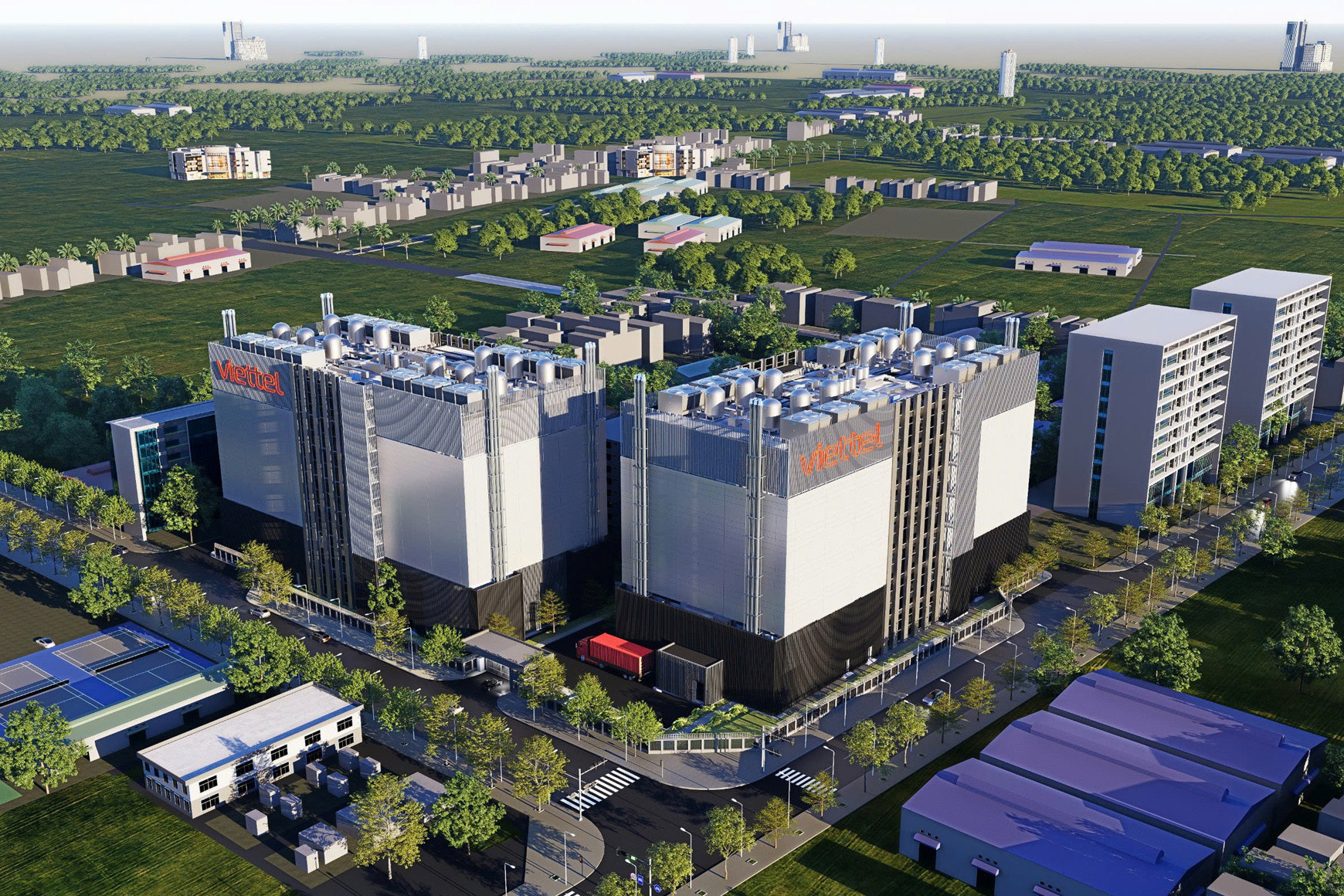
Viettel inaugurated its Research and Development Center, focusing on semiconductors, artificial intelligence, and big data, underscoring its ambition in high technology. In Nghe An, a 1,000-bed oncology hospital was completed to address urgent healthcare needs in the North Central region.
In the energy sector, Hai Anh Wind Power Plant, with an investment exceeding $59 million, contributes to the nation’s green transition. In Da Nang, a commercial-service complex with an integrated theme park worth nearly $3.1 billion was launched, expected to drive tourism growth in central Vietnam.
In transportation, the Rach Mieu Bridge was designed and built entirely by Vietnamese units, finishing four months ahead of schedule. This project symbolizes the maturity of domestic engineering capacity.
These projects serve not only economic development but also a greater belief: Vietnam can rise by relying on its own internal strength.
Investment as a growth pillar
According to Deputy Minister of Construction Le Anh Tuan, these 250 projects alone could contribute more than 18% of GDP in 2025 and over 20% in the years after, providing unprecedented momentum.
The government has set an 8% growth target for this year, aiming for double-digit growth from 2026 to 2030.
However, Deputy Minister of Finance Do Thanh Trung warned that for GDP to grow above 10% annually, total social investment must rise from the current 32.1% of GDP to 41.5% by 2030, equivalent to $262-296 billion annually, one and a half times current levels. Of this, the state sector must contribute $76-88 billion, foreign direct investment $40-45 billion, and the private sector $146-162 billion.
To achieve this, industries must also grow at high rates: industry and construction by 11-12% annually, and services by 10-11%, both higher than 2024.
This requires adequate electricity, affordable logistics, and a skilled workforce. Yet many power projects in the National Power Development Plan VIII remain stagnant, logistics costs remain high, and there is a shortage of skilled technical labor. In short, double-digit growth is not just about capital, but also about systemic readiness.
Beyond groundbreaking - the institutional bottleneck
While launching 250 projects is a breakthrough, 2,887 other projects remain stalled, representing $235 billion in capital and 347,000 hectares of land - a massive resource equivalent to half of GDP that is “frozen on paper.”
The problem is not capital, but institutions. Land, minerals, planning, and administrative procedures are riddled with overlaps that stifle investment. Compared to these 2,887 stuck projects, today’s 250 are just the visible tip of the iceberg.
The pressing question: will Vietnam resolve these bottlenecks comprehensively, or only partially, leaving other obstructions?
Japan after World War II, South Korea in the 1960s, and China after 1978 all used political milestones to trigger new growth cycles. Vietnam, after 80 years of independence, now stands before the same opportunity.
General Secretary To Lam spoke of “an era of national rise to prosperity, civilization, and strength.” To achieve this, Vietnam must first cut the ropes binding its feet.
The groundbreaking of 250 projects is a beginning, but decisive institutional reforms are essential to ensure that future projects are not “suspended.”
The 1986 Doi Moi reforms launched four decades of growth. If the current reforms are bold enough, they could serve as a launchpad for Vietnam to reach high-income status within decades.
Three breakthroughs - four pillars
To realize the dream of double-digit growth, Vietnam must build on three strategic breakthroughs: institutions, infrastructure, and human resources.
Institutions: immediately untangle the obstacles holding back 2,887 projects and unlock $235 billion in frozen capital.
Infrastructure: use public investment as a “catalyst” to mobilize maximum private resources, focusing on the North-South expressway, high-speed rail, urban railways, airports, and seaports.
Energy: ensure abundant and affordable supply, diversify sources, and prioritize clean and renewable energy.
Human resources: train a highly skilled workforce, because without it, capital and infrastructure cannot reach their full potential.
Eighty years ago, Vietnamese people proved their determination to win independence. Eighty years later, the challenge is to prove the ability to build prosperity.
Launching and inaugurating 250 projects in a single day is unprecedented. Yet, beyond this event, what matters most is whether institutional reforms are strong enough to turn today’s push into long-term momentum.
If successful, August 19, 2025, will not only be remembered as a day of groundbreaking ceremonies but as the start of a new era - when Vietnam enters the ranks of developed nations on the strength of reform and aspiration.
Tu Giang - Lan Anh
.svg)
