 Vietnamnet.vn

 Podcast



According to Hanoi’s newly announced 100-year master plan, the capital intends to develop a broad and flexible network of public libraries tailored to different residential areas as part of its cultural development strategy.
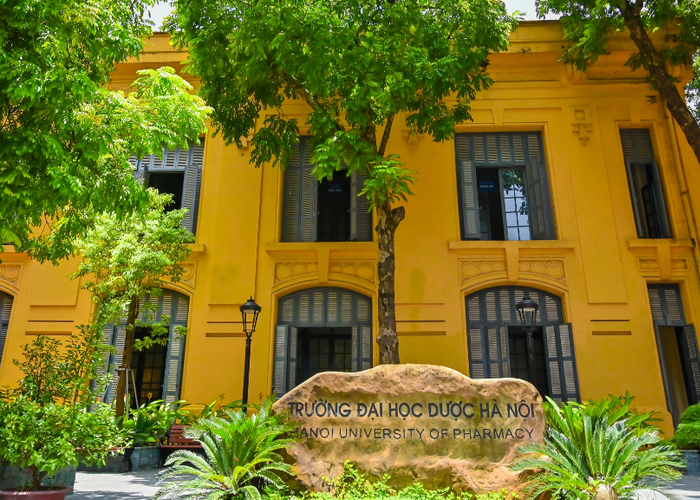
Notably, the plan identifies the complex at 19 Le Thanh Tong in Cua Nam Ward - currently home to Vietnam National University, Hanoi and part of Hanoi University of Pharmacy - as a future national-level academic heritage and academic diplomacy space operating under a “dynamic preservation” model.
Under this approach, the buildings will be conserved and protected for their historical value while continuing to maintain and promote contemporary academic activities tied to the development of Vietnam’s modern higher education system.
The master plan states that the heritage space will contribute to socio-economic development and strengthen Hanoi’s image as a knowledge-based and creative city through cultural and intellectual products.
The city also hopes the project will help promote academic tourism, heritage tourism and high-level academic diplomacy activities.
Previously, during the public consultation process for the Hanoi Capital Master Plan, city authorities proposed transforming the Hanoi General University space at 19 Le Thanh Tong into a “Museum of Universities in the Ho Chi Minh Era.”
The proposal was based on plans to relocate Hanoi University of Pharmacy and the Faculty of Chemistry under the University of Science, Vietnam National University, Hanoi.
However, many intellectuals, lecturers and students called for preserving the educational functions of Hanoi University of Pharmacy.
They argued that converting the entire complex into a museum could waste intellectual resources and diminish the vitality of a space deeply connected to academic activities.
Speaking previously with VietNamNet, architect Pham Thanh Tung said the 19 Le Thanh Tong complex is not only a more than 100-year-old architectural heritage site but also a “living museum” where teaching, research and academic traditions continue to thrive across generations.
According to Tung, Hanoi could establish an educational history museum elsewhere instead of transforming a functioning academic environment into a static exhibition space.
Architect Dao Ngoc Nghiem also noted that relocating universities out of the city center does not necessarily mean eliminating their original campuses entirely.
He suggested maintaining the 19 Le Thanh Tong campus for postgraduate education and scientific research in order to preserve the continuity of academic life.
Hanoi University of Pharmacy is a public university under the Ministry of Health and originated as the Faculty of Pharmacy of the Indochina Medical and Pharmaceutical University.
The institution became an independent university in 1961 and has played a major role in the development of Vietnam’s higher education system.
The campus still retains its distinctive early 20th-century architecture and is regarded as one of Hanoi’s historically valuable heritage sites.
Thanh Hue
.svg)
