 Vietnamnet.vn

 Podcast



Half a century ago, Vietnam's National Assembly officially renamed Sai Gon–Gia Dinh as Ho Chi Minh City, marking a milestone of profound historical significance. Since then, the city has grown into the country's economic powerhouse while repeatedly pioneering new approaches to development thinking and institutional reform.
On the occasion of the 50th anniversary of the city officially bearing the name of President Ho Chi Minh (July 2, 1976 – July 2, 2026), VietNamNet presents this special series tracing the journey from the historic naming decision to the city's remarkable development milestones, highlighting its resilience, aspirations and pioneering role as Vietnam enters a new era of growth.
Half a century after being honored with the name of President Ho Chi Minh, the city has transformed from a war-scarred urban center facing immense challenges into Vietnam's largest regional economy, contributing roughly one-quarter of the country's GDP and nearly one-third of total state budget revenue.
Beyond its economic achievements, Ho Chi Minh City has repeatedly served as the birthplace of new development ideas and governance models. From bold policy experiments during the centrally planned economy to today's special institutional mechanisms, the city has consistently played a pioneering role in shaping Vietnam's reform process.
As it reaches its 50-year milestone, the city now faces an unprecedented objective: sustaining double-digit economic growth during 2026–2030 while laying the foundation to become a globally competitive megacity.
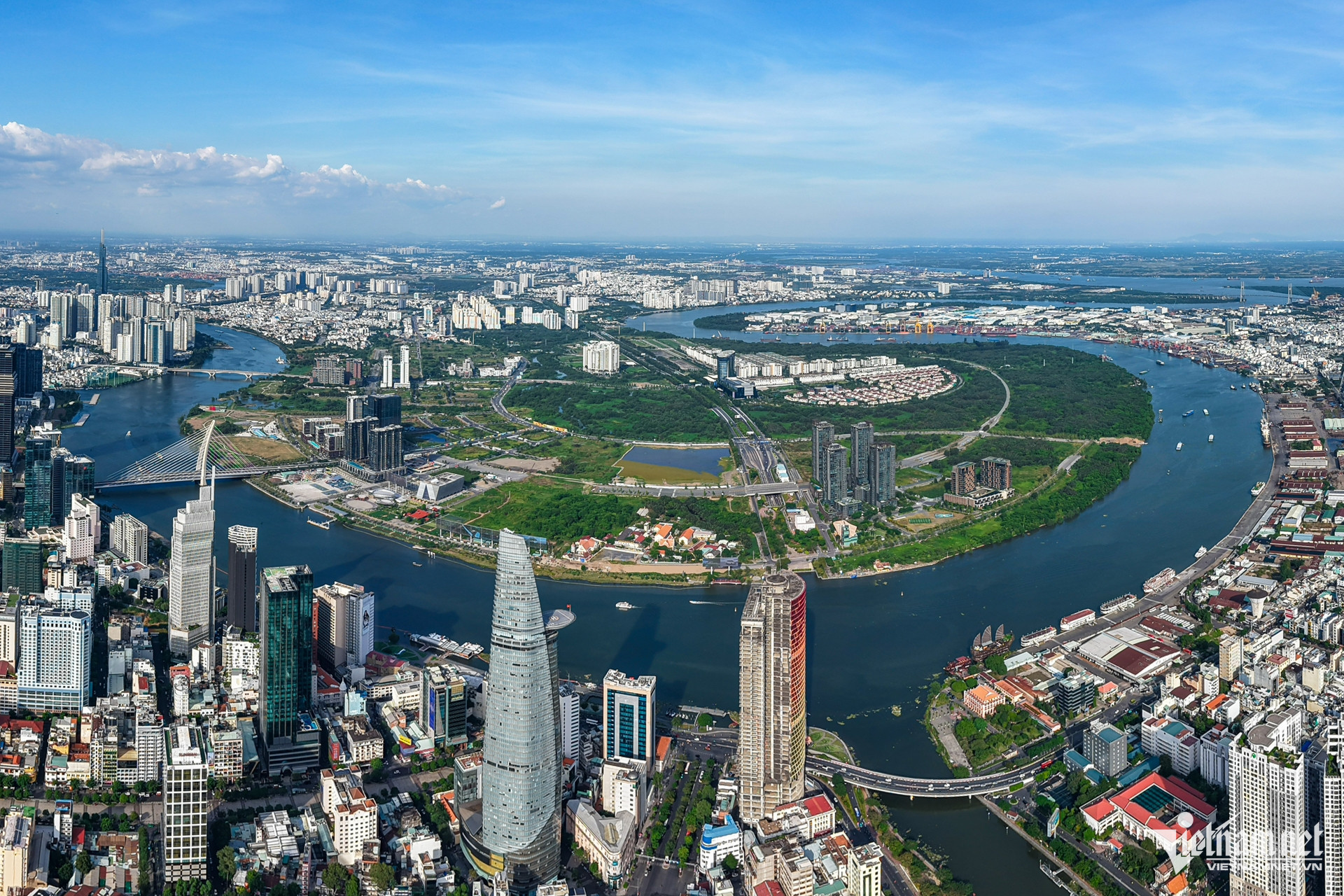
Economic resilience forged through hardship
According to Dr. To Thi Thuy Trang of the Ho Chi Minh City Institute for Development Studies, the decade following national reunification (1975–1986) was marked by extraordinary hardship. Applying a centrally planned, subsidy-based economic system to the dynamic commodity economy of Sai Gon–Gia Dinh quickly exposed deep structural problems. Inflation at one point reached 740 percent, living standards deteriorated sharply, and many families survived on meals supplemented with cassava, sweet potatoes and sorghum.
Against this backdrop, Ho Chi Minh City became the birthplace of several pragmatic policy experiments designed to overcome economic constraints. Initiatives such as the "triangular export" model, negotiated pricing mechanisms for food procurement and the "Three-Part Plan" allowing enterprises greater autonomy over raw materials not only addressed immediate shortages but also introduced new approaches to economic management.
Dr. Trang noted that these initiatives were closely associated with the leadership of Vo Van Kiet and Nguyen Van Linh during their tenure leading the city's Party Committee. More importantly, they represented policy experimentation driven by practical realities, gradually recognized and institutionalized by the central government, helping lay the groundwork for Vietnam's Doi Moi reforms launched in 1986.
As Vietnam transitioned toward a socialist-oriented market economy, Ho Chi Minh City continued to lead reform efforts. In 1989, Tan Thuan Export Processing Zone - the country's first export processing zone - was established, opening a new chapter in attracting export-oriented manufacturing investment. The model subsequently expanded into a network of industrial parks and export processing zones that became major drivers of industrialization and international integration.
The establishment of Saigon Hi-Tech Park in 2002 marked another major transition - from labor-intensive manufacturing toward high-technology industries - attracting global corporations including Intel and Nidec. During the same period, projects such as the Phu My Hung New Urban Area, East–West Boulevard (now Vo Van Kiet Boulevard) and numerous large-scale infrastructure developments reshaped the city's urban landscape.
Growth also accelerated in neighboring provinces. Binh Duong emerged as one of Vietnam's leading industrial centers through its extensive industrial park system, while Ba Ria–Vung Tau strengthened its role as an international maritime gateway anchored by the Cai Mep–Thi Vai deep-water port complex. Together, the complementary development of the three localities laid the foundation for a unified economic space following administrative integration.
Unlocking growth drivers for a unified megacity
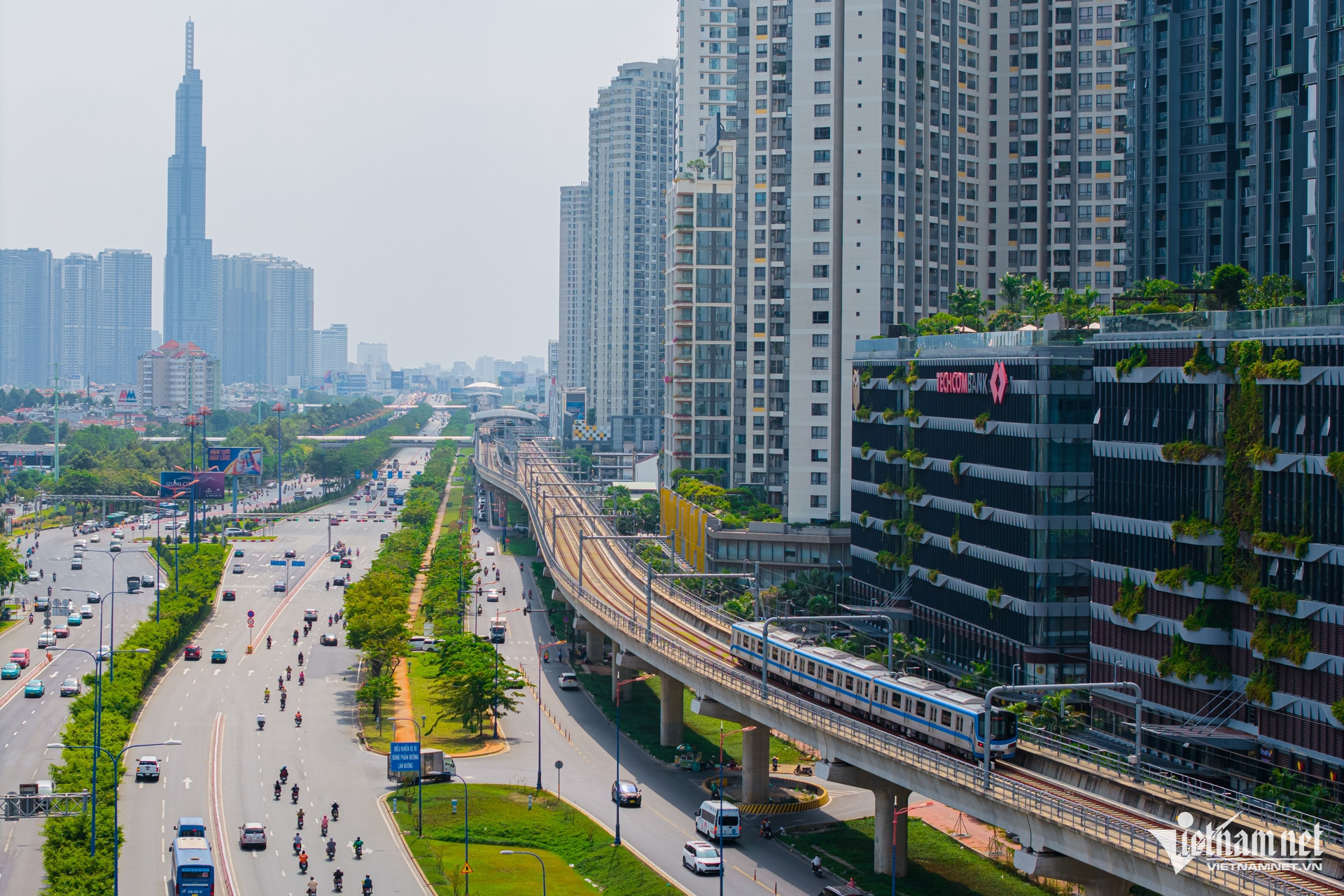
On July 1, 2025, under Resolution No. 60-NQ/TW issued by the Party Central Committee, Ho Chi Minh City officially merged with Binh Duong and Ba Ria–Vung Tau, creating Vietnam's first multi-centered megacity. The expanded metropolis covers more than 6,772 square kilometers and is home to over 14 million people. Its development strategy is organized around the framework of "three regions, one special zone, three development corridors and five strategic pillars."
In 2025, the city's gross regional domestic product (GRDP) was estimated at approximately US$115 billion (VND3 quadrillion), accounting for 23.5 percent of national GDP, while state budget revenue exceeded US$30 billion (VND785 trillion), nearly one-third of the country's total.
Between 2010 and 2024, the economy of the expanded city more than tripled, while GRDP per capita surpassed US$8,200, consistently remaining well above the national average.
However, experts caution that economic scale alone does not guarantee sustainable growth. The city's GRDP growth has slowed over the past decade. Whereas growth outpaced the national average during 2011–2015, it lagged by more than two percentage points during 2021–2024. Its contribution to national GDP has also declined from above 30 percent to around 23.5 percent.
Researchers argue this reflects the limitations of a growth model heavily dependent on foreign direct investment, low-cost labor and traditional service industries. The merger therefore represents not only an administrative expansion but also an opportunity to restructure economic space and cultivate new growth engines.
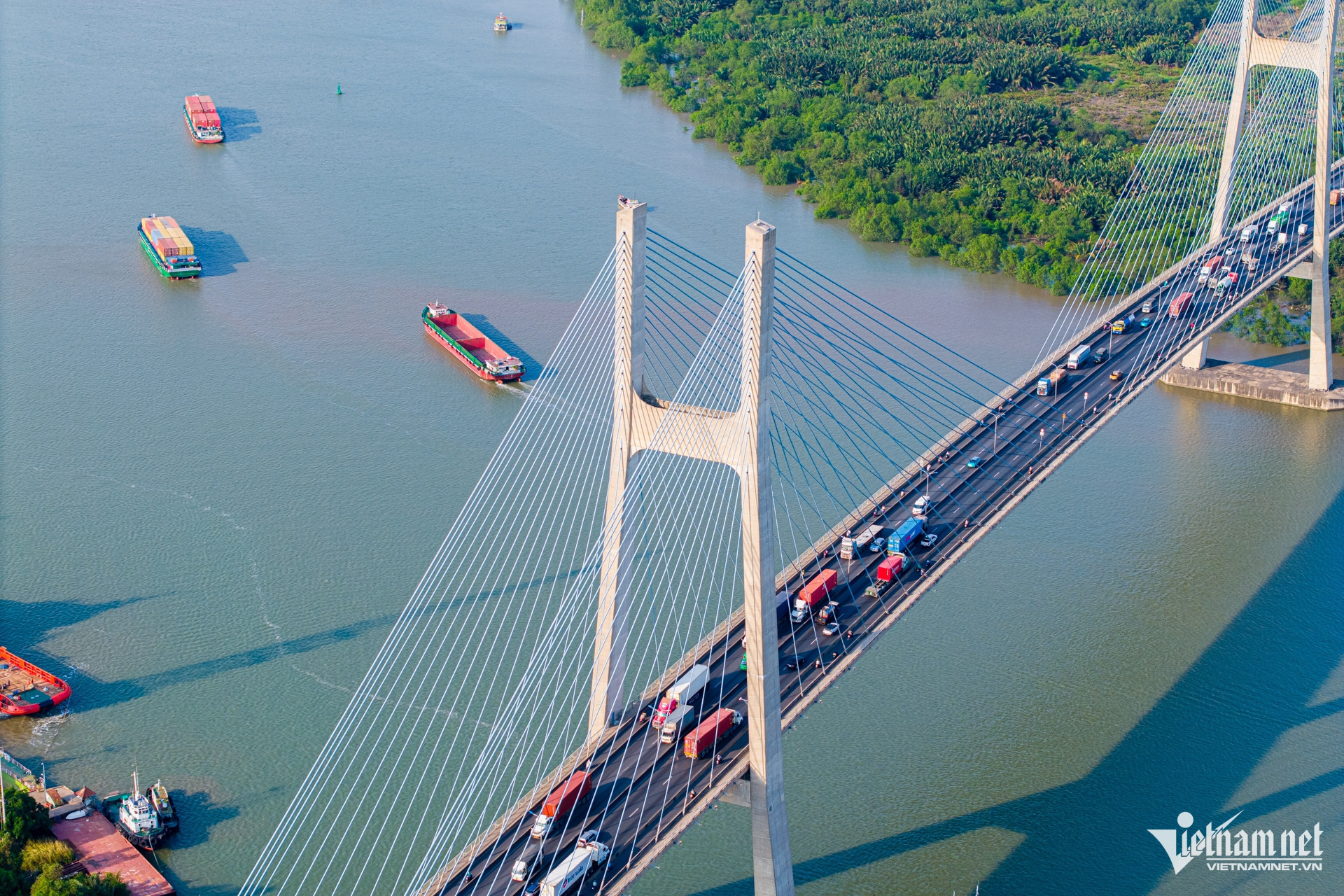
Research into sectoral competitiveness indicates that, following the merger, Ho Chi Minh City now enjoys above-average competitive advantages in nine of Vietnam's 14 major economic sectors. Finance and banking, science and technology, information and communications, transportation and logistics, and commerce and services remain among the city's highest value-added industries.
Perhaps more significantly, manufacturing - previously not considered a comparative strength - has risen above the national average thanks to Binh Duong's industrial base. Researchers describe this as the merger's greatest strategic value: Ho Chi Minh City contributes strengths in finance and services, Binh Duong provides advanced manufacturing capacity, while Ba Ria–Vung Tau adds seaport, logistics and energy advantages, creating an integrated value chain rather than isolated development.
On the other hand, education and training have experienced a relative decline in competitiveness, with the location quotient (LQ) falling from 1.14 to 0.90. Experts consider this a warning signal, as education plays a critical role in supplying skilled workers for strategic sectors including finance, logistics, science and technology.
Toward global megacity status
If five decades ago Ho Chi Minh City pioneered Vietnam's Doi Moi reforms through practical policy experimentation, today it faces a new national mission: serving as the country's principal engine of economic growth in the next stage of development.
Under Conclusion No. 18-KL/TW, adopted by the 14th Party Central Committee on April 2, 2026, Vietnam aims to achieve sustained double-digit economic growth during 2026–2030. As the country's largest growth pole, Ho Chi Minh City has been tasked with leading this effort.
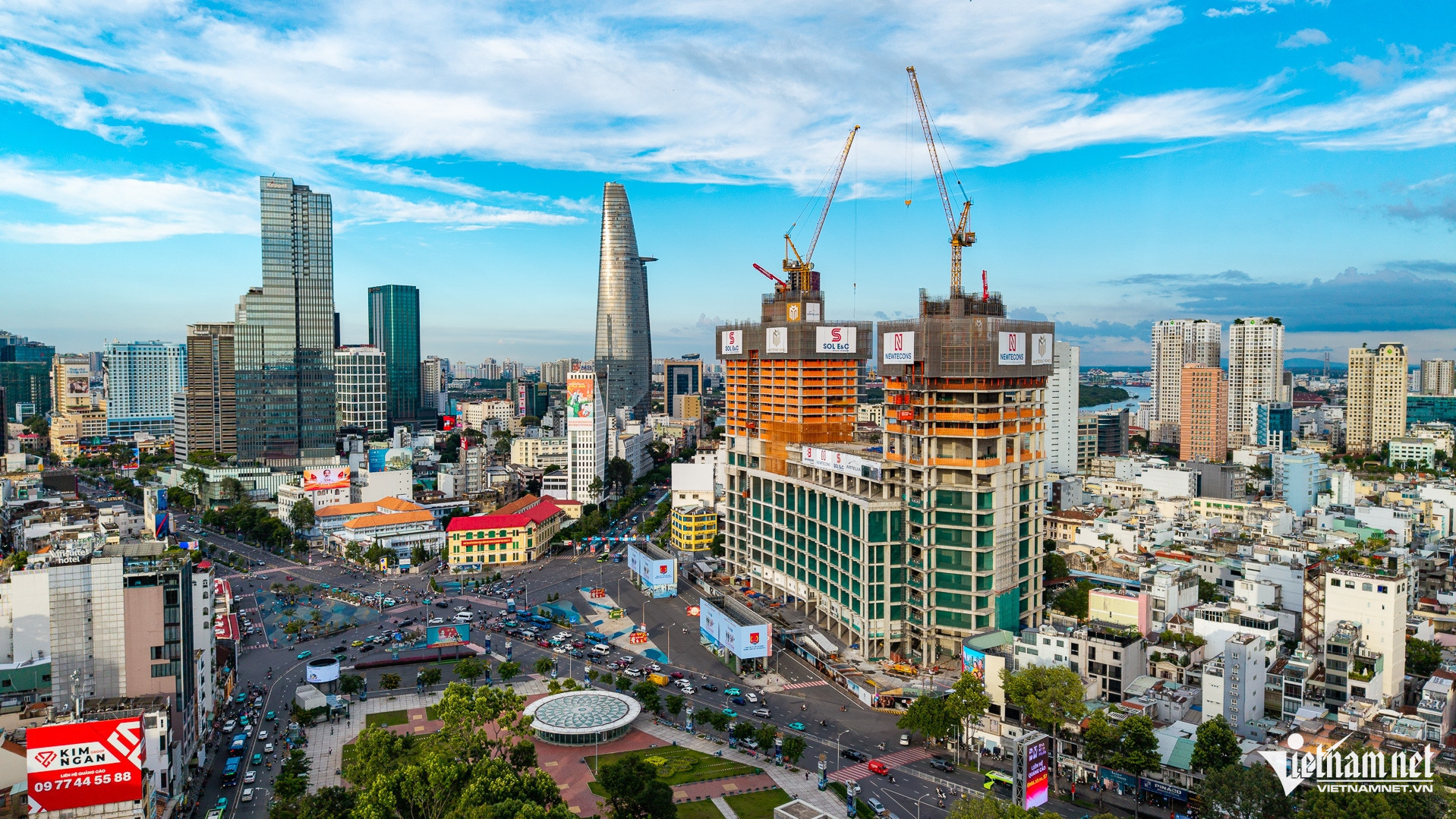
To support this objective, the city has set ambitious targets for 2026–2030, including annual GRDP growth of 10–11 percent, per capita GRDP of US$14,000–15,000 by 2030, an economy worth approximately US$200 billion, and a digital economy accounting for 30–40 percent of total output.
Experts, however, argue that such ambitions cannot be achieved simply by expanding investment or increasing economic scale. Success will depend on transforming the growth model, strengthening science and technology capabilities, and deepening institutional reform. Long-standing bottlenecks - including fiscal mechanisms, decentralization and an overreliance on foreign investment concentrated in assembly and processing - remain significant challenges.
Over the past decade, Ho Chi Minh City has gradually expanded its institutional autonomy through a series of special policy frameworks. From Resolution 54 to Resolution 98, followed by Resolution 260 and, most recently, Politburo Resolution No. 09-NQ/TW, the city has received increasing authority over governance and development. Experts view these reforms as essential preparation for managing a megacity of unprecedented scale and complexity.
The proposed Special Urban Law, expected to be submitted to the National Assembly in 2026, is anticipated to move beyond pilot mechanisms toward a more stable and comprehensive legal framework. Greater autonomy in planning, investment, public finance and government organization would be accompanied by stronger requirements for accountability and effective governance.
Looking back over the past 50 years, Ho Chi Minh City has evolved from a city emerging from war - where many families survived on cassava and sweet potatoes - into Vietnam's largest economic center. Yet its greatest achievement extends beyond GDP or fiscal contributions. It lies in a pioneering spirit marked by innovation, determination and the willingness to explore new development models.
The challenge ahead is unlike any the city has faced before: integrating the strengths of a multi-centered megacity where finance and services, manufacturing, logistics and the marine economy reinforce one another to create new engines of growth. If successful, Ho Chi Minh City will not only maintain its role as Vietnam's economic leader but also continue shaping new development models and institutions as the country advances toward the centenary of national reunification.
Phuoc Sang
.svg)
