 Vietnamnet.vn

 Podcast



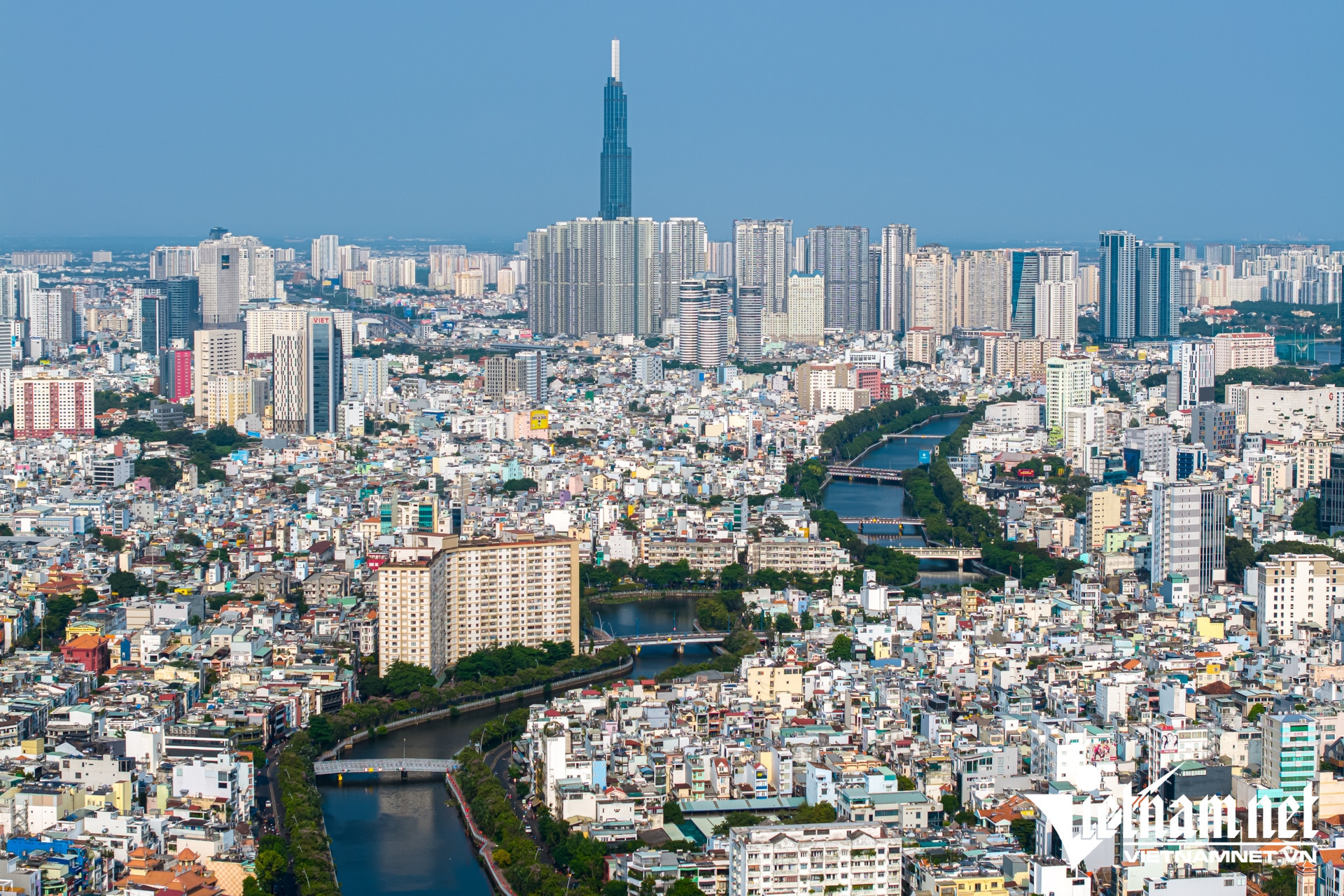
Over the longer term, Ho Chi Minh City aims to become a global, smart and modern metropolis built around green and sustainable growth, a high quality of life and climate adaptation. The proposed international megacity model comprises five growth poles, five strategic connectivity systems, five satellite centers and 10 development management zones.
At the review session, delegates said clear development boundaries were needed to prevent uncontrolled urban sprawl. Infrastructure has not kept pace with urbanization, regional connectivity remains limited, and links between production, logistics, finance, research and markets are still fragmented. Infrastructure should therefore become a driving force in restructuring the city’s economic geography, they said.
Delegates also focused on the need to develop a transport network capable of providing meaningful connections between the city’s growth poles.
Under the planning framework, metro lines, railways, transit-oriented development (TOD) and public transport will form the backbone of the network. These will need to be integrated with Long Thanh International Airport, the Can Gio-Cai Mep-Thi Vai port system, ring roads and a multimodal logistics network.
Another priority is to gradually separate freight flows from urban traffic and reduce the number of container trucks passing through the city center.
Areas surrounding major public transport hubs would become centers for jobs and services, while increases in land value generated by improved connectivity would be tapped to help reinvest in infrastructure.
On the economic front, the plan targets double-digit growth driven by an international financial center, high technology, artificial intelligence, semiconductors, the digital economy, logistics, the marine economy, a free trade zone and innovation.
Investment would be diversified through public-private partnerships, municipal bonds, green finance and land value associated with TOD, reducing reliance on the public budget.
Protecting the environment alongside growth
Alongside economic expansion, protecting ecosystems and strengthening the city’s resilience are positioned as fundamental priorities.
Participants at the review session called for clearly defined green-blue infrastructure and ecological “red lines” to protect the Can Gio mangrove forest, Binh Chau-Phuoc Buu, river corridors and water retention areas, while taking an integrated approach to the risks of flooding, land subsidence and sea-level rise.
The plan is also examining a “sponge city” model combining green infrastructure, water retention, landscaping and flood-control measures. Disaster prevention and mitigation would also be incorporated into Ho Chi Minh City’s long-term development scenarios.
Speaking at the session, Ho Chi Minh City People’s Council Chairman Vo Van Minh said the plan must have a long-term vision while translating that vision into specific programs, projects and funding mechanisms.
Residents, quality of life and the capacity to adapt to climate change should remain at the center of the plan, he said, adding that it must also be aligned with public investment plans, land use and sufficiently robust coordination mechanisms.
Concluding the session, Hoang Tung, head of the Urban Affairs Committee of the Ho Chi Minh City People’s Council, called on relevant agencies and consultants to continue reviewing the feasibility of the proposed spatial structure, strategic infrastructure, funding resources and investment phases.
He also called for a shift away from the idea of a “fixed 100-year plan” toward an open and flexible strategic framework that can adapt over time and be monitored through specific indicators.
Phuoc Sang
.svg)
