 Vietnamnet.vn

 Podcast



In 2026, Ho Chi Minh City will focus on cleansing, standardizing and effectively leveraging data to operate a truly smart city. Public services will shift from “processing applications” to “serving needs.”
The city’s digital transformation journey has entered a phase where technology is no longer an abstract concept but is present in every touch on the Citizen App, in every “Digital Literacy for All” class and in the ambitious Digital Twin model.
In conversations at the beginning of the Lunar New Year 2026, Vo Thi Trung Trinh, Director of the Ho Chi Minh City Digital Transformation Center (HCMC-DXCenter), outlined a comprehensive picture of a smart Ho Chi Minh City where data is truly an asset and public trust is the highest measure of technological efforts.
Digital skills as a fundamental right of every citizen
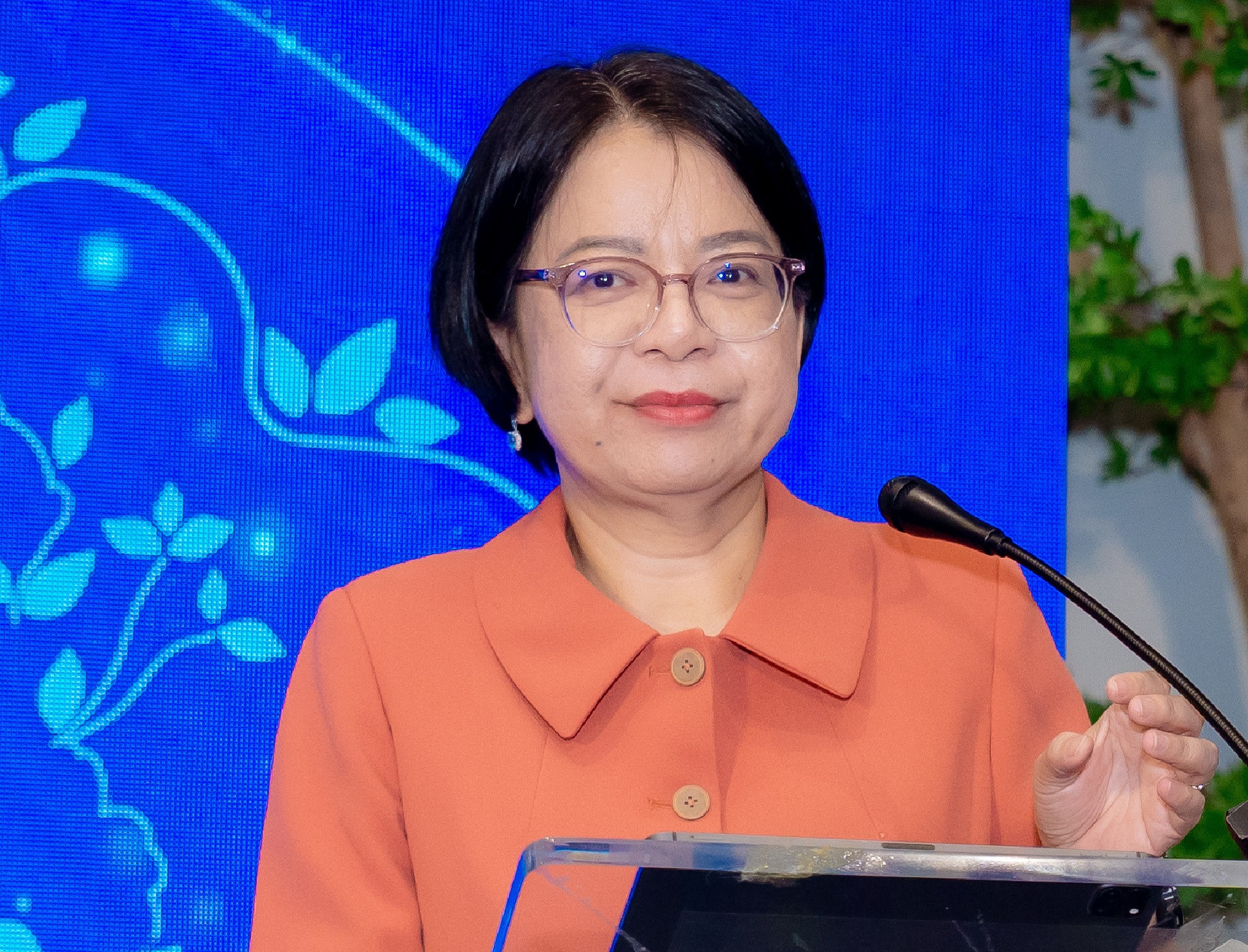
According to Vo Thi Trung Trinh, the rollout of the Ho Chi Minh City Citizen App demonstrates the city’s determination to build a unified digital platform connecting citizens with the government. The app is designed to serve as a “super app,” integrating digital services across multiple sectors with just one touch.
After one year of operation, she emphasized that the most significant values are transparency and personalization. Data is securely protected, and the processing status of applications is updated in real time, allowing citizens to monitor progress and results.
The app integrates electronic health records, student information, timetables, academic results, planning data and land information. Notably, its feedback and emergency reporting features create a two-way interaction channel. Authorities receive and respond based on real data. Citizens can also evaluate the quality of public services directly on the app, forming a basis for improving service standards and strengthening trust in government.
To date, the app has reached more than 600,000 downloads and over six million interactions.
In 2025, HCMC-DXCenter launched the “Digital Literacy for All” movement. Vo Thi Trung Trinh said the initiative was inspired by the 1945 literacy campaign initiated by President Ho Chi Minh to eradicate illiteracy and raise public awareness. The new movement carries the mission of universalizing digital skills, enabling all citizens to access, use and master technology effectively.
She noted that the movement has gradually entered daily life, delivering tangible results. It not only enhances digital capacity for different groups but also contributes to building digital habits and culture within communities. The “Digital Literacy for All” learning section on the Citizen App continuously shares materials and instructional videos, gradually forming a digital learning repository for regular study.
HCMC-DXCenter has coordinated with grassroots authorities to support elderly citizens and vulnerable groups with basic skills such as using smartphones and preventing online fraud. “We define digital skills as a fundamental right of every citizen,” she affirmed. “The goal is not merely to know how to use an application, but to help people feel confident, proactive and capable of protecting themselves in cyberspace.”
The past year also marked a turning point as Ho Chi Minh City piloted the Digital Twin model. Vo Thi Trung Trinh highlighted that one of the center’s major priorities has been expanding this model from its pilot phase in Con Dao Special Zone to the entire city.
In the digital environment, technical infrastructure, traffic systems, environmental conditions and power grids are synchronously simulated, enabling forecasts of congestion hotspots, flood risks and operational incidents based on real-time data.
In 2026, HCMC-DXCenter will continue piloting the model in Sai Gon ward, Binh Duong and Con Dao Special Zone, with comprehensive implementation in Con Dao. At the same time, the city is completing its Smart Urban Operations Center, applying AI, machine learning and chatbots to support decision-making, integrate multi-sector data and provide a real-time overall picture.
Through centralized data exploitation, she described the center as the “digital brain” of the city, capable of forecasting risks, issuing early warnings, proposing response scenarios and delivering timely information to authorities. This is a crucial step toward realizing the goals of building a smart city, digital government, digital economy and digital society, with citizens at the center.
Governance driven by data
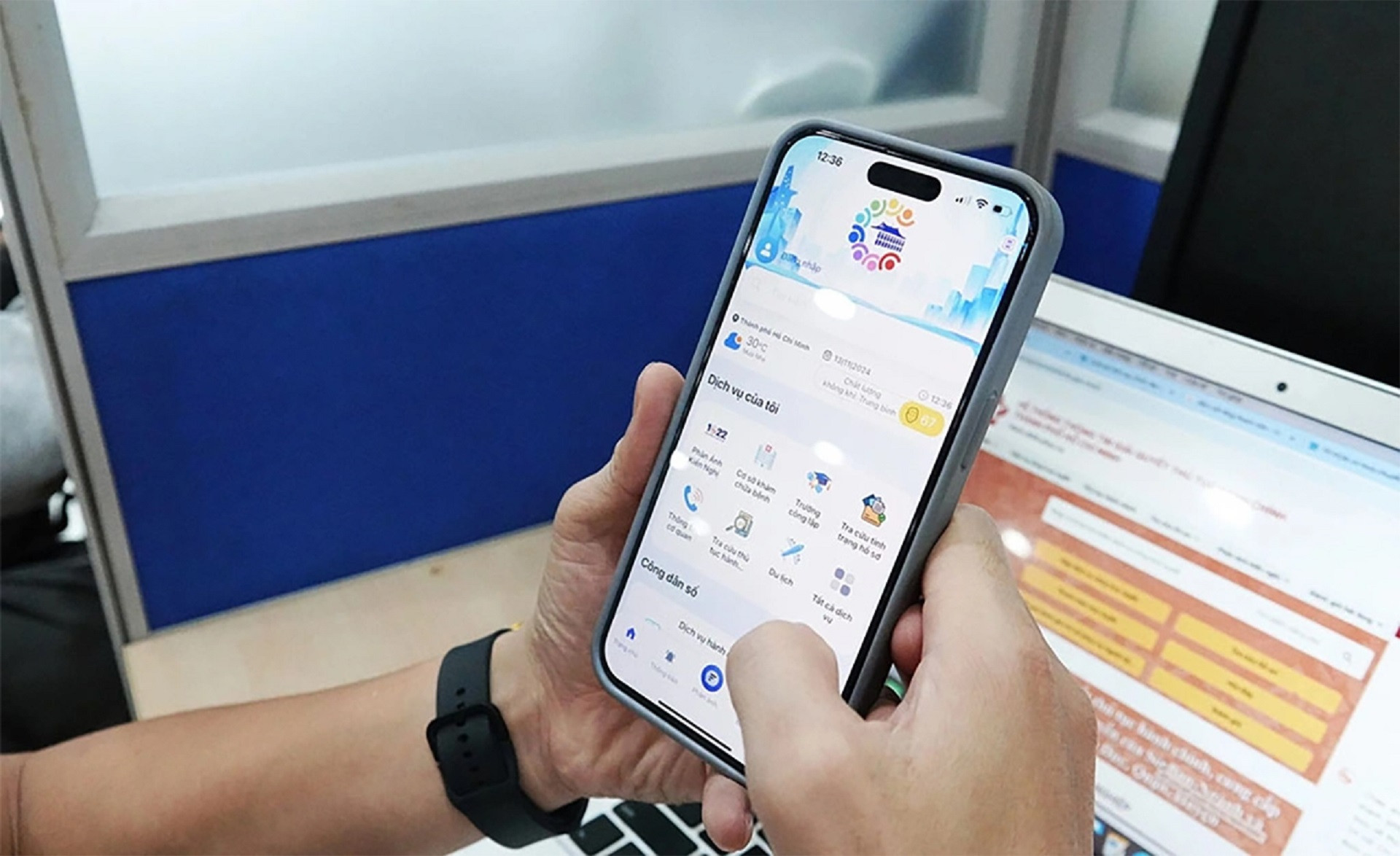
The Ho Chi Minh City Citizen App has recorded more than 600,000 downloads and over six million interactions. Photo: CDS
Beyond technology deployment, 2025 also marked a strong shift in governance thinking. According to Vo Thi Trung Trinh, the city has transitioned from a traditional administrative approach to one based on real-time data management. This principle has helped remove geographic barriers, shorten processing times, reduce costs and improve the efficiency of human resource management.
The city has successfully configured 2,066 administrative procedures without geographic restrictions, including 1,780 at the provincial level and 302 at the commune level. Accounts have been established for all 38 area task forces and 168 commune-level units. Particularly at the commune level, the tier closest to citizens, more than 84 percent of applications are now processed online, demonstrating the strong spread of digital transformation across all levels of government.
Administrative operations no longer depend on paper reports. Leadership decisions and directives are issued swiftly and promptly based on dashboards updated by the minute.
Ensuring full technical conditions for digital authentication and digital signatures for each official and unit has become a vital foundation, paving the way for end-to-end online administrative procedures and accelerating the transition from paper-based administration to electronic governance that is transparent and efficient.
She stressed that the center has closely followed practical requirements and implemented solutions in a timely manner, ensuring no disruption even amid changes in organizational models and administrative boundaries. This, she said, affirms the adaptability and resilience of the new governance system.
Looking ahead, residents and businesses in Ho Chi Minh City can expect smarter public services thanks to data exploitation and the integration of AI virtual assistants.
In 2026, the city will focus on cleansing, standardizing and effectively using data to operate a truly smart urban system. Public services will shift from “processing applications” to “serving needs.”
Citizens will not have to re-declare information that has already been authenticated. AI virtual assistants can guide procedures, check documents, send reminders and flag errors. Some procedures will be fully automated, reducing direct contact and waiting times.
Businesses will have access to open data on planning, land and traffic, helping reduce risks and accelerate investment. Procedures for business registration, licensing and procurement will be handled more transparently and faster thanks to interoperable data.
Persistent urban problems will also benefit from data-driven warnings and solution proposals. The Smart Urban Operations Center, combined with AI analysis of urban management and construction planning data, will provide a comprehensive picture with full analytical information, becoming a powerful tool to tackle complex challenges.
Specifically for traffic congestion, AI will analyze camera data, bus GPS and traffic volume to coordinate traffic signals in real time and forecast congestion points 30 to 60 minutes in advance so that authorities can regulate early. The app will also allow citizens to receive optimal route suggestions depending on the time.
For flooding, AI models will forecast rainfall, tides and water flow to proactively operate pumping systems, culverts and discharge gates. Early warnings will be issued to residents in high-risk areas. Integrated data will help the city prioritize investment at critical bottlenecks.
For environmental pollution, air, noise and wastewater sensors will be connected into a unified monitoring system. AI will detect abnormalities and quickly trace pollution sources. Data will be made public so that residents and businesses can jointly monitor.
Ho Chi Minh City continues to pursue a data-driven decision-making model. City leaders can monitor socio-economic indicators in real time to make fast, accurate and evidence-based decisions. This marks the shift from “traditional management” to “smart governance.”
Toward 2030, the city aims to operate its data exchange platform in sync with the Smart Urban Operations Center, enhancing governance capacity based on real-time data. The digital economy is expected to account for 30 to 40 percent of the city’s GRDP.
More than an economic target, this reflects the city’s commitment to a modern and sustainable metropolis, where technology and data are not merely management tools but a foundation that directly serves citizens, creating a smart, safe and humane living environment.
Quoc Ngoc
.svg)
