 Vietnamnet.vn

 Podcast



Starting May 15, residents in An Dong Ward in Ho Chi Minh City will be able to apply, submit documents, and make online payments from home for temporary use of sidewalks and roadways through a digital application platform.
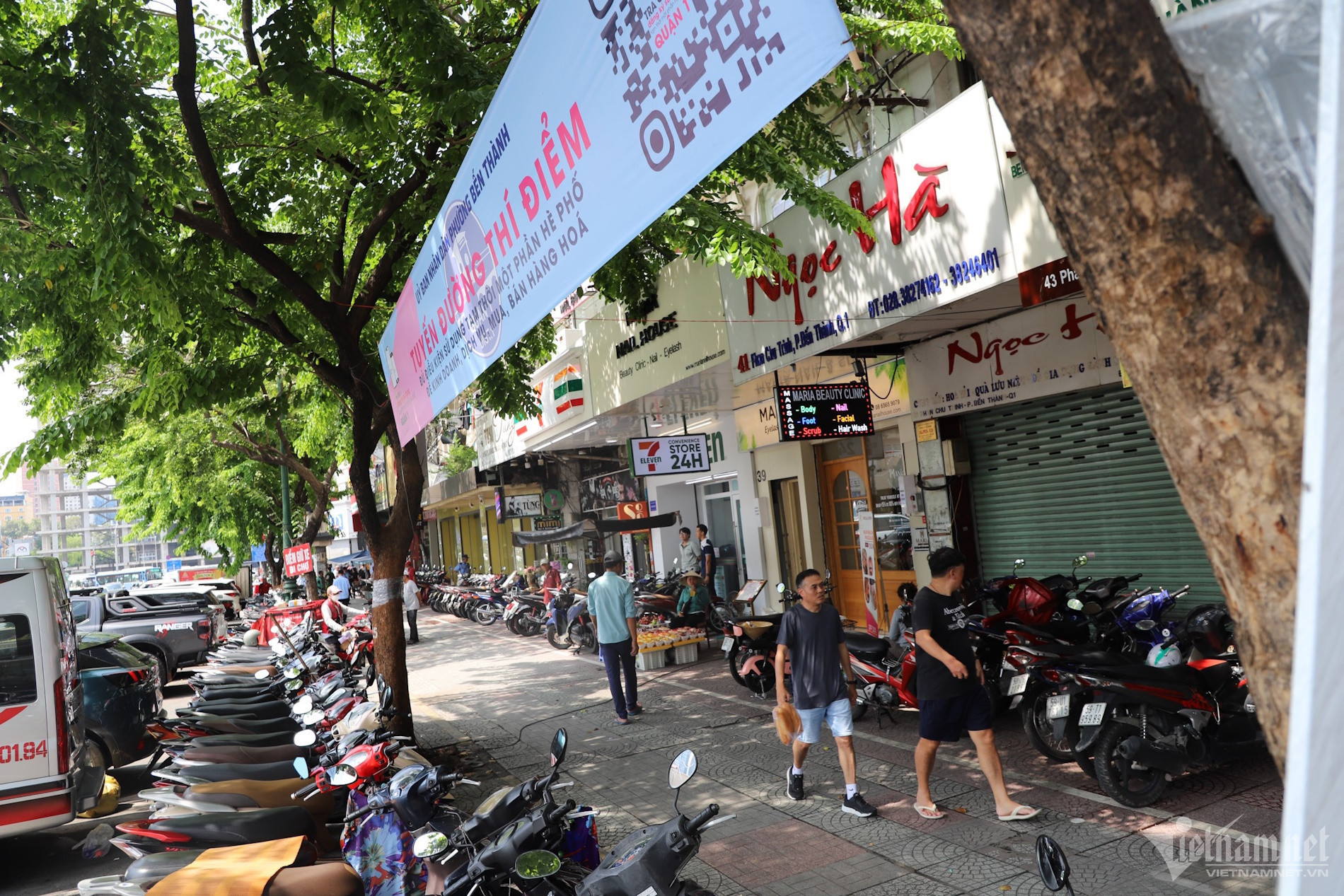
In 2024, Ho Chi Minh City allowed temporary fee-based use of portions of sidewalks and roadways in several central wards. Photo: Tuan Kiet
On May 13, representatives of the An Dong Ward People’s Committee announced that the locality is preparing to officially launch software for issuing permits and collecting fees related to temporary sidewalk and roadway use.
The ward is the first administrative unit in Ho Chi Minh City to implement this digitalized model following the recent administrative restructuring, aiming to optimize urban order management while minimizing travel and paperwork for residents.
Fully online registration process
The application, expected to begin operating on May 15, will allow residents to complete the entire procedure remotely.
Users only need to scan a QR code or access the system link to declare information and specify the intended purpose of use.
The system will verify user accounts through VNeID or chip-based citizen identification cards to ensure security.
After receiving a confirmation email, users can upload the required documents directly to the platform.
Approval results, along with QR codes for cashless payment, will then be sent via email.
One of the software’s most notable features is its ability to automatically classify applications according to the correct authority responsible for handling them.
For applications under ward-level jurisdiction, the system will receive, process, and collect fees online.
If an application falls under the authority of city departments or agencies, the system will automatically generate forwarding documents, helping shorten processing times.
Using chip-based IDs for parking access
Another notable feature is that residents can use chip-based citizen ID cards or automobile driver’s licenses to park vehicles at licensed roadway parking locations without requiring parking attendants.
Under current regulations, temporary use of sidewalks and roadways can only be licensed for six categories of purposes.
These include political, cultural, and sporting events; disaster prevention and rescue operations; construction work; temporary storage of waste or construction materials; weddings and funerals; and parking services when necessary.
Authorities emphasized that commercial business and street vending activities are currently not permitted to use these spaces.
Ho Chi Minh City revising old sidewalk fee model
Beginning in early 2024, Ho Chi Minh City allowed temporary fee-based use of portions of sidewalks and roadways for certain activities, including some commercial purposes.
However, since the Road Law and the Law on Road Traffic Order and Safety officially took effect in early 2025, provincial-level authorities no longer have the legal authority to independently issue regulations permitting business activities on sidewalks.
As a result, Ho Chi Minh City suspended the previous policy and is currently studying and developing a new operational model that complies with existing legal regulations.
Tuan Kiet
.svg)
