 Vietnamnet.vn

 Podcast



The Ho Chi Minh City People's Committee is seeking feedback on a draft resolution governing the issuance of municipal and project bonds through the international financial center in Vietnam to mobilize capital for key projects.
The proposal is intended to implement Point a, Clause 1, Article 24 of the Law on Urban Development, providing a legal basis for the city to raise medium- and long-term funding through the financial center while ensuring financial safety, transparency and risk management.
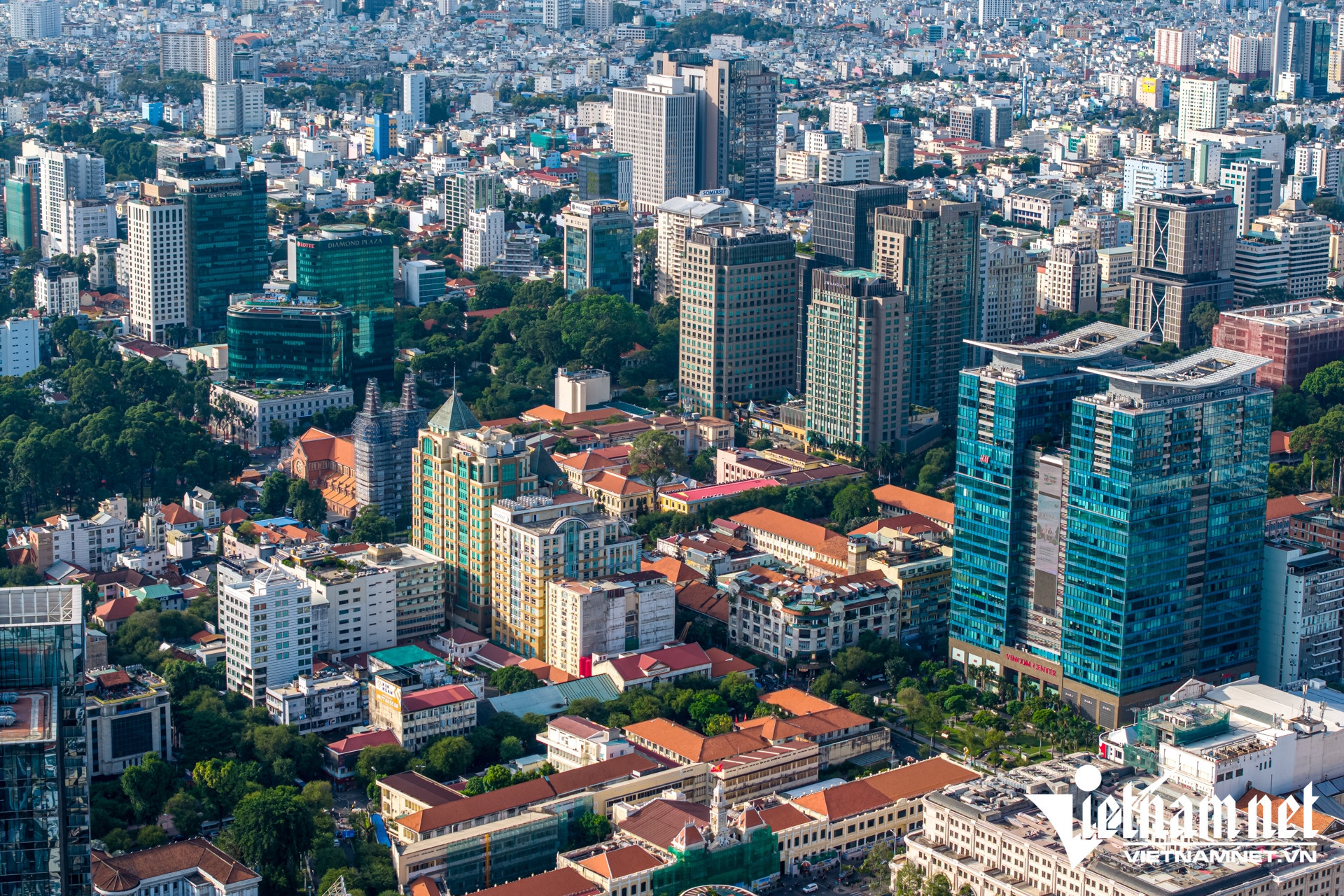
Under the draft, municipal and project bonds would be classified as local government bonds and could be issued by Ho Chi Minh City in Vietnamese dong or freely convertible foreign currencies.
Issuance methods could include underwriting, auctions, direct sales, distribution through agents and other appropriate mechanisms.
Proceeds would only be used for programs and projects approved by competent authorities and which have completed the required investment and environmental procedures.
Bond issuance would also have to remain within the city's borrowing, outstanding debt and budget deficit limits, as well as its borrowing and debt repayment plans. The city would be required to ensure timely payment of principal, interest and related expenses.
For foreign-currency bonds, Ho Chi Minh City would be permitted to use hedging instruments to manage exchange-rate and interest-rate risks in accordance with regulations.
The draft also requires information disclosure and safeguards for investor interests, along with reporting on bond issuance, use of proceeds, payments, borrowing and debt repayment obligations, and risk management.
According to the proposal's impact assessment, Ho Chi Minh City's capital requirements are growing across transport, urban redevelopment, environmental protection, flood prevention, digital transformation, energy, logistics and social infrastructure.
The scale of these investment needs has increased pressure on the city to diversify its funding sources.
Municipal and project bonds are expected to provide additional capital while reducing reliance on the city budget and bank credit.
The initiative could also stimulate financial services associated with the bond market, including advisory services, issuance arrangements, credit ratings, risk management and secondary-market trading.
Based on its borrowing and debt repayment plans, capital requirements, budget capacity and market conditions, the Ho Chi Minh City People's Committee would prepare a bond issuance plan and submit it to the municipal People's Council for approval.
The operating authority of the international financial center in Ho Chi Minh City would be responsible for preparing the draft issuance plan and submitting it to the city's Department of Finance for appraisal.
The Ministry of Finance and the State Bank of Vietnam would also be consulted on matters falling within their respective jurisdictions.
The proposed framework would allow the city to establish a medium-term issuance program involving multiple bond offerings, with the program updated annually to provide greater flexibility as market conditions change.
For bond auctions, the draft would permit competitive interest-rate bidding or a combination of competitive and non-competitive interest-rate bidding.
If adopted, the framework would give Vietnam's largest economic hub another channel for tapping medium- and long-term capital as it faces rising investment requirements across major infrastructure and urban development projects.
Phuoc Sang
.svg)
