 Vietnamnet.vn

 Podcast



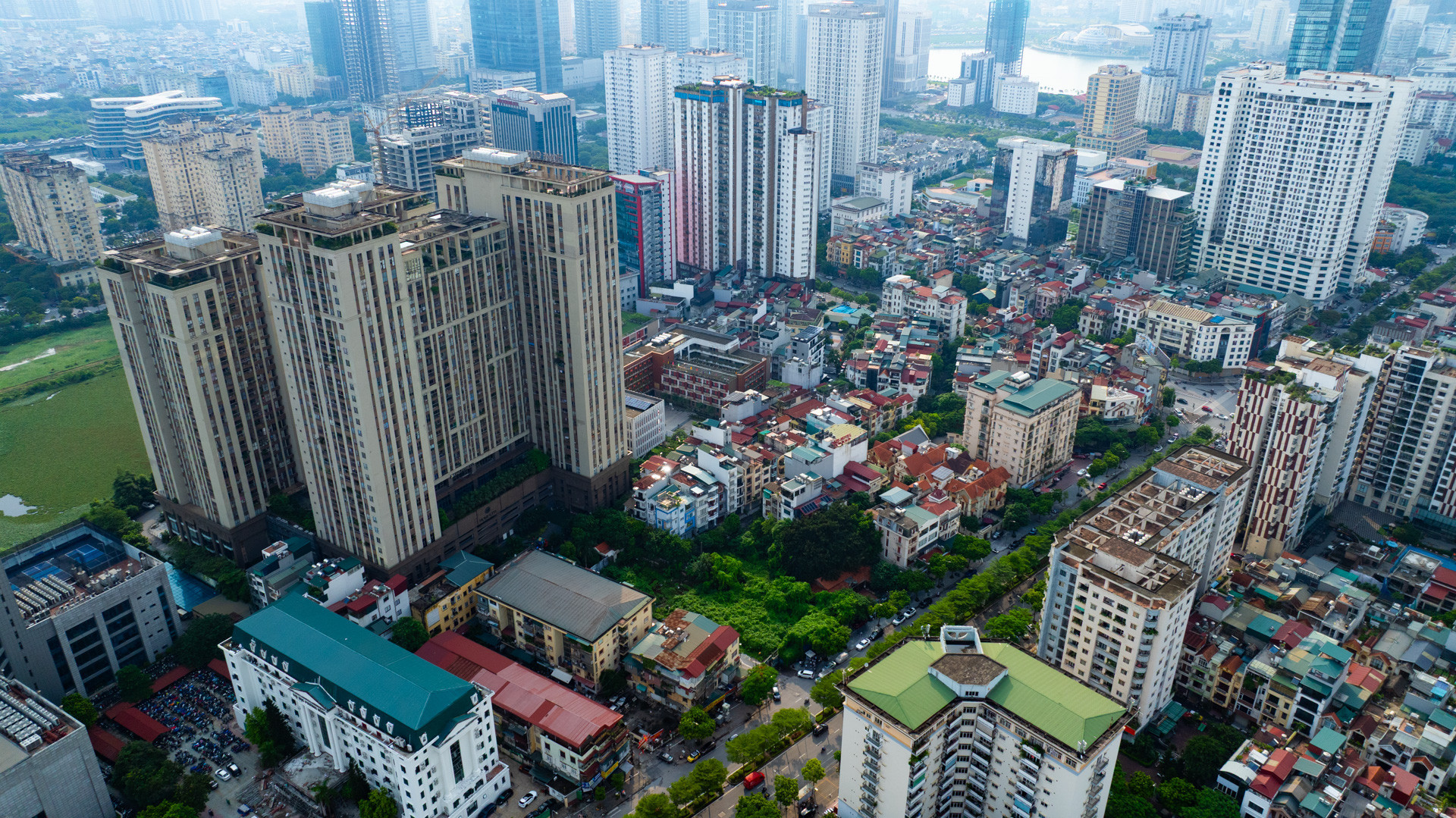
In 2022, when proposals for term-limited apartment ownership first emerged, Le Van Hung in Hanoi was considering purchasing a VND3.5 billion apartment on Minh Khai Street. After extensive discussion, he and his wife changed course, buying a 35 sqm, five-story landed house in Hoang Mai district for VND3.7 billion.
Tran Minh Ha in Hanoi similarly chose a landed home of roughly 30 sqm deep within an alley instead of buying an apartment. She accepted tighter living quarters because if a landed house deteriorates, she can rebuild it independently and pass it to her children.
Anxieties also affected apartment owners. Nguyen Mai Huyen in Cau Giay pooled funds from both sets of parents and repaid bank loans for six to seven years to buy a VND3.5 billion apartment. She noted that if ownership rights face time limits, her family might sell even at a loss to transition toward landed property.
Housing prices in Hanoi and HCMC currently equal 25-30 years of average income. For many families, an apartment represents a lifetime of savings and a legacy for their children, particularly while social safety nets remain thin. Accepting that such achievements last for only a single generation remains difficult for them.
In 2022, the Ministry of Construction proposed linking apartment ownership duration to building lifespan. Upon building demolition, apartment ownership rights would terminate; residents would participate in rebuilding or receive compensation if the land plot transitioned to other uses.
The National Assembly Standing Committee disapproved. Consequently, the 2023 Housing Law regulated only apartment operational lifespans: upon reaching design term limits, structures undergo quality inspections and may continue in service if deemed safe.
In early 2026, that option re-emerged. The Ministry of Construction withdrew the proposal on July 14, but an August draft introduced the concept of "term-limited apartment buildings," which may be interpreted as limiting apartment ownership rights as well. By early September, this phrasing was again dropped. Terminology circled back to "operational lifespan of apartment buildings."
Names changed quite rapidly, yet the underlying problem remains.
Under Resolution 278 dated September 18, 2026, the Government instructed further clarification regarding apartment operational lifespans, residents' land-use rights, and financial obligations upon reconstruction.
After four years, the most challenging aspect remains intact: when an apartment building reaches the end of its lifespan, how are residents' property rights handled, and who pays for reconstruction?
What about property rights?
An apartment building encompasses two distinct legal issues. Concrete and steel possess a physical lifespan; once structures become unsafe, residents must relocate and buildings must be demolished.
However, apartment buyers do not merely purchase a few dozen square meters of concrete; they also hold shared land-use rights for the land plot. The physical building may no longer exist, yet interests regarding the land and the ability to participate in rebuilding must remain protected.
Imposing time limits on ownership rights therefore touches upon constitutional principles protecting lawful property. The State cannot place a countdown clock on ownership rights simply to make building demolition and reconstruction easier.
Resolution 21 established a guiding thread: for newly constructed apartment buildings, apartment operational lifespans follow building design terms, but property rights of owners must be guaranteed. Upon expiration, owners fulfill financial obligations to rebuild the structure.
Resolution 21 does not view the end of a building's lifespan as the termination of ownership rights. Residents retain property rights and, if rebuilding occurs, must contribute funds.
The phrase "entitled to fulfill financial obligations" in Resolution 21 essentially means: when an apartment building requires reconstruction, residents will have to pay additional money.
Contribution amounts depend on land value, demolition expenses, temporary housing costs, and additional constructed floor areas. Plots with high land values can offset a major portion of costs, whereas locations unable to increase floor counts face far greater difficulty.
The bottleneck is easy to identify. The state budget cannot continue bearing the cost of renovating private property. If projects lack profitability, attracting corporate investment remains difficult. Meanwhile, residents maintain the belief that they must receive an equivalent new apartment.
The draft Housing Law likely needs to clarify cost-sharing mechanisms and options for individuals lacking funds, rather than waiting until buildings deteriorate for parties to negotiate independently.
Tu Giang
.svg)
