 Vietnamnet.vn

 Podcast


A 38-year-old woman identified as N.P.L. from Di An, Ho Chi Minh City, had been hoping to have a child since marrying two years ago.
During a reproductive health examination, doctors diagnosed her with diminished ovarian function and recommended in vitro fertilization (IVF).
Her IVF cycle yielded only two eggs. With such a limited number available, closely monitoring embryo development and assessing embryo quality became particularly important.
Doctors subsequently selected a suitable embryo for transfer.
According to Dr. Nguyen Quoc Anh, Director of the Center for Assisted Reproduction and Andrology at Viet My General Hospital in Ho Chi Minh City, a woman's age is among the most significant factors affecting IVF success.
As women grow older, ovarian reserve and egg quality generally decline, reducing the number of eggs that can be retrieved and the chances of obtaining viable embryos.
For older women, those with diminished ovarian reserve or patients who have experienced unsuccessful embryo transfers, doctors must carefully assess their overall reproductive health and treatment history.
Embryo quality assessment is an essential part of that process.
How time-lapse cameras track embryo development
In conventional embryo culture, embryologists examine embryos under a microscope at specific intervals, such as 16-18 hours after fertilization and on days two, three or five.
Their assessments are primarily based on the embryos' appearance at those particular moments, including cell number, cell size, uniformity and the proportion of cellular fragmentation.
However, this approach cannot capture the full sequence of developmental changes occurring between examinations.
Time-lapse imaging technology offers a different approach.
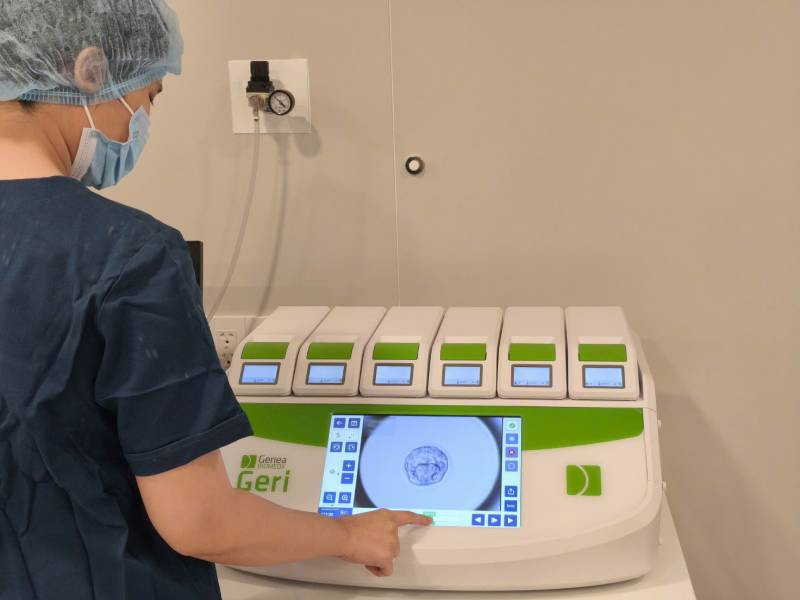
Cameras installed inside embryo incubators automatically capture images at preset intervals. These images are then combined into videos, allowing embryologists to observe cell division, compaction and blastocyst formation without removing the embryos from their controlled culture environment.
The resulting footage effectively provides doctors with a continuous visual record of an embryo's development.
This gives embryologists additional information about developmental patterns, complementing conventional morphological assessments and helping them determine which embryos should receive priority for transfer.
AI supports embryo ranking but cannot guarantee IVF success
Images collected through time-lapse monitoring can also be analyzed using artificial intelligence software to support embryo scoring and ranking.
These assessments provide embryologists with additional information for comparing embryos and determining the order in which they might be considered for transfer.
However, Dr. Quoc Anh emphasized that AI does not independently decide which embryo should be selected.
Doctors must still review the imaging data and compare AI-generated assessments with their own professional evaluations before making clinical decisions.
Importantly, an embryo with favorable morphology, apparently normal development or a high AI ranking is not guaranteed to implant successfully or result in a healthy pregnancy.
IVF outcomes depend on multiple factors, including the woman's age, egg and sperm quality, the embryo's genetic characteristics and the condition of the uterine lining.
For this reason, fertility treatment must be individualized according to each patient's age, reproductive health, number and characteristics of available embryos, previous treatment history and the couple's preferences.
Although cameras and AI can provide valuable additional information, they remain tools to support clinical judgment rather than substitutes for the expertise of fertility specialists.
Phuong Thuy

