 Vietnamnet.vn

 Podcast



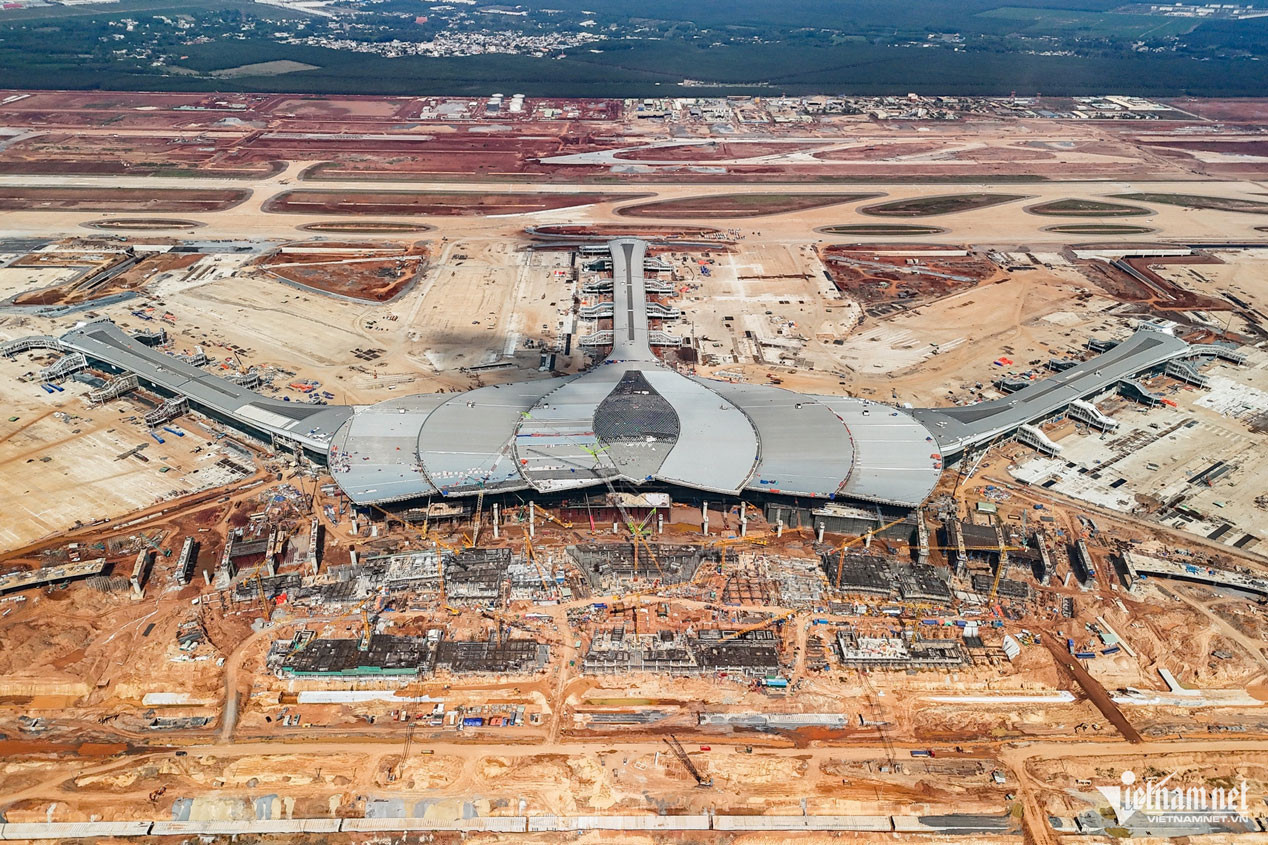
The Long Thanh International Airport project - a national key work - has a total estimated investment of about VND336 trillion (US$13.44 billion). Phase 1 alone, for which ACV serves as investor, carries a total investment of nearly VND110 trillion (US$4.4 billion), with a designed capacity of 25 million passengers and 1.2 million tonnes of cargo per year. Recently, the Ministry of Construction assigned ACV to continue as investor for Phase 2, excluding technical infrastructure items that ensure flight operations.
As investment volumes rise, ACV has also seen notable changes in its executive ranks. On February 25, the company’s Board of Directors appointed Le Van Khien, a board member, as the legal representative, replacing Chairman Vu The Phiet in that role. Earlier in February, ACV appointed Nguyen Duc Hung, Deputy General Director, to oversee executive management.
Previously, Deputy General Director Nguyen Tien Viet had been in charge of executive management. Viet also serves as Director of the Long Thanh International Airport Project Management Board and was elected to ACV’s Board of Directors at the end of last month.
Record revenue and profit
In 2025, ACV reported net revenue of nearly VND25.96 trillion (US$1.04 billion), up about 15 percent year on year and the highest level in its history. The main revenue source came from aviation services, generating nearly VND21.7 trillion (US$868 million). Of this, passenger service revenue exceeded VND12.5 trillion (US$500 million), while take-off and landing services contributed nearly VND3.3 trillion (US$132 million).
The 2021-2025 period illustrates a clear recovery and acceleration after the pandemic. In 2021, revenue fell to just VND4.75 trillion due to the severe impact of Covid-19. It then rose to more than VND13.8 trillion in 2022, nearly VND20 trillion in 2023, almost VND22.6 trillion in 2024, before setting a new record in 2025.
In terms of profitability, ACV recorded after-tax profit of nearly VND12.1 trillion (US$484 million), in 2025, up more than 3 percent compared to 2024 and the highest level since the company began operating under a joint stock model. In 2024, profit reached nearly VND11.68 trillion, significantly higher than the almost VND8.47 trillion posted in 2023. The high profit margin reflects the characteristics of airport infrastructure operations, which involve large fixed costs but strong scalability as passenger volumes increase.
By the end of 2025, ACV’s total assets exceeded VND90.9 trillion (US$3.64 billion), a sharp increase from nearly VND77.3 trillion at the end of 2024. Total liabilities stood at nearly VND21 trillion (US$840 million), up from more than VND17.2 trillion a year earlier. Borrowings and finance lease liabilities accounted for over VND9.7 trillion, primarily long-term debt. Equity reached more than VND69.9 trillion (US$2.8 billion), including over VND35.8 trillion in contributed capital and nearly VND20.9 trillion in undistributed after-tax profit. The Ministry of Finance represents the State’s capital, holding more than 95 percent of ACV’s charter capital.
A notable point is the rapid rise in construction-in-progress as Long Thanh accelerates. According to the fourth-quarter 2025 financial statements, construction-in-progress expenses reached over VND35.4 trillion (US$1.42 billion), by year-end, up sharply from nearly VND20.9 trillion at the end of 2024. Phase 1 of the Long Thanh International Airport alone accounted for nearly VND34.2 trillion (US$1.37 billion), reflecting the project’s fast-tracked implementation.
On the stock market, ACV shares have been traded on UPCoM since November 2016. In the February 26 session, the stock fell VND2,200 to VND53,600 per share, down nearly 4 percent. Over the past three months, the share price has fluctuated between VND50,000 and VND65,000 per share.
With a solid financial foundation, sustained high profitability and a central role in the Long Thanh project, ACV stands to benefit from the largest infrastructure investment cycle in Vietnam’s aviation history. However, capital pressure, implementation progress and senior leadership changes remain factors to watch.
ACV also faces questions regarding capital recovery given the massive total investment, as well as passenger attraction challenges if connectivity infrastructure between Long Thanh airport and Ho Chi Minh City - including metro lines, high-speed rail and regional expressways - is not developed in sync.
Manh Ha
.svg)
