 Vietnamnet.vn

 Podcast



The recommendation comes less than three months after Decision 01/2026 took effect, effectively classifying most pickup trucks as cargo vehicles and restricting them during peak hours.
A rule that only came into force on January 15 is now being reconsidered under an expedited process in April. That detail alone reflects a widening gap between regulatory intent and everyday reality.
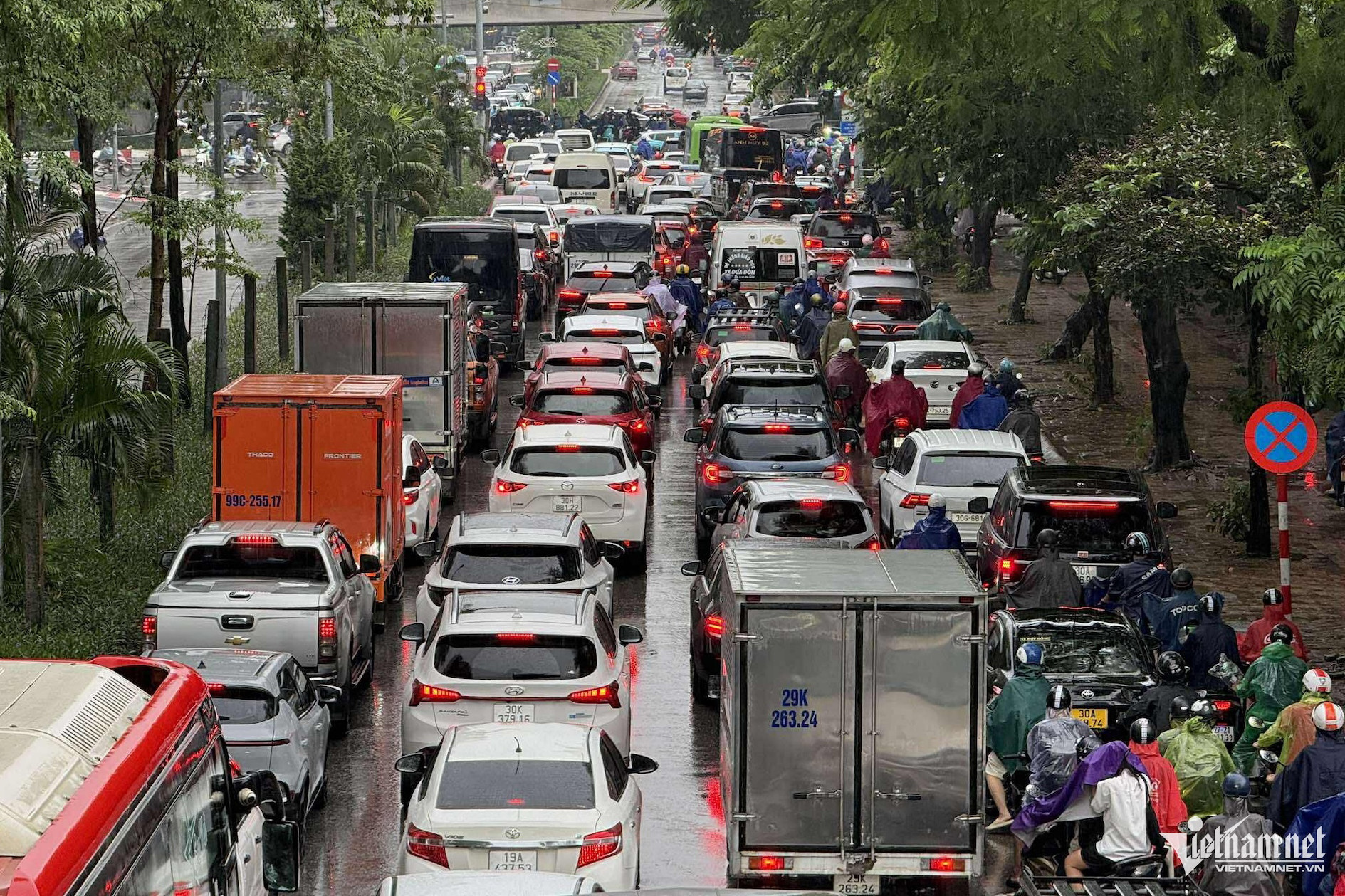
For many small business owners, engineers, service workers and urban families, vehicles such as the Ford Ranger, Toyota Hilux or Mitsubishi Triton are no longer seen as traditional cargo trucks. They are multipurpose vehicles - used for family transport, daily work and flexible mobility in a city evolving faster than its legal classifications.
The need to revisit a newly issued regulation has therefore become a test of policymaking quality - and, more importantly, a signal to move away from the mindset of “if something cannot be managed, it should be banned.”
At a deeper level, it also touches on Vietnam’s commitments under free trade agreements to remove so-called behind-the-border barriers that quietly increase economic costs.
The original intent behind Decision 01 was not without logic. Hanoi sought to reduce congestion during peak hours by restricting trucks from entering inner-city areas between 6am-9am and 4pm-7:30pm, with heavier vehicles only allowed between 9pm and 6am.
From a traffic flow perspective, this approach aligns with practices seen in many large cities.
The problem arises from rigidly applying vehicle registration classifications. Under Circular 53/2024, more than 90 percent of pickup trucks are categorized as “pickup cargo vehicles.” As a result, vehicles widely used for personal and small-scale commercial purposes are subjected to the same restrictions as heavy-duty freight trucks.
In reality, most pickups today do not operate as traditional transport vehicles. They serve a hybrid role - combining personal mobility with light cargo transport - making them especially popular among small businesses and service providers.
Applying a one-size-fits-all restriction risks missing the actual policy target.
Data from Hanoi’s Department of Construction further complicates the picture. Pickup trucks have similar dimensions and road occupancy as passenger SUVs, with no significant difference in their impact on traffic flow.
Between 2021 and 2025, Hanoi recorded just 14,704 pickup trucks. Compared to more than 8 million vehicles in circulation, including 1.2 million cars, this is a relatively small share. The department itself has acknowledged that their contribution to congestion is limited.
Yet the consequences of restrictive policy could be disproportionate.
One pickup owner in Vinh Tuy noted that stricter rules might force people to shift from owning one vehicle to two - a passenger car for family use and another vehicle for work. A regulation intended to reduce congestion could, paradoxically, increase the number of vehicles on the road.
The ripple effects extend far beyond traffic.
For small businesses and service workers, restrictions on a work vehicle translate directly into higher costs - in transportation, delivery, installation and production. Ultimately, these costs feed into higher prices and urban living expenses.
More fundamentally, the issue touches on property rights.
For many households and small enterprises, a pickup truck worth hundreds of millions to over VND1 billion (approximately US$41,000) is not merely a means of transport. It is a major asset accumulated over years of work and a key tool for generating income.
When a sudden policy change significantly limits how that asset can be used, the impact goes beyond mobility. It affects the ability to fully utilize legally owned property.
From a citizen’s perspective, protecting property rights begins with policy stability and predictability. People need confidence that their assets will not lose functionality due to administrative changes that lack thorough impact assessment.
Even regulators have acknowledged broader implications. Authorities noted that the policy has affected user sentiment and, in turn, the automotive market and manufacturing sector.
The fact that Hanoi has engaged with stakeholders such as Ford, VAMA, VinFast, EuroCham and representatives from the US underscores how a seemingly local traffic rule can influence investor expectations and the broader business environment.
At its core, the pickup debate reflects a principle emphasized by To Lam: the need to decisively move away from the mindset of banning what cannot be easily managed.
Modern governance cannot begin with restriction. It must begin with data, user behavior and a clear understanding of social costs.
A traffic regulation that increases logistics costs, creates uncertainty in the automotive market and forces unnecessary adjustments on businesses and citizens becomes a tangible example of a behind-the-border barrier.
To Hanoi’s credit, the policy is being reconsidered relatively quickly.
But the true value of this reversal lies in the lesson it offers. Good policy is not defined by how fast it can be corrected, but by how carefully it is designed from the outset - so that people are not forced to bear costs that could have been anticipated.
A pickup truck entering Hanoi’s inner city may seem like a narrow issue of traffic management.
In reality, it has become a measure of how a modern city learns to stay ahead of real life, rather than constantly catching up.
Tu Giang
.svg)
