 Vietnamnet.vn

 Podcast



Vietnam’s transport infrastructure funding needs for 2026-2030 are estimated at nearly $115 billion, a sum the state budget is unlikely to cover in full.
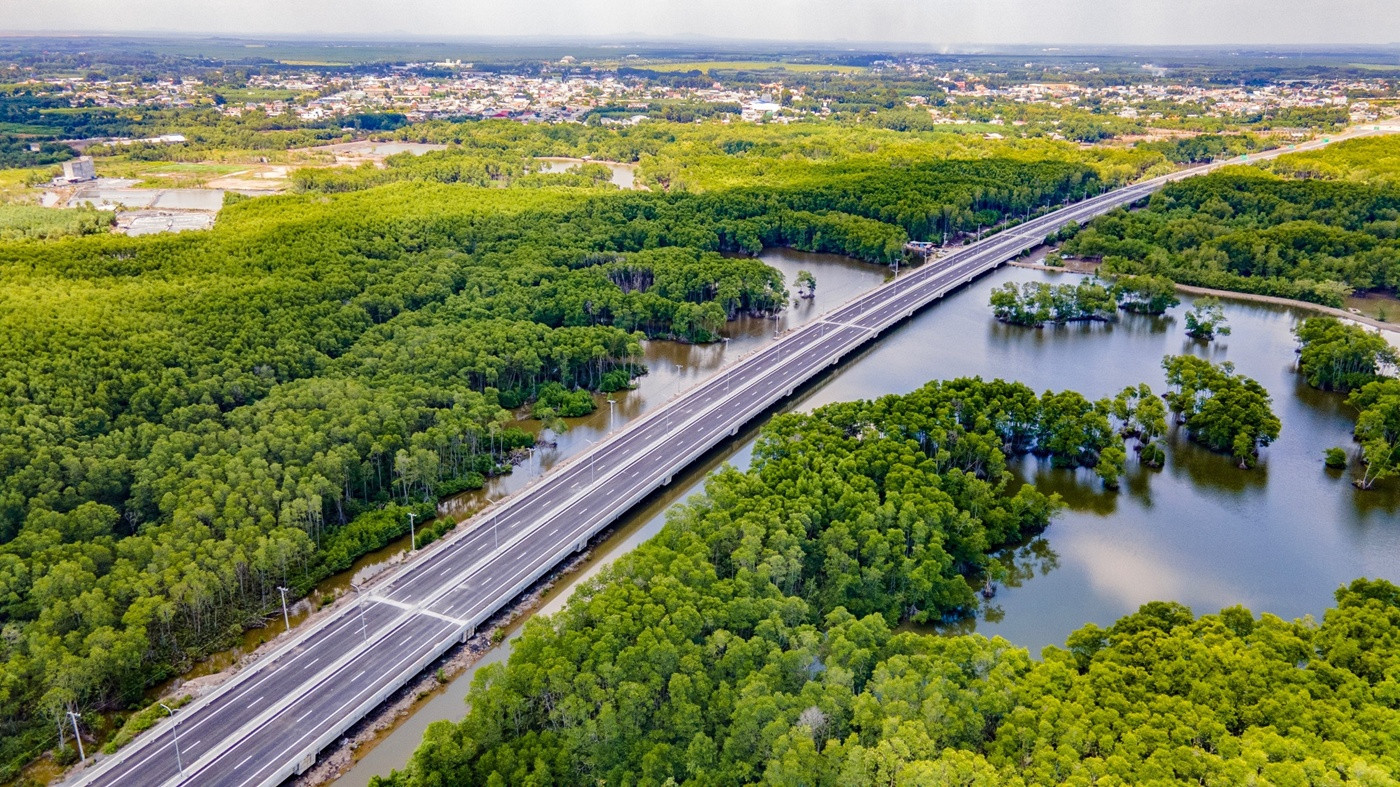
Private investment through PPPs is expected to supplement funding and accelerate expressway development. Illustrative photo: V. Hung.
Mobilizing private capital through public-private partnerships (PPPs) is therefore an important way to supplement public resources as the country works toward completing more than 5,000 kilometers of expressways by 2030.
The Ministry of Construction has proposed 29 priority projects seeking PPP investment, with a preliminary combined cost of about $35.39 billion. They focus on widening the eastern North-South Expressway, upgrading Ho Chi Minh City’s Ring Road 3, completing Hanoi’s Ring Road 5 and developing routes that connect regions.
Attracting investment from outside the state budget, however, requires resolving obstacles involving procedures, long-term credit and risk-sharing arrangements between the state and investors.
Each dollar of state funding attracts nearly three in private capital
According to Pham Thy Hung, deputy director of the Ministry of Finance’s Public Procurement Agency, PPPs mobilize resources beyond the state budget, ease pressure on public finances and allow the private sector to participate in infrastructure investment, management and operation.
Since the Law on Public-Private Partnership Investment took effect, 30 projects have received in-principle investment approval, he said. Contracts have been signed for 12 of them. Total investment across the 30 projects is about $49.85 billion.
These include 24 build-operate-transfer (BOT) projects with reported total investment of about $14.95 billion, comprising $3.95 billion in state funding and $11.39 billion from investors. Each dollar of state funding has thus attracted nearly three dollars from outside the state budget.
Notable projects include the Dong Dang - Tra Linh, Huu Nghi - Chi Lang, Ho Chi Minh City - Thu Dau Mot - Chon Thanh, Tan Phu - Bao Loc and Dau Giay - Tan Phu expressways, as well as the widening of the Ho Chi Minh City - Trung Luong - My Thuan Expressway.
Alongside BOT projects, build-transfer (BT) contracts have also been reinstated. Several major projects involving Gia Binh Airport, the APEC Convention Center and a scenic boulevard along the Red River have been launched or broken ground, helping broaden the resources available for infrastructure investment.
Hung said the PPP legal framework had been amended to expand its scope, simplify procedures and make projects more attractive to investors. Notably, minimum investment thresholds have been removed, while state funding can account for up to 70% of total investment in qualifying projects.
The new rules also delegate more authority to lower levels of government, expand the methods available for selecting investors and establish mechanisms for sharing revenue risk. The 2024 Law on Roads allows BOT contracts to be used to widen existing expressways and upgrade roads to expressway standards, while safeguarding road users’ freedom of choice.
Financing and revenue risks remain obstacles
Despite these initial results, transport PPPs still face considerable difficulties. Of the 30 projects granted in-principle investment approval, only 12 have reached the contract-signing stage. Project preparation, investor selection and financing arrangements remain time-consuming. Funding relies largely on commercial banks, whose loans carry high interest rates and short maturities, while sources of long-term capital remain insufficiently developed.
Project viability is also vulnerable to lower-than-forecast revenue, delayed toll adjustments, land clearance problems and material shortages.
For BOT projects with contracts signed before January 1, 2021, unresolved problems have undermined confidence among investors and lenders. Decree 122/2026/ND-CP sets out mechanisms to address these difficulties, including sharing revenue shortfalls and determining compensation when contracts are terminated early.
The Ministry of Finance says coordinated measures are needed to restore confidence while preventing losses and waste involving state funds and assets.
For BT projects, the principal challenge is determining the value of the completed infrastructure and the land used as payment. Valuation, disclosure and oversight must therefore be transparent and rigorous.
Choosing viable projects and managing risks
Hung said Vietnam needs to continue refining PPP legislation, streamline procedures and improve risk-sharing mechanisms that balance the interests of the state and investors.
He also stressed the need to assess financial viability, revenue potential and investment recovery plans carefully before choosing the PPP model. For essential projects that are not financially viable, authorities should consider public investment followed by appropriate concessions for commercial operation, management or toll collection.
The Ministry of Finance has also proposed prioritizing state funding to meet commitments under PPP contracts, including payments under revenue-shortfall sharing arrangements. It is also proposing that preferential lending be explored to help investors access long-term capital.
For transport projects, material supplies and land clearance requirements need to be assessed during preparation. Local authorities also need stronger capacity to negotiate, sign and manage contracts.
For BT projects specifically, authorities should strengthen oversight of infrastructure valuations and the land allocated as payment, publish information on the national e-procurement system, and reinforce inspection and auditing.
Attracting private capital therefore depends on more than expanding the PPP framework. It also requires selecting suitable projects, developing viable financial plans and managing risks throughout the life of each contract. These are essential conditions for private funding to support transport infrastructure development while ensuring investment efficiency and protecting the public interest.
Vu Diep
.svg)
