 Vietnamnet.vn

 Podcast



Letting the music speak from the heart
At 81, village elder Pham Van Nguyen, from Ba Thanh village in Ba Dong commune, Quang Ngai Province, still vividly remembers evenings when young Hre men and women gathered by the fire, with the sound of the Ra ngoi carrying through the stillness of the mountains.
Back then, feelings that were difficult to put into words could be entrusted to music.
"When a young man and woman had feelings for each other, they would play the Ra ngoi. The man would play first and the woman would answer. They sat facing each other and continued this musical exchange for hours, sometimes through the night," Nguyen recalled. "Just by hearing the rhythm, they could understand each other's feelings. If their hearts were not in harmony, neither would the music be."
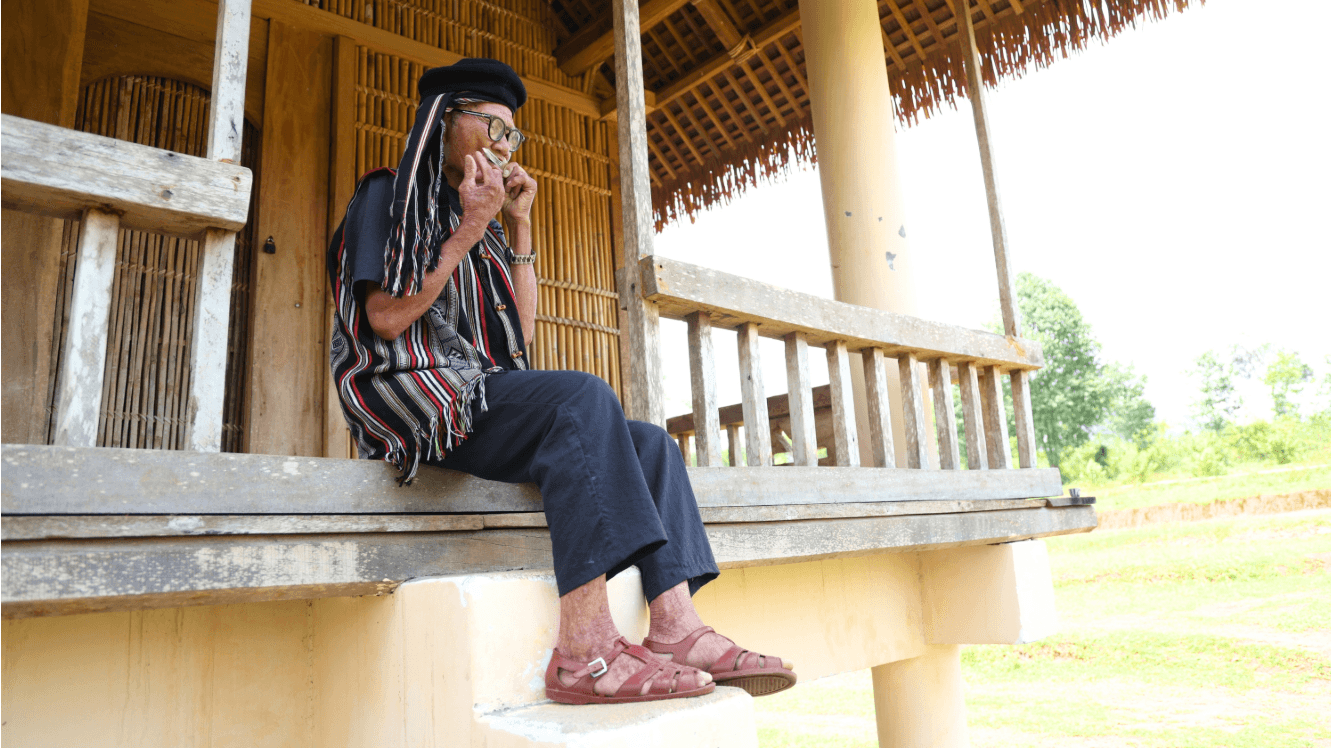
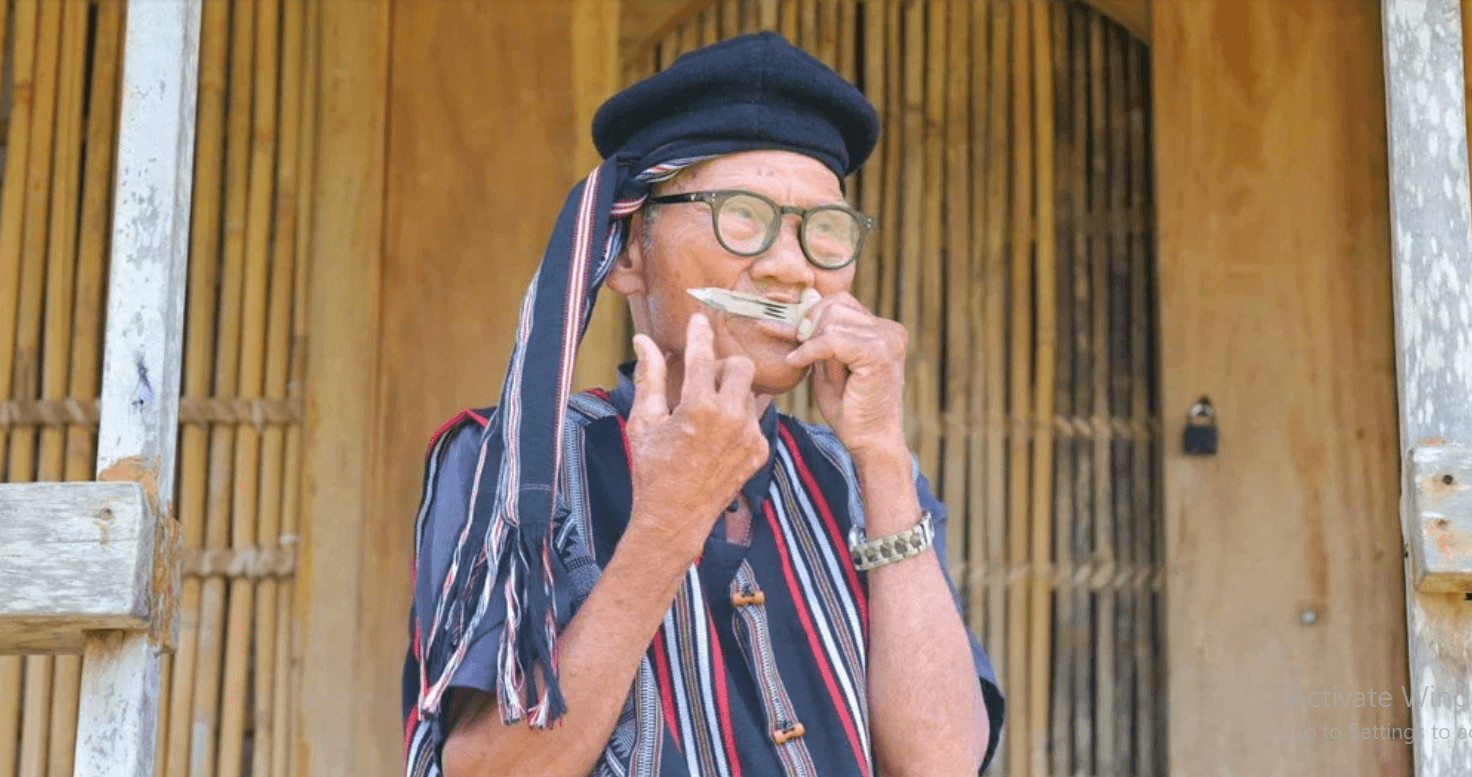
The Ra ngoi, also known as a mouth harp, is a traditional instrument familiar in the cultural life of the Hre ethnic community. Its sound often accompanies the traditional ta leu and ca choi melodies during community gatherings and festivals, and was particularly associated with courtship.
Its construction is relatively simple. A piece of quality wood forms the body around a vibrating tongue made of steel or copper. Producing a clear, resonant and lingering sound, however, is far from easy.
According to Nguyen, crafting the tongue is the most difficult step. It must have just the right thickness and elasticity. If it is too thick, the sound becomes dull and heavy; if it is too thin, the notes lack resonance.
Even at his advanced age, Nguyen's eyes still light up whenever he talks about the Ra ngoi. He enthusiastically explains how to select materials, make the instrument and control one's breath, while recalling Hre love stories once conveyed through its delicate sounds.
To play the instrument, the musician places it close to the lips, holds its body with one hand and plucks the tongue with the other. Sound comes from the vibration of the metal tongue and is then shaped by the player's breath, lips, tongue and oral cavity.
Despite its compact size, the Ra ngoi is therefore not an instrument that can be mastered in a day or two.
Pham Van Lam, one of the few people who can still play it, said learners need to focus above all on controlling their breathing.
"Only when you can control your breath can you coordinate your lips, tongue and mouth, turning the tiny vibrations of the instrument's tongue into many different shades of sound," Lam said.
It was precisely this ability to shape its sound that once made the Ra ngoi a distinctive means for young Hre men and women to "talk" to each other without uttering a word.
As the sound of the harp grows quieter
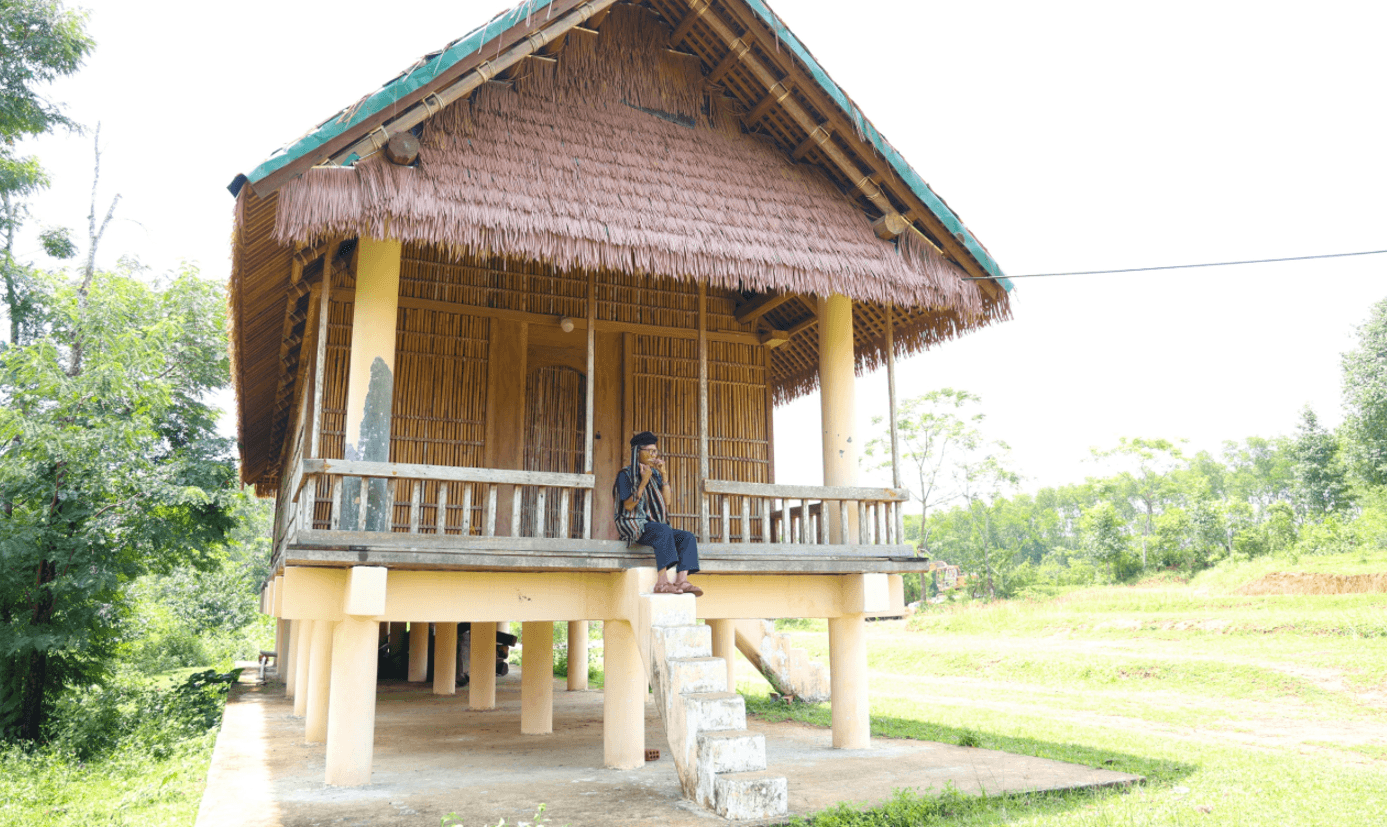
Once a familiar presence in community life, the cultural space for the Ra ngoi is gradually shrinking.
Nights of courtship through music now survive largely in the memories of older generations. Fewer people know how to craft and play the instrument proficiently, while relatively few young people remain interested in learning it.
For village elder Nguyen, this is his greatest concern.
He said the Ra ngoi is already difficult to learn, while the social environment in which it was traditionally played has changed. Young people now have many new forms of entertainment, and courtship no longer depends on music to convey feelings.
"What we hope for most is that more young people will come to love the music of their own ethnic community and be willing to learn how to make and play the instrument," Nguyen said. "There must be a younger generation to carry it on if the sound of the Ra ngoi is to survive."
Artisan Pham Thi De has also devoted considerable time to preserving the Hre community's traditional cultural heritage.
Whenever she has the opportunity, she performs on the Ra ngoi. In her village, she regularly talks with young people and teenagers and is willing to teach both the instrument and traditional ta leu and ca choi melodies to anyone interested in learning.
For De, preserving the Ra ngoi means more than safeguarding a musical instrument. It means preserving part of the Hre community's spiritual and cultural life.
Behind its sound lies a way in which generations of Hre people communicated, expressed affection and formed connections with one another.
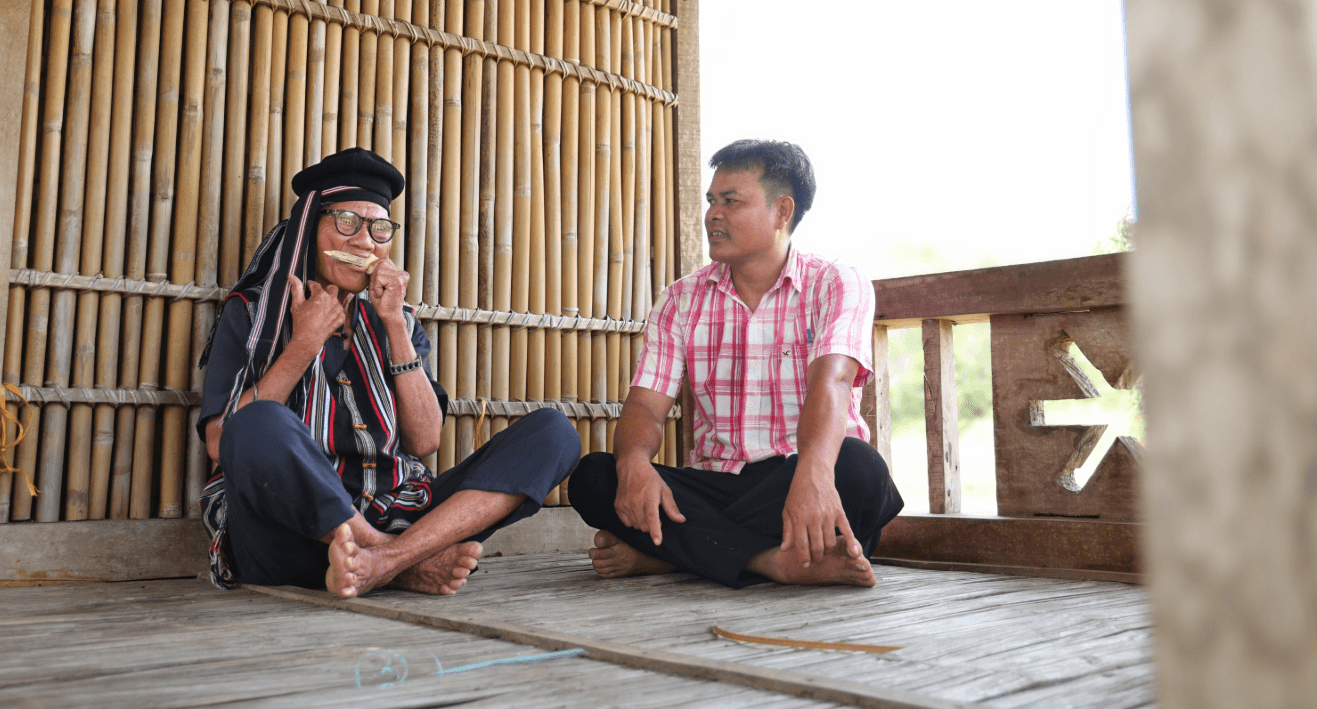
Musician Pham Minh Dat said the Ra ngoi's particular value lies both in its playing technique and in the cultural space the instrument represents.
Given its distinctive characteristics, he said the Ra ngoi could be researched and documented for possible inclusion in Vietnam's national list of intangible cultural heritage.
"If it is recognized, that would provide an important foundation for implementing more practical measures to preserve, teach and promote the value of this traditional instrument," Dat said.
Pham Thi Minh Doi, Vice Chairwoman of the Ba Dong Commune People's Committee, said local authorities have maintained cultural preservation programs linked to community spaces in residential areas.
Artisans are encouraged to pass their knowledge on to younger generations, while village performing arts groups are given opportunities to participate in festivals and cultural events, helping maintain spaces where traditional art forms can continue to be practiced.
Yet for the Ra ngoi, its future may ultimately depend on whether young people still want to pick up the instrument.
An instrument truly lives only as long as there are people who know how to play it and others who want to listen.
For village elders like Pham Van Nguyen, the hope is simple: that one day, amid the Hre mountains, the delicate sound that once carried so many unspoken declarations of love will still be heard.
Le Phuong
.svg)
